

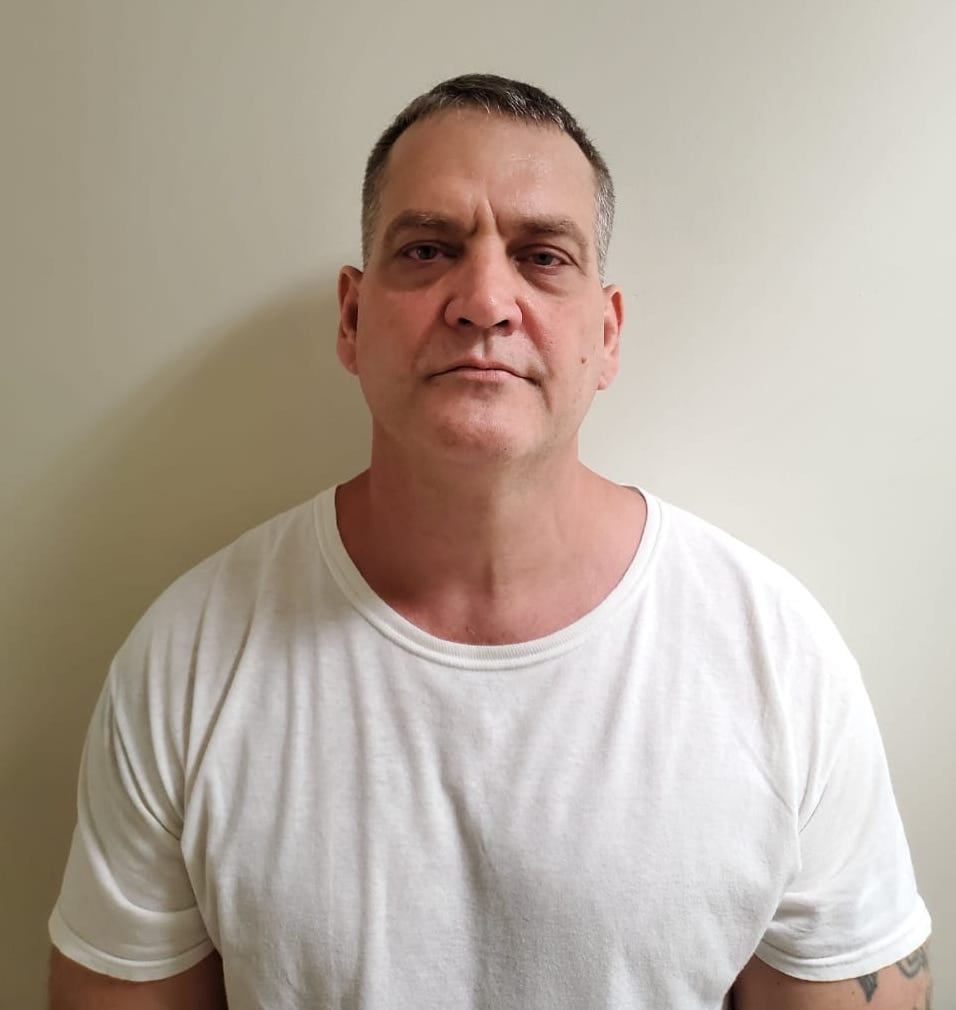



SUPERIOR Court Associate Judge Joseph N. Camacho has invited attorneys Victorino DLG Torres, Michael W. Dotts, Jordan Sundell, Joe McDoulett and other interested persons to speak at the disciplinary hearing for attorney George Lloyd Hasselback.
Judge Camacho, in a notice and order on Wednesday, noted that pursuant to the CNMI Supreme Court’s mandate there is no need for a prosecuting attorney.
The hearing is scheduled for Friday, Oct. 29, at 2:30 p.m. in Courtroom 220A.
Hasselback said in his brief that he has not violated Model Rule 3.3(a)(1) and (2), believing that the statements that he made to the court were true based upon a reasonably diligent inquiry.
“As I have stated previously in my response to Notice of Candor to the court,” Hasselback said, “I was unaware on the morning of Feb. 5, 2021 that a written transcript of Mr. Guo’s deposition had been prepared. I had missed an email from the transcriptionist that unequivocally informed me that a transcript had been provided. Because I had misunderstood another email communication with the transcriptionist, I had formed the mistaken, but genuine, belief that a written transcript had yet to be prepared. This was a mistake. I did not intend to mislead the court. When I made those statements, I believed them to be true.”
According to Hasselback, “A private reprimand is appropriate in this situation.”
He added, “I have practiced before this court for over 15 years in both private and public practice and this is the first time I have been accused of misconduct that amounts to a violation of the ethical rules.”
“I sincerely hope that my hard-won credibility with this court is such that I enjoy enough of a benefit of the doubt to be believed when I say that I did not knowingly make a false statement to this court at any time,” he added.
“I believe that my professional and personal reputation in the CNMI is such that this first factor would weigh extremely heavily in favor of a private reprimand by this court.
“Next, I have fully cooperated with the investigation of this matter. When called by the attorney who was appointed to investigate this matter, I spoke honestly and candidly about what happened. I did not equivocate or attempt to avoid any of his questioning. I repeatedly assured him that I remained available for any follow-up questions or interviews that he would like to conduct. I was as cooperative as I possibly could be given the geographic separation from the CNMI that I now experience. This factor too, should weigh towards leniency.
“Also, I took reasonable, prudent, and swift efforts to mitigate any damage to either my client or the public, because of the statements made on Feb. 5, 2021.
“Immediately upon learning of opposing counsel’s Notice of Duty of Candor, I investigated the matter and filed a thorough response with the court that rectified the inadvertent misstatements I had made. Since these misstatements did not result in anything other than a minor delay in the proceedings, there was no appreciable harm to my client or the public. In any event, I did my best to correct the record as soon as I was able. Given this, I also believe that this factor would weigh towards leniency.
“Finally, I can assure the court that I have taken steps to ensure that this will never happen again.
“This mistake has impacted me significantly. I have not experienced any other event in my legal career that left such an indelible mark on my memory as this one. I find myself in a situation where my integrity and personal honor have been called into question due to a simple mistake that I believe has been fully corrected. The lessons learned from this event will never fade from my memory and I can assure this court that I will do everything I possibly can to ensure that nothing like this happens again,” Hasselback said.
On March 5, 2021, the disciplinary committee of the CNMI Bar Association opened an investigation into an allegation of wrongdoing involving Hasselback.
Following the investigation, the committee transmitted its findings to CNMI Supreme Court Chief Justice Alexandro Castro for further action.
According to that investigation, on Feb. 5, 2021, while representing a client at a motion hearing in the case of Jiang Sheng Asset Management LLC vs Vincent Deleon Guerrero Torres and Wang Tao, Civ. No. 19-0241, Hasselback repeatedly stated to the Superior Court that he was unaware that a particular transcript had been completed.
Hasselback then requested a recess for time to review the transcript, which was granted.
The opposing counsel, Victorino DLG Torres, filed a notice of duty of candor to the court, alleging that Hasselback, at the time that he made the statements, did, in fact, have knowledge that the transcript had been completed.
Victorino DLG Torres’ notice suggested that Hasselback’s statement amounted to a violation of ABA Model Rule of Professional Conduct, but he did not ask the Superior Court to impose sanctions.
Associate Judge Joseph N. Camacho, who presided over the motion hearing, submitted a letter to the CNMI Bar Association disciplinary committee, notifying the panel of a potential violation.
The disciplinary committee met and appointed an investigator to determine the meaning of the word “transcript” as used in the allegation.
The investigator found “transcript” meant “written transcript,” and recommended the disciplinary committee to forward the matter to the chief justice for further action.
Under the NMI Rules of Attorney Discipline and Procedure, when the disciplinary committee recommends the chief justice to take further action, “the chief justice must appoint prosecuting counsel.”
However, Rule 22 allows the Supreme Court, “on its own or on a party’s motion…to expedite a decision or for other good cause, suspend any provision of these rules in a particular matter and order proceedings as it directs.”
On Oct. 13, 2021 Chief Justice Alexandro Castro, Justice John Manglona, and Justice Perry Inos, invoked Rule 22 and suspended the Rules of Attorney Discipline and Procedure to expedite a decision in light of the investigator’s suggestion of leniency; the absence of a request for sanctions from opposing counsel; and to save judicial resources.
The CNMI Supreme Court then remanded the matter to Judge Camacho for appropriate action.

