






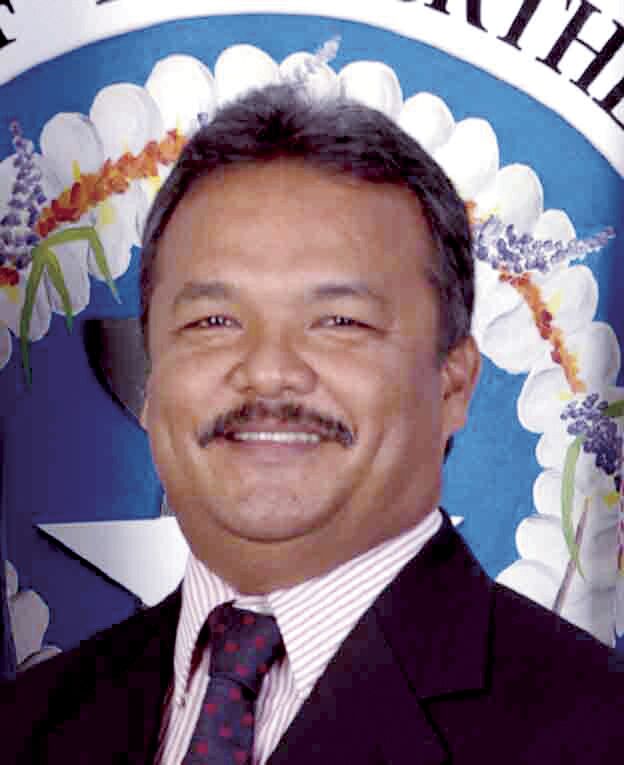
SENATOR Paul A. Manglona said, “There is no doubt that without the hard work of our congressman in D.C.” the CNMI government would be “almost totally shut down today.”
Manglona, an independent aligned with the Democrats, said it was the CNMI delegate to the U.S. Congress, Gregorio Kilili Camacho Sablan, who secured “tremendous financial relief” for the islands under the American Rescue Plan Act of 2021.
Kilili, who is now serving a seventh term in Congress, caucuses with U.S Democrats.
But Manglona said the CNMI government cannot say that it is totally out of the woods now.
“If we do not do our homework in the next two years, as [the] branch of government with the power of the purse, in making sure we have reliable, factual financial information in front of us to work with, and if we are not willing to sit down and take on the difficult task of passing a truly balanced budget, we will be right back where we were prior to getting all the federal financial assistance,” said Manglona, the CNMI’s longest-serving lawmaker.
‘Pass the bill’
He is also hoping that the Republican-led Senate will act on House Bill 22-33, which would require legislative appropriation for the $481.8 million in American Rescue Plan Act funds that the CNMI received from the federal government.
The bill was transmitted to the Senate even though the vote on it in the House was 10 in favor and 10 against.
Speaker Edmund S. Villagomez, an independent aligned with the Democrats, invoked an old House rule that allowed the presiding officer to “vote twice” in case of a tie.
But according to Attorney General Edward Manibusan, the tie-breaking rule of the House “contravenes” the CNMI Constitution.
The AG noted that the CNMI Constitution’s Article II Section 5(c) states: “The legislature may not enact a law except by bill and no bill may be enacted without the approval of at least a majority of the votes cast in each house of legislature.”
No public hearing was conducted before the House voted on the bill. Neither was there a committee report presented to the members.
Before the House leadership acted on the bill, the AG’s office informed the members that there was no need for it, and that the federal law includes restrictions and other rules that the CNMI must follow.
The Office of the Public Auditor, for its part, questioned the bill’s provision that would saddle OPA with an “unrealistic mandate” and affect its independence.
But according to Senator Manglona, the Senate should vote on H.B. 22-33, “and stop making lame excuses, such as procedural deficiency. We are running out of time and the Legislature needs to make sure ARPA funds are allocated reasonably.”
He added, “We must pass House Bill 22-33 now so we can truly say to our people that we have diligently worked to reasonably allocate all our limited resources and pass a balanced budget plan for fiscal year 2022. Our action on H.B. 22-33 will significantly determine the results of our efforts in addressing our serious financial crisis. By passing this bill, we are essentially restoring the checks and balances of our government.”
On Friday, Senate Floor Leader Vinnie F. Sablan, with the support of the rest of the Senate leadership, removed H.B. 22-33 from the bill calendar and sent it back to the Fiscal Affairs Committee chaired by Sen. Victor B. Hocog.
Paul Manglona
