

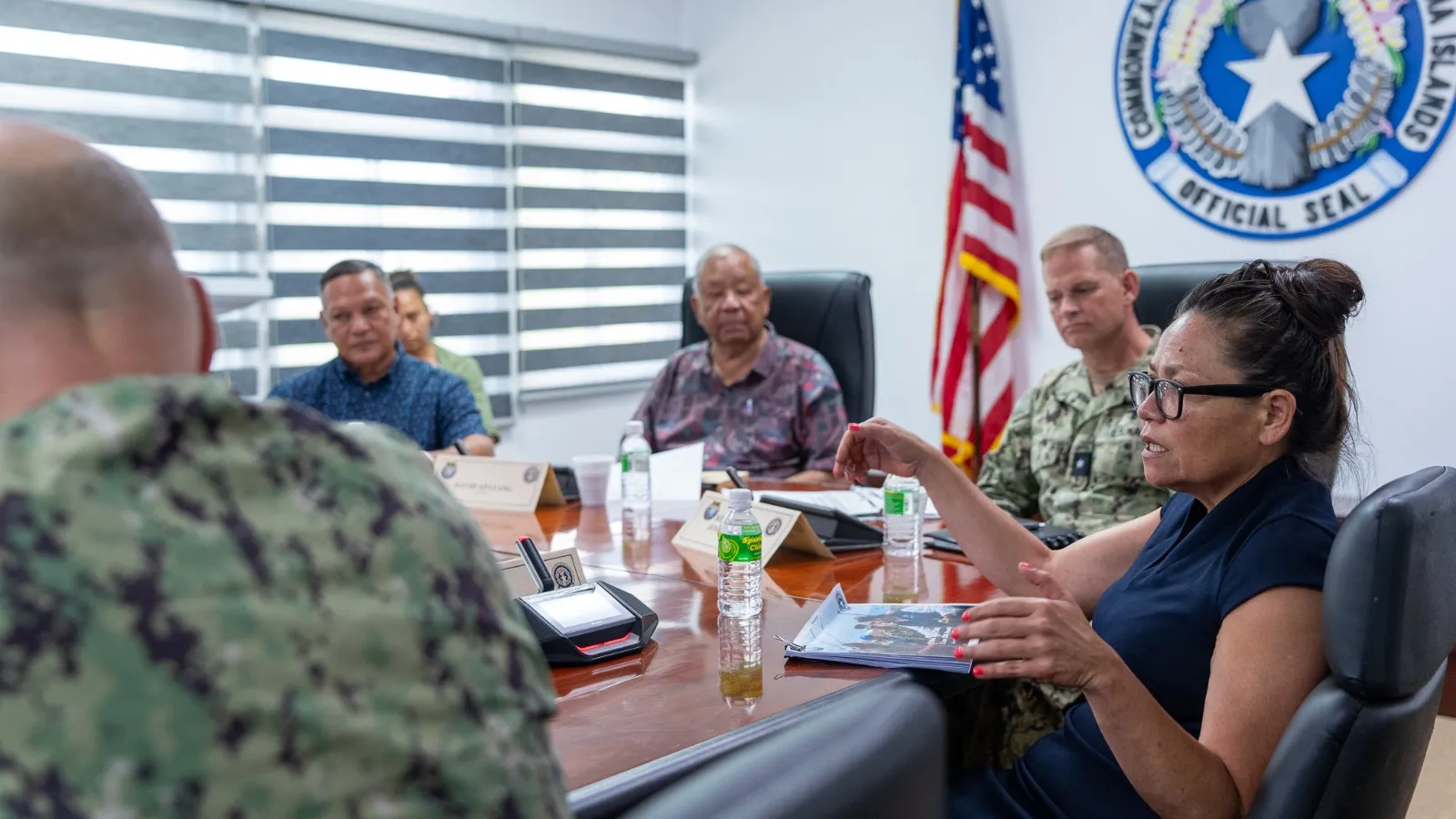



COMMONWEALTH Healthcare Corporation Chief Executive Officer Esther L. Muna said there have been discussions about surge capacity support, on the off chance that the CNMI experiences a surge in positive Covid-19 cases.
The alternate care site, or ACS, at Kanoa Resort will be utilized if there is a surge, while the Medical Care and Treatment Site, or MCATS, will be utilized for overflow.
The ACS was built to separate Covid-19 patients from the main hospital, in an effort to safeguard the CNMI community from a spread.
It was created after the Federal Emergency Management Agency and the U.S. Department of Health and Human Services projected that the CNMI might have 6,000 Covid-19 cases by mid-June of last year. The actual number as of June 4, 2020 was 24 of which six were active.
Discussions then took place between the CNMI Office of the Governor and Tan Holdings Corporation to transform Kanoa Resort into a state-of-the-art facility to combat Covid-19.
On April 2, 2020, the CNMI received guidance from FEMA on how to convert a hotel into a hospital or an ACS facility.
By April 14, 2020, the transformation of Kanoa Resort began.
What used to be the lobby, the Century Tours office, a Duty-Free store, and a gym have been turned into a facility that can accommodate 50 ICU beds on the first level, and 152 mid-level care rooms on the main wing of the hotel.
In the lobby, space is reserved for a pharmacy, and one wing has been designated hemodialysis capable.
Doctors, pharmacists, and medical staff will be separated from patients who will be kept in the red zone.
A corridor anteroom allows access to a clean space in between the patient and the doctor zones.
The structure is not permanent. If the site needs to evolve to provide more space, modular furniture can be taken down efficiently to allow room for more beds.
The red zones, or the patient zones, face the courtyard or the ocean to cater to patients’ mental and emotional healing while undergoing treatment.
Because it is a controlled environment, visitors are not allowed in the facility.
The site has a state-of-the-art mechanical system, including the UV lights and air purifiers with Hepa filters that help prevent the spread of diseases within the facility.
The system allows new air to circulate every five to seven minutes, with the air going out being cleaner than the air coming in.
“We are putting all measures [in place] and we’re monitoring this to the hour,” Muna said.
She and her team have been monitoring Covid-19 vaccinations, surveillance, testing, the health of individuals who tested positive for the virus, and much more.
“We are doing everything possible to protect the community and the healthcare workers,” she added.
As of Sunday, the CNMI had a total of 190 positive Covid-19 cases since March 2020 including two deaths in March and April 2020.
Of the 190 total cases, 153 were inbound travelers, while 37 were identified through community screening.
Ninety-one of the 153 inbound travelers who tested positive for the virus originated from the U.S. mainland, 39 from U.S. territories, and 23 from a foreign country.
Of the 37 identified through community screening, 11 were from community-based testing and 26 were from contact tracing.

Esther Muna
