



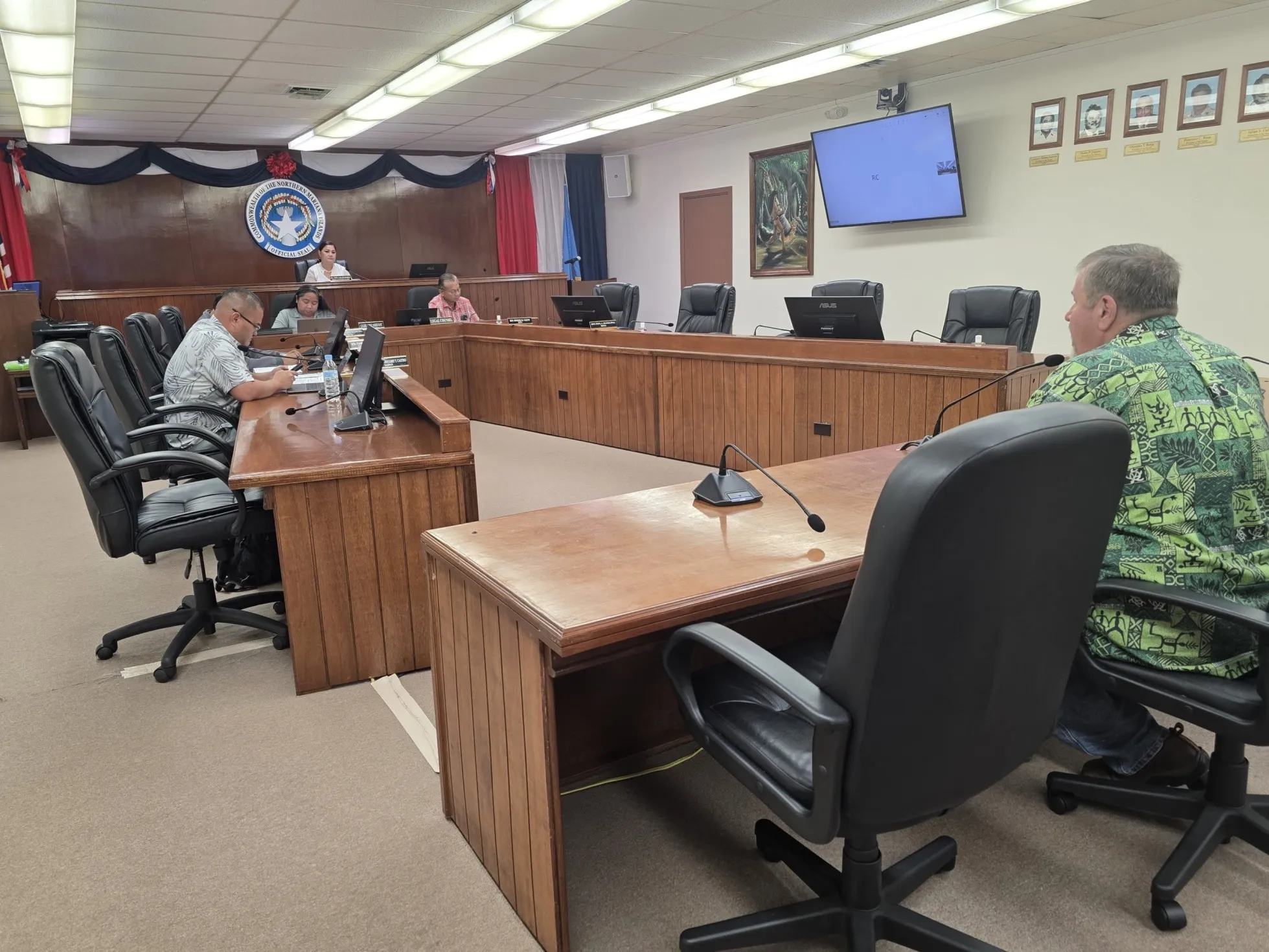


SUPERIOR Court Associate Judge Wesley Bogdan has dismissed without prejudice the complaint of Kan Pacific Saipan Ltd. against Imperial Pacific International LLC.
“Without prejudice” means the lawsuit can be refiled.
Judge Bogdan issued the order following the plaintiff’s voluntary request for an order dismissing the case.
Kan Pacific sued IPI for breach of contract.
IPI in a previous motion asked the court to issue an order dismissing the case because Kan Pacific failed to join an indispensable party, the CNMI Department of Public Lands.
According to IPI, which was represented by attorney Juan T. Lizama, DPL must be joined pursuant to Rules 19(1)(B)(i) and 19(2) for two reasons: (1) DPL is a third-party beneficiary to the contract in dispute, and (2) IPI will not be able to fully protect its interest regarding DPL’s involvement with the 2016 settlement and how it was carried out unless DPL is joined.
IPI said Part 4(c) of the 2016 settlement provided for $16 million to be paid directly from Kan Pacific to DPL and made DPL a third-party beneficiary. Section 7 made Kan Pacific and IPI jointly and severally liable for rental payments to DPL.
There is ample case law in the United States providing for third-party beneficiaries to contracts to be joined to contract disputes, IPI said.
“Second, DPL is indispensable to resolving this suit because DPL has additional facts and evidence needed to fully determine any liability that IPI would have to Kan Pacific, as well as DPL’s potential liability to parties in this case. Such facts include what DPL knew about the 2016 settlement and how it was carried out, which could determine whether DPL should have taken action to recognize the 2016 Settlement as void in order to ensure a fair competition for the next lease, or clearly terminate it.”
IPI’s interests will be impaired without the joinder of DPL, IPI reiterated.
According to the factual background of the lawsuit, on Dec. 15, 1977, Kan Pacific leased 146 hectares of public land from DPL’s predecessor for 40 years. The following day, Dec. 16, 1977, the lease was executed a second time with revisions.
The relevant difference between the two leases lies in a provision requiring DPL’s consent or approval to any assignment or sublease of Kan Pacific’s interest in the latter.
Sometime between October and December of 2015, local newspapers published that ongoing negotiations were occurring between Kan Pacific and IPI.
Later, news articles revealed that a deal was “signed.” Under the deal IPI would take over Kan Pacific’s existing lease.
The intent was for IPI to be in the best position to get the next lease from DPL.
Saipan Entertainment brought suit contesting the legality of the transaction since DPL did not consent.
That suit lead to a settlement nullifying the transaction, IPI stated.
In 2016, Kan Pacific and IPI entered into a new agreement that essentially transferred Kan Pacific’s existing lease to IPI (e.g., it transferred all assets and operations from Kan Pacific to IPI and required Kan Pacific to encourage present employees to join IPI). In return, IPI would pay Kan Pacific $17.5 million, with an initial payment of $12.5 million and then $200,000 for 25 years, starting June 2017.
Part 4(c) of the 2016 settlement provided that $16 million would be paid directly from Kan Pacific to DPL and that DPL would be a third-party beneficiary.
Section 7 made Kan Pacific and IPI jointly and severally liable for rental payments to DPL.
IPI did not obtain the new lease with DPL in part due to its inability to meet the requirements imposed by DPL. After making three annual payments to Kan Pacific, IPI did not make the payment in 2020, leading to the present lawsuit.
In July 2020, Kan Pacific, through attorney Joseph Iacopino, filed a complaint against IPI and 50 unnamed individuals for breach of contract for an undetermined amount.
The lawsuit stated that prior to June 1, 2020 Kan Pacific and IPI; and 50 Does, entered into a written agreement, which defendant was contractually obligated to pay a certain sum of money to the plaintiff on or before June 1, 2020.
The complaint stated that “the said agreement includes a confidentiality provision.”

