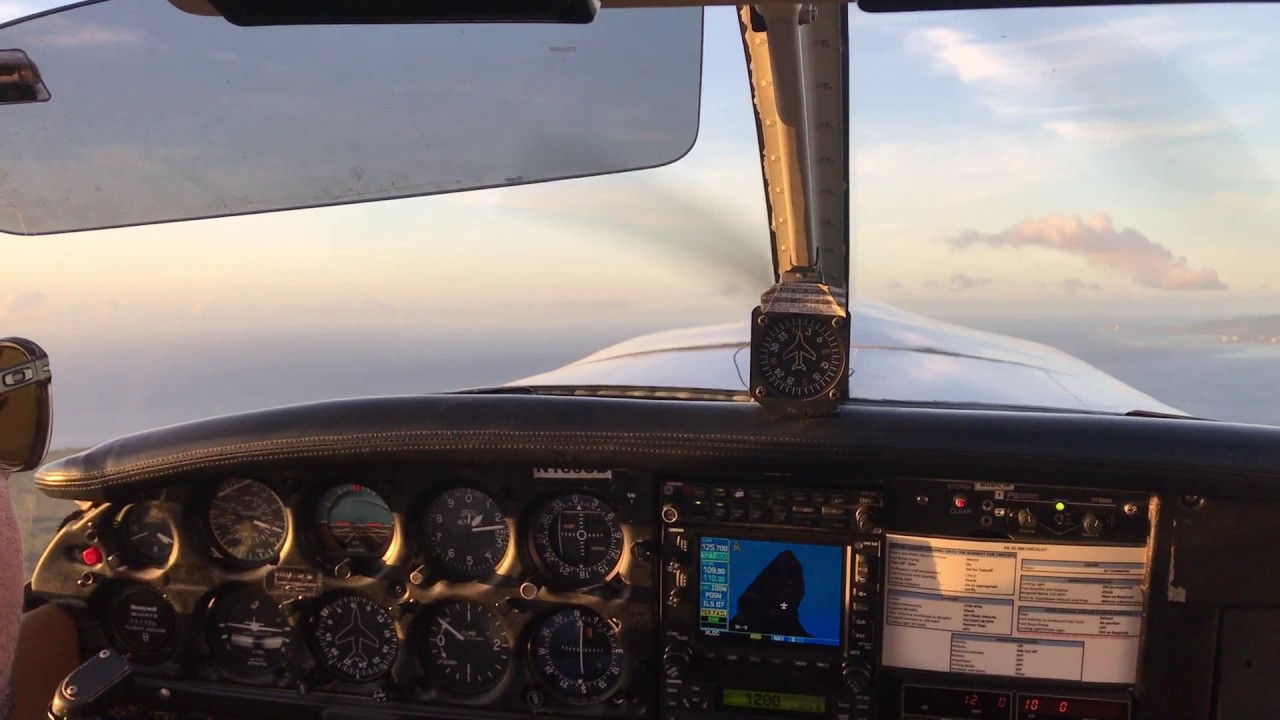





STAR Marianas Air’s airfare increase is a “heartless move” according to Commonwealth Ports Authority Chairwoman Kimberlyn King-Hinds.
King-Hinds is responding to Star Marianas president Shaun R. Christian’s response to her reaction to the recent airfare hikes.
The CPA chairwoman said Star Marianas “is entitled to its own opinion, not facts.”
“Once again, Star Marianas issues its press release crying foul, raising the same legal theories that have already been decided by the Federal Aviation Administration and the District Court in an attempt to divert the public’s attention from the real question which is how does an airline keep raising rates when they have not been paying, and all the fees are 100% waived until December,” King-Hinds said.
Star Marianas is right, she added.
“We don’t have the authority to raise fares. They can charge whatever fare they want. But just because you can, doesn’t mean you should. And at a time when people are struggling and fees have been waived, it is unconscionable to raise fares. It’s a heartless move,” she said.
She added that infrastructure projects at airports across the U.S. are supported through three funding mechanisms: Airport Improvement Program grants through the FAA, Passenger Facility Charge or PFC tenant rents and fees.
“[Star Marianas] has been complaining about the PFC for many years. First, they filed a complaint stating that it was a violation of the ‘anti-head tax,’ which the FAA has dismissed. Now they just call it an ‘overcharge.’ To say that CPA has overcharged the public $2 million in PFC is a mischaracterization of the facts and frankly their modus operandi. Enough already,” King-Hinds said.
She shared a little bit of history “as facts are necessary.”
On Oct. 15, 2004, the FAA approved the CPA’s collection of a $4.50 PFC per eligible enplaned passenger at the Saipan, Tinian, and Rota International Airports (Application 1).
Due to an increase in airline activity beginning in Fiscal Year 2017, CPA reached its PFC collection authority faster than anticipated.
On June 17, 2021, the CPA issued a Notice of Amendment to Approved PFC applications at CPA airports, which notified airlines of an amendment to CPA’s Application 1 to decrease the application collection authority to reflect actual costs of approved projects in the application.
Based on the approved amendment, CPA’s PFC Application 1 collection authority was decreased by $205,056.00 and expired on Dec. 1, 2018.
CPA’s overcollection is the result of amendments to Application #1, which reduced CPA’s PFC impose/use authority for projects completed with other CPA funds or grants.
King-Hinds said Section 6.02(c) of the Airport Use Agreement signed by the CPA and each signatory airline states: “Authority reserves the right to assess and collect Passenger Facility Charges subject to the terms and conditions and such methods of collection set forth in the Aviation Safety and Capacity Expansion Act of 1990, Section 9110 of the PFC Act as amended or revised.”
The proceeds of any Passenger Facility Charge may be utilized as permitted by the PFC Act. This section of the AUA acknowledges a signatory airline’s understanding that CPA may choose to assess and collect a PFC.
In addition to the amendment to Application 1, CPA’s PFC Application 2 was approved on June 22, 2018. Application 2 approved a $4.50 PFC collection in the amount of $4,194,094.00 for additional projects and extended CPA’s collection authority until May 1, 2021.
CPA’s PFC Application 3 similarly proposed a $4.50 PFC for use of over-collected PFC revenue. Since the PFC revenues for Application 3 have already been collected, additional collection is not required.
On May 10, 2021, CPA filed its plan to use over-collected PFC revenue with the FAA in accordance with federal law. Should the FAA approve CPA’s Application 3, the over-collected PFC revenue will be used to reimburse CPA’s capital fund with approved PFC revenue and will be made available for future capital improvement projects at the three international airports. This will allow CPA to complete these projects without assessing the airlines for this amount through rates and charges.
The chairwoman said CPA is in compliance with the AUA on its collection and its use of PFC goes through FAA approval, whether Star Marianas agrees with it or not. CPA also notes for the record that it did request SMA to stop remitting PFCs, which SMA to this date has not stopped remitting.
She also noted that CPA does not get any funding from the CNMI government for capital improvement projects. PFC’s are used only for those purposes and cannot be used for operations or personnel, she said.
And any excess PFC collection is reported to the FAA with a plan, which identifies which capital improvement project will be funded by these excess funds.
“The truth is nobody on the board likes PFC’s either. But in the absence of alternative funding sources, whether it be through direct government capital improvement project investments or federal grants, CPA has to assess this fee to make capital improvements at all three airports. We must all share in this burden,” King-Hinds said.
“I really do not want to engage in a ‘tit for tat’ with SMA, but the public needs to know what’s going on with this issue. The facts are that when SMA complained in 2012 to the FAA and its complaint against CPA was rejected, the FAA told SMA ‘First pursue dispute resolution in good faith.’ t did not,” she said.
She recalled that when Star Marianas sued and lost in the District Court for the NMI, CPA simply said, “Pay what you owe.” When the airline company complained again to the FAA through the administrative process, the company lost.
The chairwoman said that “CPA said again, ‘You owe $2.3 million. Please pay.’ It did not.”
When Star Marianas appealed to the FAA director and lost, “CPA again repeated, ‘Pay for the facilities you use.” It refused.”
When Star Marianas filed in Superior Court and CPA filed its motion to dismiss, the company complained to the CNMI Senate, demanding an “oversight of CPA.” The Senate declined and Star Marianas agreed to mediation or settlement.
“When invited to meet and pursue settlement or mediation, SMA refused. Instead, they once again sued CPA in Superior Court. These are well-established sets of facts. With all that being said, continuing this type of dialogue with SMA is not productive and is not the best use of my or CPA’s time, resources and energy moving forward,” she said.
Instead, CPA will focus on the work to improve inter-island connectivity, whether for travelers or the shipment of goods, and find means and opportunity to bring down fares whether it be through finding subsidies, new carriers, and or any means necessary to provide relief to the people of the CNMI, most especially the people of Tinian and Rota, she said.
To that end, King-Hinds said, “CPA will leave no stone unturned and no door un-knocked.”
“CPA has been engaged in discussions with the U.S. Department of Transportation, the FAA, the governor, members of the Governor’s Council of Economic Advisors, members of the CNMI Legislature, and folks from various sectors in both the private and public sector, to find a pathway moving forward with regard to this issue. We will keep at it until we do,” she said.