


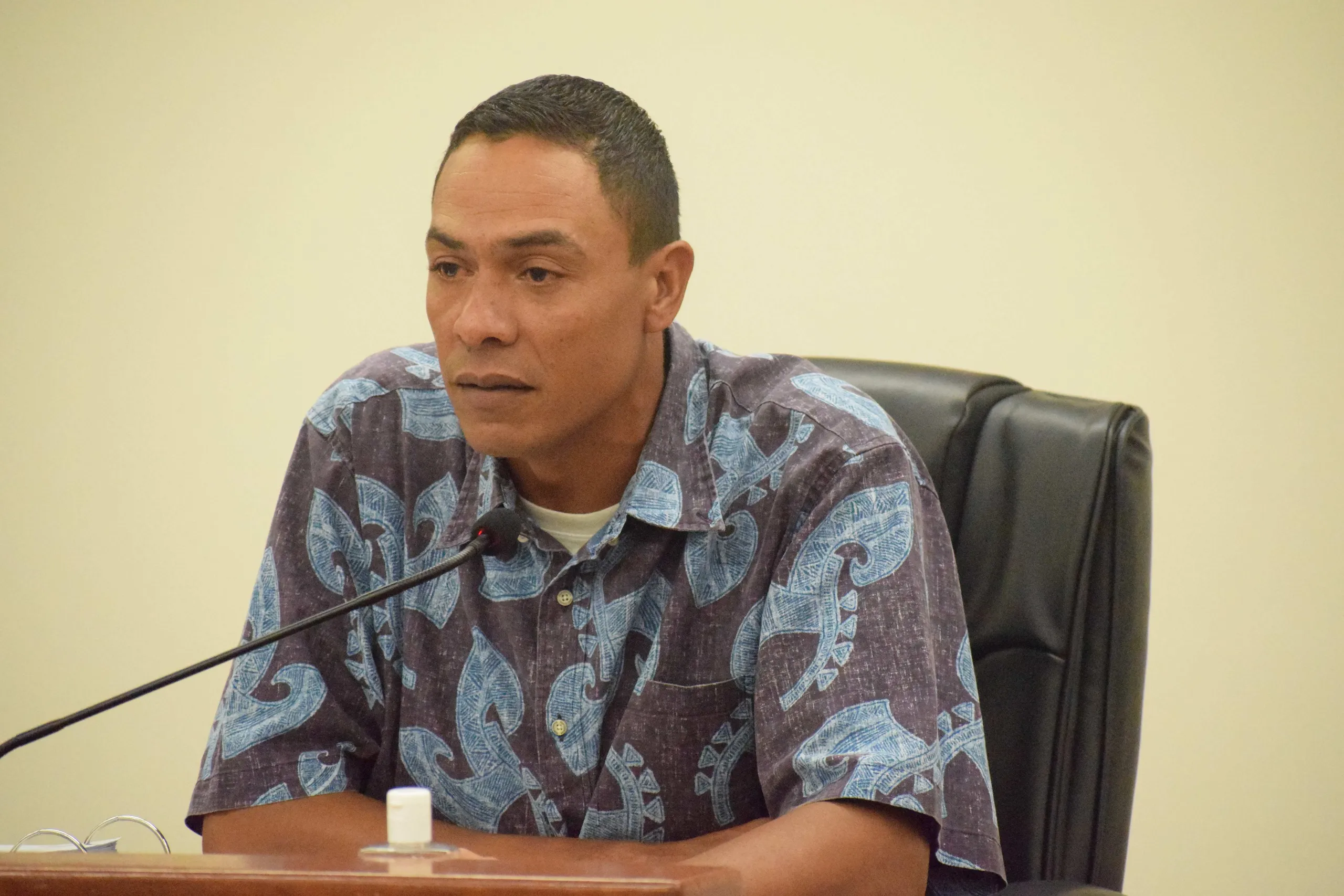



Govendo also filed in Supreme Court a separate request that the media be allowed to video record the formal proceedings against him.
He said the Commonwealth Rules of Judiciary Disciplinary Procedures states that “the hearing shall be open to the public.”
“Accordingly, the presence of television cameras in this proceeding would serve the spirit of this rule by furthering the public’s access,” Govendo stated in his one-page request filed yesterday.
He noted that in the recent State of Judiciary Address, Chief Justice Miguel S. Demapan said the judiciary “is striving to remain above reproach, to put forth an air of transparency.”
Govendo said he “agrees wholeheartedly with this message and believes that video recording these formal proceedings would be a large step toward accomplishing this goal.”
In his two-page answer to the recommendation of formal proceedings, Govendo denied the allegation that he has repeatedly used racially insensitive and disparaging language in his courtroom.
He said it was Judge Ramona V. Manglona who “improperly made this controversy public.”
He denied “that there is a pattern of racial insensitivity and asserts that any reference to past adoptions or cases are irrelevant to the matter at hand and should be stricken.”
On Oct. 21, the Supreme Court notified Govendo of the findings against him, and ordered him to file an answer to the allegations within 15 days.
Retired Guam Superior Court Judge Richard Benson earlier concluded that there was sufficient evidence to proceed with formal disciplinary proceedings against Govendo.
The court set a hearing date for Dec. 17, 2009.
The complaint stemmed from statements that Govendo made from the bench to a defendant in a family law case in July 2007.
“Adios muchacho! Don’t come back,” Govendo was quoted as telling Roger Castillo, then 50, who was later found guilty of one count of stalking his former common-law wife.
In Oct. 2004, Castillo was arrested and was in custody for 14 months for beating her up.
Court papers stated that Castillo, who worked here as a farmer, had been with the special forces of the Philippine military and was a member of the Abu Sayyaf terrorist group.
In Dec. 2008, the Supreme Court appointed retired Judge Benson to investigate a complaint filed against Govendo.
On Nov. 14, 2008, Benson recalled in his recommendation that Manglona believed there was “a substantial” likelihood that Govendo “committed a violation of the [American Bar Association’s] Model Code of Judicial Conduct,” based on the statements that Govendo uttered during the show cause hearing for Castillo.
Govendo said Manglona was “obviously appalled by the statements that I made and has severely overreacted.”
“Judge Manglona does not hear many family protection cases and has never dealt with individuals like Roger Castillo either as a judge, a government attorney or a private attorney,” Govendo said.
Manglona accused Govendo of violating Canon 3B which states in part that “[a] judge shall not, while a proceeding is pending or impending in any court, make any public comment that might reasonably be expected to affects its outcome or impair its fairness or may any nonpublic comment that might substantially interfere with a fair trial or hearing.”
Govendo, however, “denies each and every allegations that he has violated any of the canons of the Commonwealth Code of Judicial Conduct or any rules of the Commonwealth Rules of the Judicial Disciplinary Procedure.”
Govendo also denied that Rule 17 “allows the investigating judge to base his findings upon rule violations that were not cited in the complaint.”
