







If you have vision problems, you exist in a world where everything is a blur and you would fail to notice details around you.
But not everyone is fortunate to have or maintain perfect vision. A huge majority of the population is suffering from vision problems and at one time or another you have to make a long-delayed visit to your eye doctor to get treatment for your vision.
If you are one of those who individuals who feel uncomfortable wearing eye glasses or contacts and who don’t want to undergo surgical correction like LASIK, here is another option for you — the Corneal Refraction Therapy or CRT.
What is CRT?
CRT involves the wearing of a retainer contact lens during sleep to gently reshape the eye and reduce nearsightedness in that manner. It is ideal for individuals who don’t want to wear daytime glasses or contacts, and who don’t want surgical correction such as LASIK. For people who are good candidates, this improves the vision to 20/20 or better in most cases.
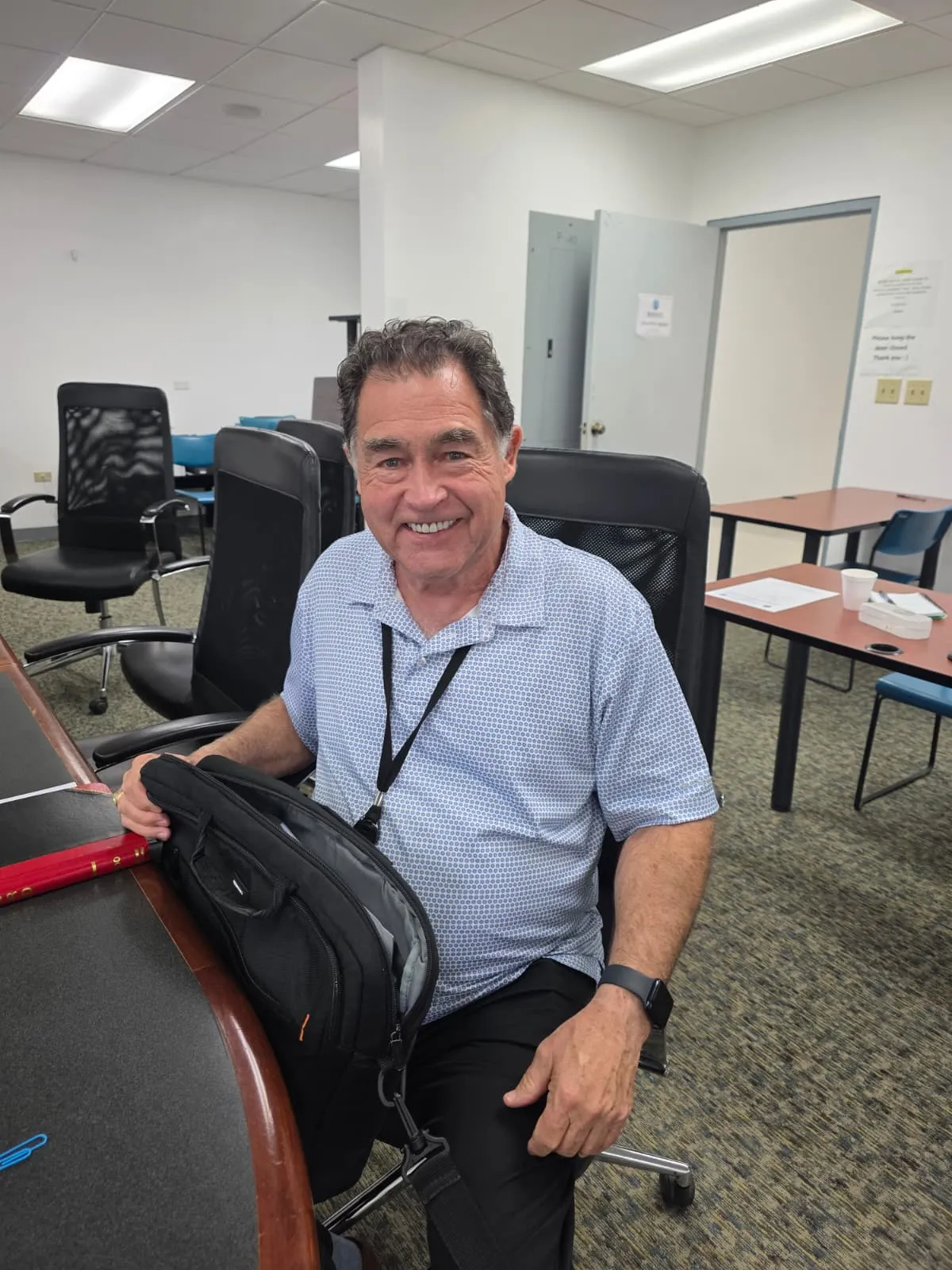
Dr. David Khorram, a Board Certified Ophthalmologist at the Marianas Eye Institute said that they have taken care of thousands of people with visions problems.
Khorram said that CRT certainly is an option available to people who would like to eliminate day-time wear of glasses and contacts.
“The people who like it most are those involved in sports, or those who work in dry or dusty environments but it is also ideal for anyone who just wants to be free from glasses or contacts during the day,” he said.
He said that CRT can definitely eliminate the dependence of glasses, but at the current time, there are no procedures in ophthalmology, medical or surgical, that can eliminate all the problems associated with refractive errors and the changes that occur with near vision as people grow older.
Khorram added that whatever approach they take, they see to it that the patients are informed about their options, and the limitations of each option.
Marianas Eye Institute had been offering CRT treatments for at least five years and had served thousands of people with vision problems ranging from the need for simple glasses or contact lenses, to medical treatment of eye disease, to more complex problems like glaucoma, or diabetic eye disease.
He said that although only a few patients opt for CRT treatment each year, those who opted for tend to be satisfied and happy.
How CRT works
Dr. Mark D. Robertson, O.D. who works with Khorram at Marianas Eye Institute and who is the one specifically certified in fitting of CRT lenses said that the effects of CRT are temporary but maintainable as long at the patient continues to wear the contact lenses at night, the effect will continue.
He said that usually, people who obtain CRT have no need to wear contact lenses or glasses during waking hours. He said that CRT is reversible.
“If the results are not satisfactory and a patient is not happy, all he needs to do is stop wearing the retainer lenses,” Robertson said.
He added that CRT is effective really only for mild to moderate myopia (nearsightedness), with or without mild astigmatism. It is totally not effective for farsightedness.
“Another refractive condition which we all get, usually in our early 40’s, is presbyopia, or the ability to shift focus from far to near,” Robertson said. People with presbyopia need a different lens power for focusing at near than what they need to focus at far.
Diabetic eye as CNMI ‘s number one problem
Robertson said they do see a lot of refractive errors like nearsightedness, farsightedness, and astigmatism in the CNMI.
“While we do place considerable attention on appropriate treatment of refractive errors, we also focus very strongly on some of the very common conditions here which, if untreated, are more likely to result in blindness,” Robertson said.
Robertson said their primary concern with vision in the CNMI is with diabetic eye disease which is the number one “eye or vision problem of people in the CNMI.” But most cases of blindness from diabetes are preventable.
Robertson said that he discovers diabetic eye disease nearly every day here – often in people who have no idea that they have diabetes.
Robertson said that unfortunately many people who wait too late to come in.
“By the time we see them, their diabetes has caused so much damage that the chances of saving what vision remains is greatly reduced,” he said.
He added that they have also provided advanced cataract surgery, and a variety of forms of laser treatment and conducted vision restoration procedures to hundreds of people each year.
Khorram said more people in the CNMI are suffering from vision problems, particularly children and youth but the only way they can determine this is when the people come in because they have a problem, or when they are referred by their medical doctor or teachers for visual problems. Khorram said they do conduct some screening programs for high-risk populations, like people with diabetes.
Challenges
Khorram said that their biggest challenge is educating and encouraging people with diabetes to get an annual eye exam.
He said that they have established the Center for Advanced Diabetic Eye Care at Marianas Eye Institute to help everyone with diabetes get the best care possible. He added that they use leading technologies, and Marianas Eye Institute clinic has been mentioned as “one of the best-equipped eye clinics in the Asia-Pacific region” in Retinal Physician magazine.
“We want people to know that the highest quality of care is available close to home, right here at Marianas Eye Institute,” he said.
Marianas Eye Institute offers a no-charge consultation. To find out whether or not you are a good candidate, you can drop by the clinic on Beach Road Garapan across 13 Fishermen Monument, call 235-9090 or visit www.marianaseye.com.
Eye Care Tips
1. Prevention is a priority in eye care today.
Unfortunately, most eye diseases which can cause permanent vision loss are treatable only in the early stages of the disease, when the person is not aware that there is a problem.
2. Wear proper protective lenses when involved in potentially hazardous activities.
We often see people with eye injuries which would not have happened if proper protective wear had been in place.
3. Consult your doctor immediately if you notice any changes in your vision.
4. Protect your eyes from ultraviolet (UV) rays, dust, wind and bright lights.
5. Eat a healthy diet.
6. Take care to avoid accidental injury to the eyes. If a foreign body enters your eye, do no rub your eye; instead, wash it with plenty of water.
7. Have sufficient light for any task, especially reading.
8. Rest your eyes every half hour when watching television. When working at a computer, look up from the screen periodically and focus on an object in the distance to reduce eye fatigue.
