





During Wednesday’s roundtable discussion held by Guam Military Buildup Committee Chair Sen. Judi guthertz, Unpingco, a former U.S. District Court of Guam chief judge, made a startling comment in saying the military is re-evaluating its alternatives, adding: “If we fail, I’m afraid the buildup is going to go elsewhere.” Unpingco was joined by Arthur Clark, Gov. Eddie Calvo’s senior policy advisor.
At the moment, Unpingco said, Guam is sending mixed messages to Congress about the buildup, and the recent comments by U.S. Senators John McCain, R-AZ, and Carl Levin, D-MI, could have started when Levin and Sen. Jim Webb, D-VA, visited Guam and were given conditions that might prove too costly.
Unpingco said there is a great deal of uncertainty and “issues impeding our buildup,” and pointed out Hawaii’s state government is also trying to convince Congress to move the U.S. Marine forces to their state.
Unpingco said Guam “has to be careful … and must come up with a (unified) stance.” The message from Guam leaders and the community, said Unpingco, must be that Guam wants the buildup and the buildup is good for Guam.
But Sen. Frank Blas Jr. said he wasn’t convinced the U.S. senators’ recent criticisms to delay and perhaps not even have a buildup had anything to do with demands made by the local government. “That’s power that I wasn’t aware 176,000 residents living here had,” he said.
Blas said he felt it was the failure of the congressional supercommittee which has prompted these senators to go against the buildup, in addition to their obligation to their constituents.
The supercommittee, formally known as the Joint Select Committee on Deficit Reduction, was created under the Budget Control Act of 2011 as a bipartisan compromise that helped Congress narrowly avoid a government shutdown. The law charged the supercommittee to identify at least $1.5 trillion in budgetary savings over 10 years, from either spending cuts or tax revenue.
The supercommittee was charged with reporting a bill with its recommendations by Nov. 23, but threw in the towel late last month. Following its failure, the bill calls for automatic across-the-board cuts, split 50-50 between defense and non-defense spending, including Medicare.
Unpingco recommended a mediator be brought in to assist with all stakeholders coming to an agreement on “one voice.” Unpingco also recommended the local government prioritize the requests it has made to the federal government.
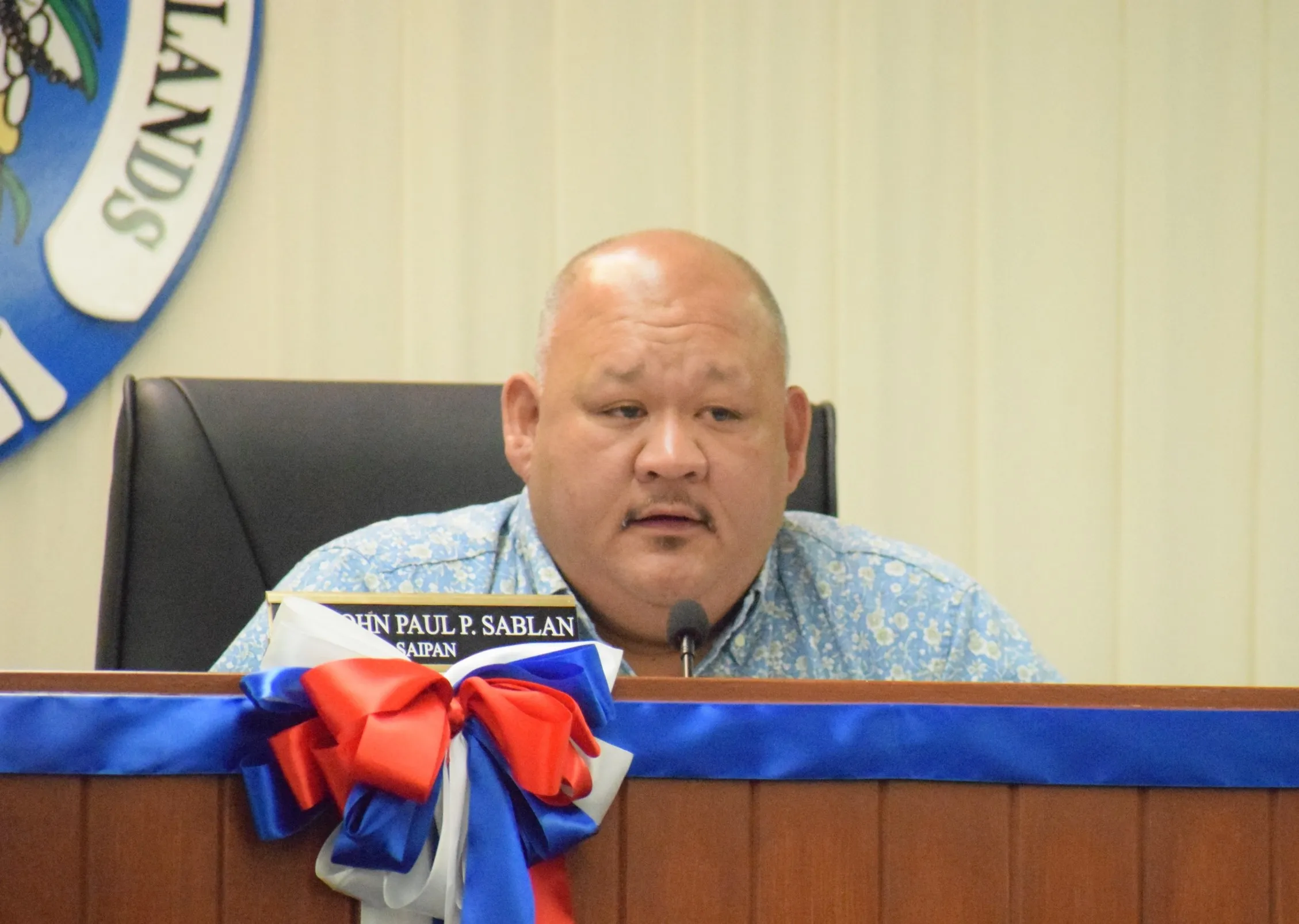
Sen. Guthertz said the Executive and Legislative branches must work together, and she and other lawmakers agreed Guam must develop a strong “one voice” position. She also pointed out that a resolution was passed, which stated Guam’s position regarding the buildup was endorsed by the 30th Legislature, the governor and Delegate Madeleine Bordallo, describing the action as “finding common grou nd in all levels of government.”
