


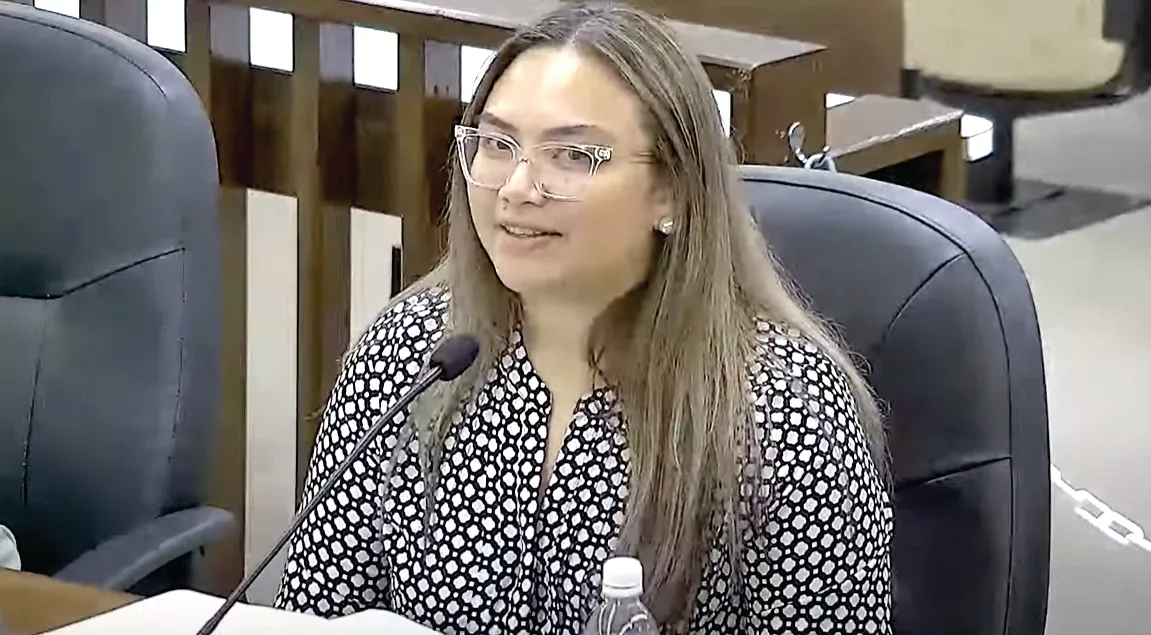
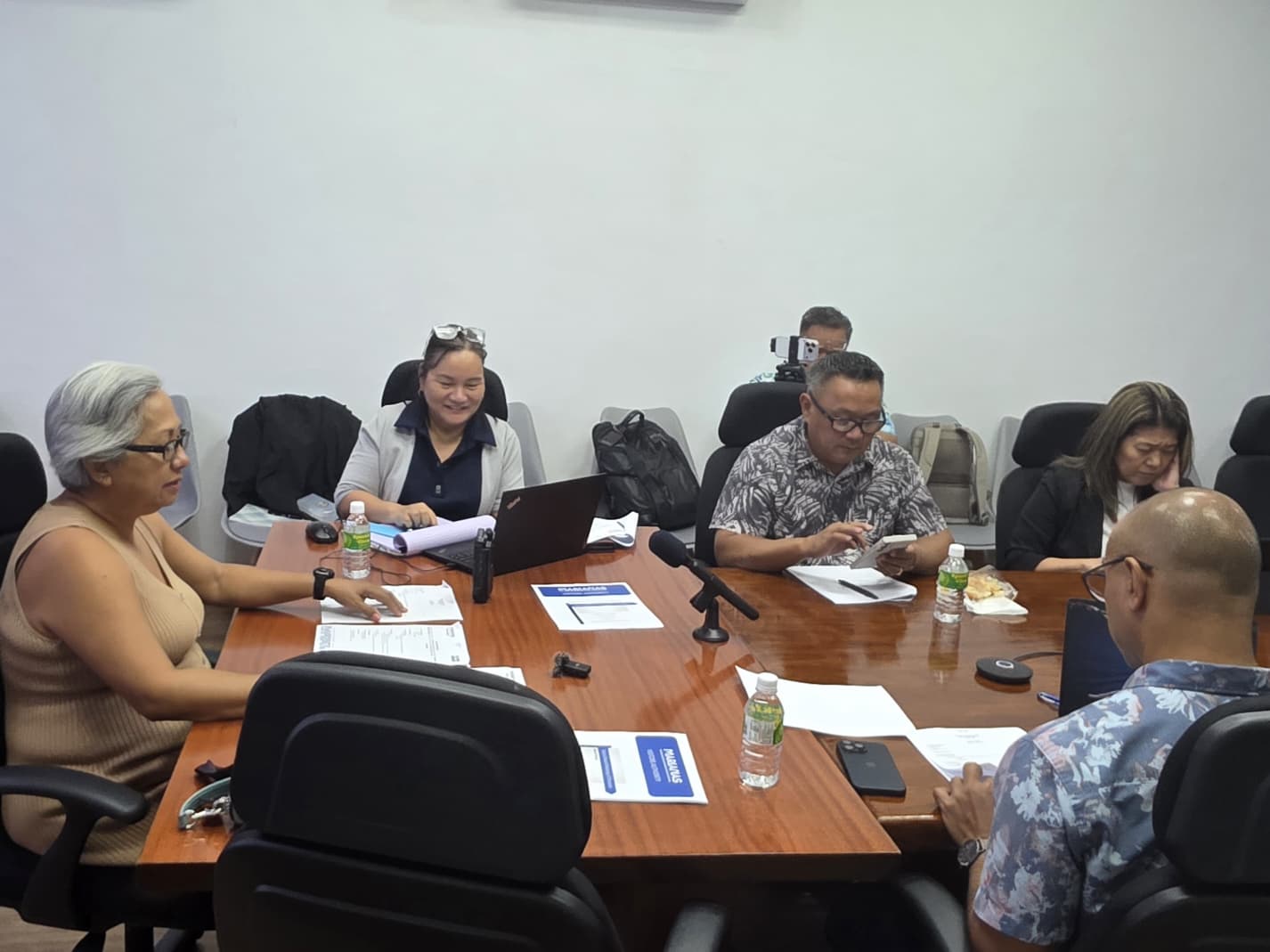




Only one resident had some concerns about the project which was the subject of the public hearing conducted by the Zoning Board at the multi-purpose center on Thursday.
Robert Jones, Triple J CEO and chairman, said there are five lots involved in the project.
The owners of four lots are already onboard but Blue Water Homes is still negotiating with one landowner, he said.
If Blue Water Homes cannot develop all 80 units because of land issues, it will construct 24 two-bedroom and 24 four-bedroom units instead. The 32 three bedrooms will be developed in another location, Jones said.
Letters of support
Zoning Administrator Therese Ogumoro said they received letters of support for the project.
According to Esther S. Ada, Retirement Fund deputy administrator, the “project will provide housing opportunities to the local people.”
She added, “I have seen and felt the struggles that the commonwealth government has been going through in trying to provide even the most basic services of education, health, and safety to the people of the commonwealth.”
She said Blue Water Homes illustrates Triple J Enterprises’ continuous commitment to the commonwealth and Jones’ “faith that the commonwealth’s economy will rebound if we continue to invest in our future.”
Ada said the project’s architectural design blends cultural characteristics and its extensive landscaping will make the location aesthetically appealing to the community.
Mike Sablan, a Triple J executive, said the project will have 112 ground-level parking spaces, two structures, two elevators and two sets of stairs.
Each unit will have a 1,300 to 1,500 square feet area, he said.
Its amenities include ocean view balconies, solar water heaters, energy-efficient appliances, reverse-osmosis water purification system, on-site power generator, on-site water catchment and storage and four ADA units.
“Our concept is to develop a family-oriented residential complex on the beach and in walking distance to schools, stores, restaurants, churches,” he said.
He said that they wanted to “recreate the village of Chalan Kanoa which was the capital of Saipan before.”
More jobs
Jose R. Lifoifoi, United Micronesia Development Association Inc. chairman, urged the zoning office to expedite the review and approval of Blue Water Homes’ application.
“I am pleased to learn that additional quality homes are contemplated to cater specifically to our low-income residents on Saipan,” Lifoifoi said in his letter to Ogumoro.
He said aside from the benefits to residents, the funding for the project will come largely from federal government sources which means that “new capital will enter the commonwealth’s economy and create general economic activity badly needed in our islands.”
Sablan said the $30 million residential housing complex project is funded through the low-income housing tax credit program of Northern Marianas Housing Corporation.
Throughout the span of the construction period, the project will generate 358 jobs which will mean $11 million in wages and $7 million taxes that will go directly to the CNMI government, Sablan said.
Concerns
John White, who resides close to the proposed site, expressed some of his concerns.
These included the excessive height of the building, the safe disposition of water runoff, the discharge of sewer and wastewater, fuel storage and spill, noise emanating from standby generators, heavy traffic of vehicles from occupants and beach erosion.
White said he supports the project but “there are numerous unanswered questions which will greatly alter the tranquility of adjacent residences.”
“If the project is approved we will see an 800 percent increase in residences. This is far too excessive,” he said.
White said there are four underground fuel pipes in the site that were originally laid during World War II as a fuel source for Isley Field and supplied by U.S. Navy ships lying offshore.
“There may well be residual petroleum in these pipes. Have cleanup efforts been addressed?” he asked.
He said over the years, as family members in the area constructed their residential houses, munitions and bones were unearthed in the site.
White said the building height should be reduced to a maximum of three floors and that the number of units should be no more than 30.
He also suggested a new design that is conducive to the current land use and will maintain “the existing serene family-oriented atmosphere of the area.”
Project proponents said archeologist will be monitoring the site.
They said the project is outside the 150 feet mean high water mark and has adequate power and water capacity. The sewer line will be connected to Beach Road sewer line, landscaping will be enhanced and green technology will be emphasized, they added.
Social benefits
Former Commerce Secretary Michael Ada said inconveniences should not outweigh the project’s social benefits.
Businessman JM Guerrero also supported the project.
Public Lands Secretary Oscar Babauta who attended the public hearing as a government official and private citizen, said the project will provide affordable housing.
Babauta is hoping that the project proponents and future investors will adopt the rent-to-own scheme.
Sablan said there’s an income eligibility to avail of the residential unit.
“After the compliance period required by the federal law, we will sell the units to tenants,” he said, adding only an indigenous tenant who occupied the unit for 15 years is qualified to buy it.
Assistant Attorney General Kate Fuller, the Zoning Board’s legal counsel, said they will hear all concerns regarding the project.
“We might as well get use to this style of living because it’s coming whether we like it or not,” Century Insurance president Dave Sablan said, adding that the modern generation will be used to living in building.
The hearing was conducted by Zoning Board Chairman Diego Blanco, members Herman Sablan, and Joe Limes.
