


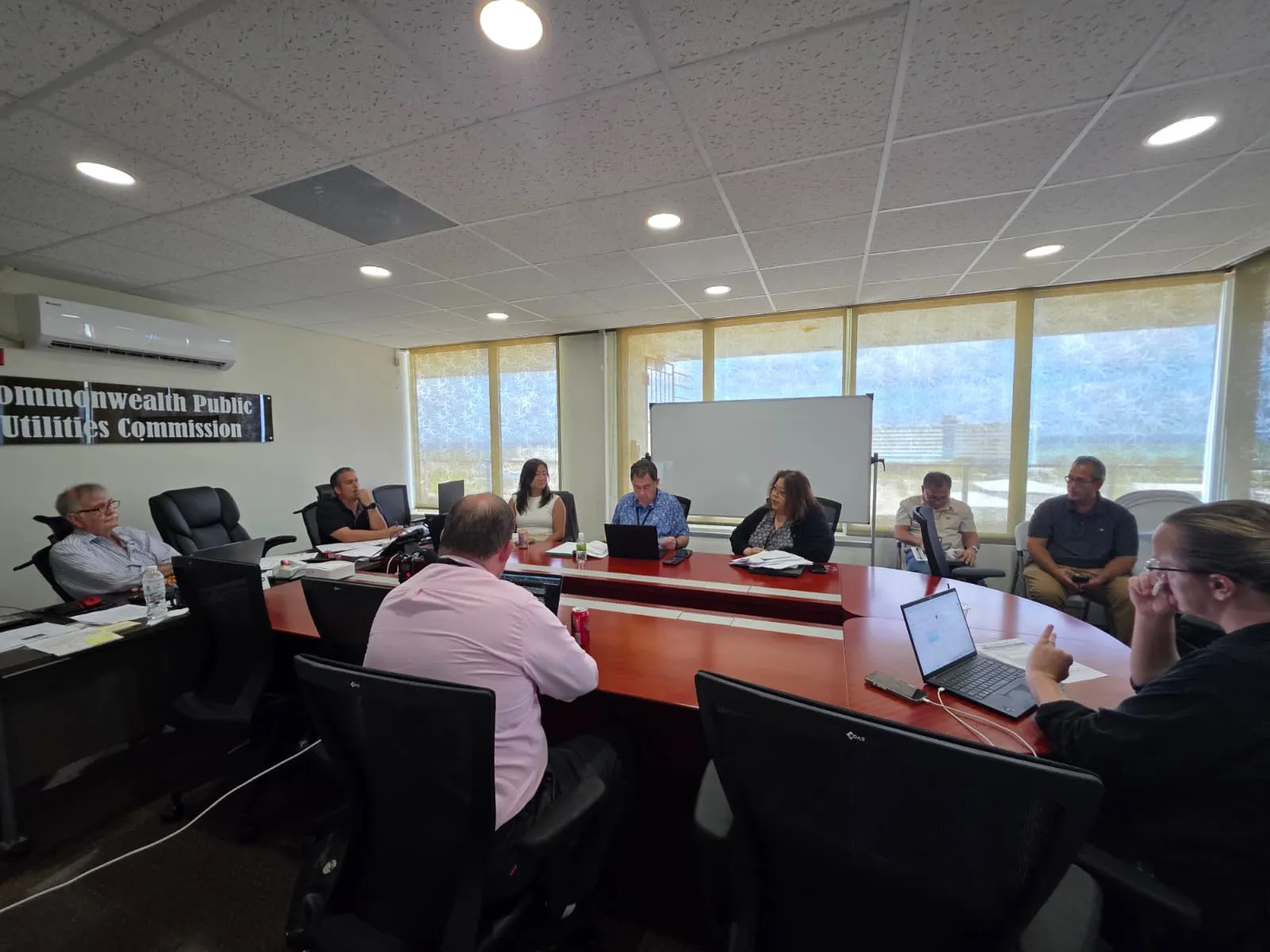




In a meeting yesterday with parties to the case — the Fund, the Attorney General’s Office representing the CNMI government, Gov. Benigno R. Fitial and Lt. Gov. Eloy Inos and attorney Michael Dotts, representing the retirees who sued Merrill Lynch — Govendo asked the parties to submit proposed findings of fact and conclusions of law on Tuesday and the judge will make a decision thereafter.
The counsels presented their competing views on the issue of constitutionality of P.L. 17-51, or the derivative lawsuit measure, whether there’s irreparable harm to the Fund with its enactment, and whether there’s likelihood of success on the merits.
Fund legal counsel Carolyn Kerns said, “We don’t challenge the law when there’s no basis.”
Kern said she believes the Fund has not received due process in the TRO hearing. She said the Fund requested for an expedited hearing, but it did not request opposition that they are not allowed to respond to.
Kern also responded to three points raised by the Dotts: The Fund has not made the proper defendants in this matter; no irreparable injury to the Fund; and the Fund is not going to succeed on the merits.
For Kern, it’s infeasible to name over 20,000 beneficiaries as defendants.
As for irreparable harm, the law has driven away the Fund’s service providers, among which is the actuary, she said.
The Fund, as recommended by Wilshire, was supposed to restructure benefits on Jan. 1, 2012; however, P.L. 17-51 resulted in the Fund losing its actuary Buck Consultants that advised it on Sept. 12 that it may have to reconsider its relationship with the Fund on account of the passage of the law.
The loss of the actuary, Kern said, makes it difficult for the Fund to gather information relating to the restructure of benefits.
For the Fund, the RFP for an actuary may be a protracted process and may delay restructure of benefits and affects longevity of the Fund.
With P.L. 17-51, the Fund, Kern said, lost its investment consultant that resulted in the Fund losing its ability to invest.
“Who could we sue for that? That’s irreparable harm. There is no way that it can be remedied,” said Kern.
She, however, told the court that the Fund has yet to make a determination whether there’s irreparable harm with the loss of the money managers.
But she said, there’s already harm inflicted on the Fund.
“We have actual irreparable harm and threat of irreparable harm,” she added.
She also pointed out that the law affords the beneficiaries the latitude to sue whoever has harmed the Fund but it does not give them the right to sue the government for not paying contributions.
Assistant Attorney General Michael Stanker said even if a TRO is granted “today,” it doesn’t guarantee that everything will be back to normal.
“A TRO does not fix the problem,” he added.
He also told the court that he sees no irreparable harm to the Fund.
Stanker also believes the Fund’s worry “is overblown.”
The small suits, he said, will go away. The service providers, he added, can procure insurance.
“The government cannot just turn over the general fund to the Retirement Fund,” he added.
He said the solution is political.
He added that the contracts are still in existence; the government didn’t deprive the Fund of the right to contract; and the Fund has not demonstrated that the breach of contract has caused impairment.
He added that the beneficiaries’ right to sue does not impair the Fund’s right to sue.
Dotts agreed. He said the Fund should look into mutual funds or get another actuary.
“There is no evidence of irreparable harm. They have a burden. They have not presented evidence there’s irreparable harm,” he added.
He also said the Legislature has passed many laws that affect businesses but have not substantially impaired contracts.
He said allowing P.L. 17-51 to be enforced is in the public’s interest.
