



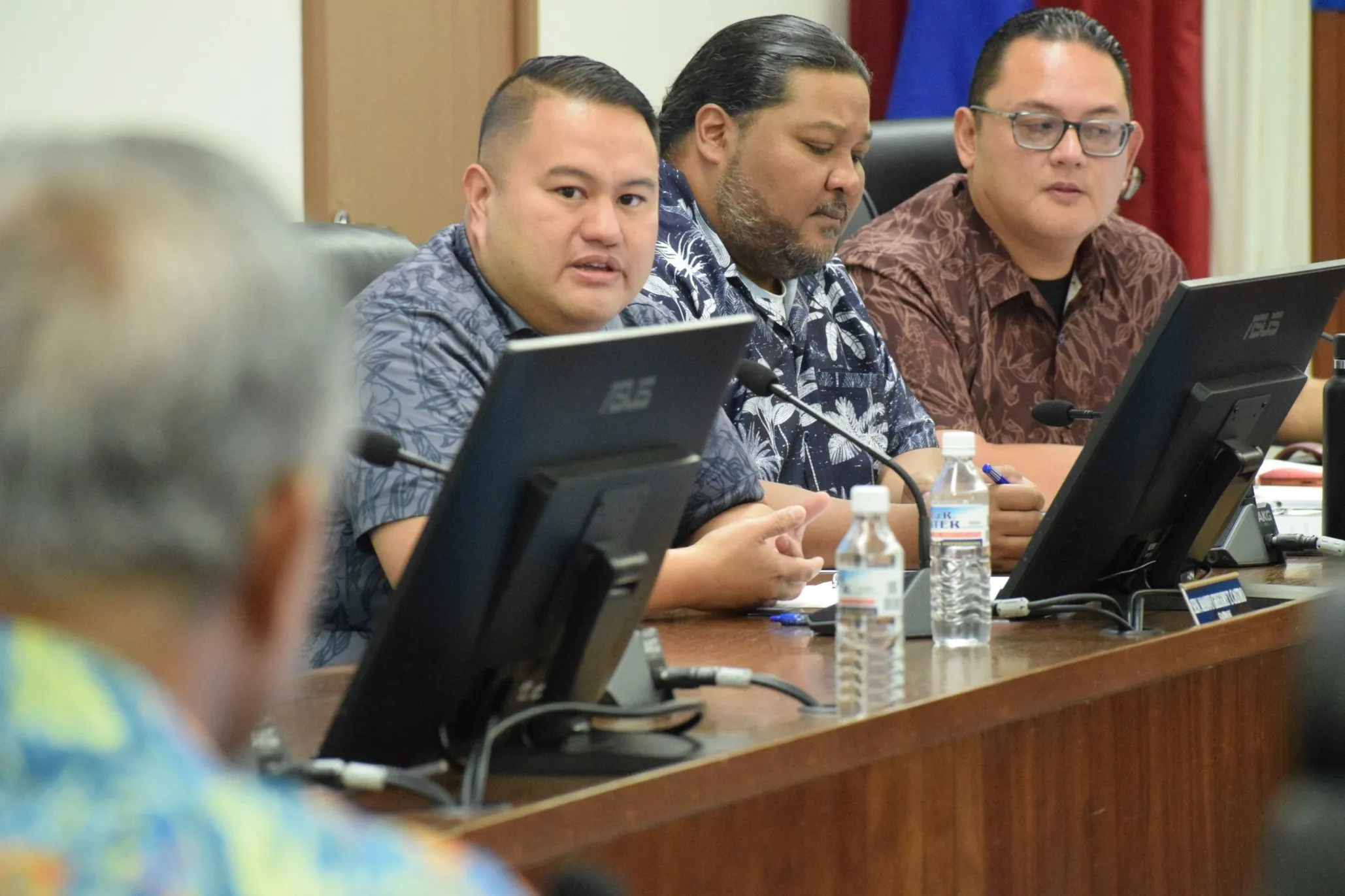



Attorneys Ramon K. Quichocho and Michael W. Dotts spoke against Senate Bill 17-94 while Retirement Fund legal counsels Viola Alepuyo and Carolyn Kern supported the bill introduced by Sen. Juan M. Ayuyu, Ind.-Rota.
Fund Administrator Richard Villagomez also expressed support for the measure saying Public Law 17-51, which allows retirees to sue on behalf of the Fund, has caused harm not only to the retirement agency but to the entire CNMI.
Both parties also answered questions from the senators who will again discuss S.B. 17-94. on Thursday morning.
Fund Board of Trustees Chairman Sixto K. Igisomar and other pension agency officials were on one side of the gallery while the retirees who oppose S.B. 17-94 were on the other side.
Dotts, who was the first to address the senators, said it is “speculative” to say that P.L. 17-51 which Lt. Gov. Eloy S. Inos signed into law last month has caused harm to the Fund. He cited Judge Kenneth Govendo’s ruling, saying the law caused no harm.
Dotts said it was only in the last minute when the Fund joined the lawsuit against Merrill Lynch. The Fund’s complaint, he said, was a “copy cat” of the complaint he filed on behalf of his clients, the retirees who lobbied for the enactment of P.L. 17-51.
The only hope right now is to run after those people who can be held liable and those who can do that are the retirees themselves, Dotts said.
Quichocho said instead of pushing for the repeal of the derivative law, the Fund should investigate why the recently hired money managers and investment consultant suddenly ran away just because of P.L. 17-51.
If they were not doing wrong why would the measure scare them away? Quichocho asked.
Kern said the harm P.L. 17-51 caused the Fund is not speculative. Those who have responded to the Fund’s request for proposals backed out after seeing the derivative law, she added.
No money managers now want to sign a contract with the Fund because of that law, she said.
Alepuyo said the complaint against Merrill Lynch, the Fund’s former investment advisor, has nothing to do with their stand against the derivative law which, she added, hurt the Fund.
Even if the Fund only has three years to live, it still needs an auditor, money managers and investment consultant, Alepuyo said.
Sen. Francisco Q. Cruz, R-Tinian, wondered why the Fund joined the lawsuit against Merrill Lynch if it believes the firm did not harm the Fund.
Senate Vice President Jude U. Hofschneider, R-Tinian, asked if anyone can sue the Fund even without the derivative law, to which Alepuyo answered, “yes.”
Senate Floor Pete P. Reyes, R-Saipan and the author of P.L. 17-51, said he does not understand why the Fund still wants to spend more money on service providers if it only has three years to live.
Senate President Paul A. Manglona, Ind.-Rota, urged the other senators to “seriously think” about their action on the proposal to repeal the law.
