

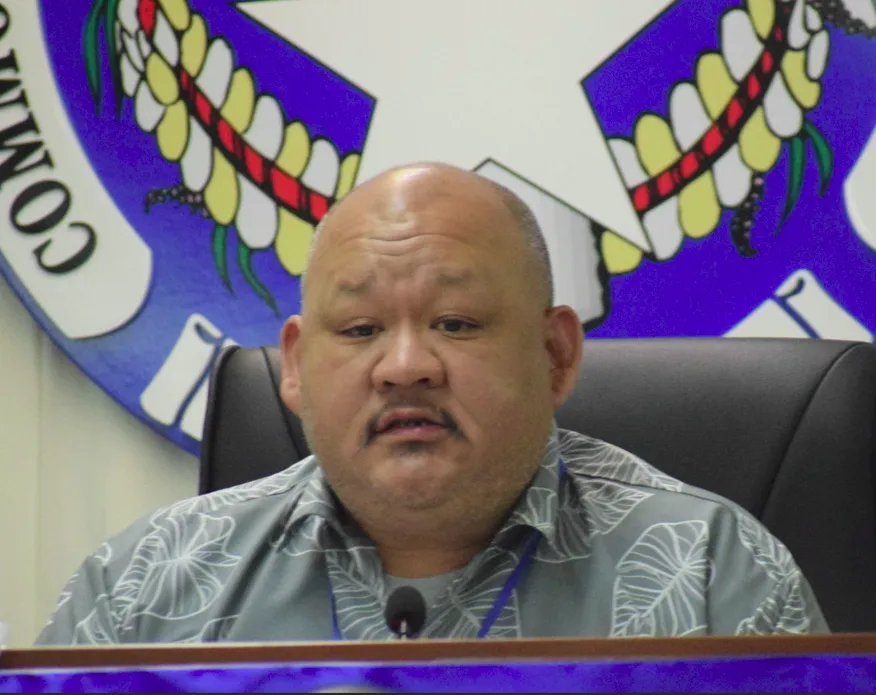


Instead of buying the usual 20-pound bag of rice, a consumer has to make do with a10-pound bag because he also has to pay his power bill, Faisao said.
“We are starting to see a pattern as clients encounter problems about prioritizing between power and food commodities,” said Faisao, who spearheaded the Residential Energy Assistance Challenge/ Low Income Home Energy Assistance Program or REACH/LIHEAP Energy Fair at the Garapan Fishing Base last Saturday.
The program, Faisao said, teaches members of the community how to conserve energy. It is designed to help low-income household reduce their “energy vulnerability.”
The increasing cost of food commodities and utilities, Faisao said, continues to impact not only the health of families but also their safety, especially when their power is disconnected. Even the education of children is affected.
DCCA and its partners have yet to tabulate the results of the survey they conducted among 600 people who filled out questionnaires during the energy fair, but last year’s result already indicated a bigger number of respondents who had to choose paying power bills over food and other commodities.
“Do you prioritize paying your power bill over buying your food and other commodities?” is still the question respondents have to answer in the survey.
Faisao said the number of people who participated this year is 200 more than last year when about 400 participated.
He said they want to refocus their attention on assistance programs.
“Our programs’ purpose is to ensure that they, the recipients, attain self-sufficiency without cumbersome problems,” Faisao said. “It is also the administration’s vision to promote health in the community.”
Although it can be up to $200,000, the funding the CNMI receives from U.S. Department of Health and Human Services is only $50,000.
Sad to say, Faisao said, DCCA might not receive REACH grant next year.
“So let’s keep our fingers crossed and be positive,” he said, adding that he is still proud to say that from 2006 to the present year, the CNMI has been the only recipient of such a competitive grant among the territories.
There are only five grant awardees nationwide — four states and one territory, which is the CNMI.
“Isn’t that something? We are the smallest community compared to other territories but we were able to compete and get it,” Faisao said.
The different booths during the energy fair gave the participants the opportunity to learn different ways of conserving energy at home, Faisao said.
At the same time, the survey conducted that day gave DCCA a concrete basis to determine which of its programs need more funding, he added.
These surveys, he said, help DCCA determine the “poverty threshold level” in the CNMI.
“We need to tackle hunger in the community” while trying to address the increasing utility costs, Faisao said.
“Because what is the use of the laptops that the Public School System distributed to the students if they don’t have power at home?” he said, adding that the internet connection is an additional cost for those using the laptops.
The other government agencies involved in the fair were the Department of Public Health’s Diabetes Coalition, the Women, Infants and Children program, the Department of Public Works’ Energy Office, the Department of Lands and Natural Resources’ Division of Fish and Wildlife the Public School System’s Head Start Program, the Ayuda Network and the Disability Development Council.
DCCA’s partners in private sector were the First Lady Vision, a non-profit organization; YCO Hardware; Gree; and Joeten Ace Hardware.
