


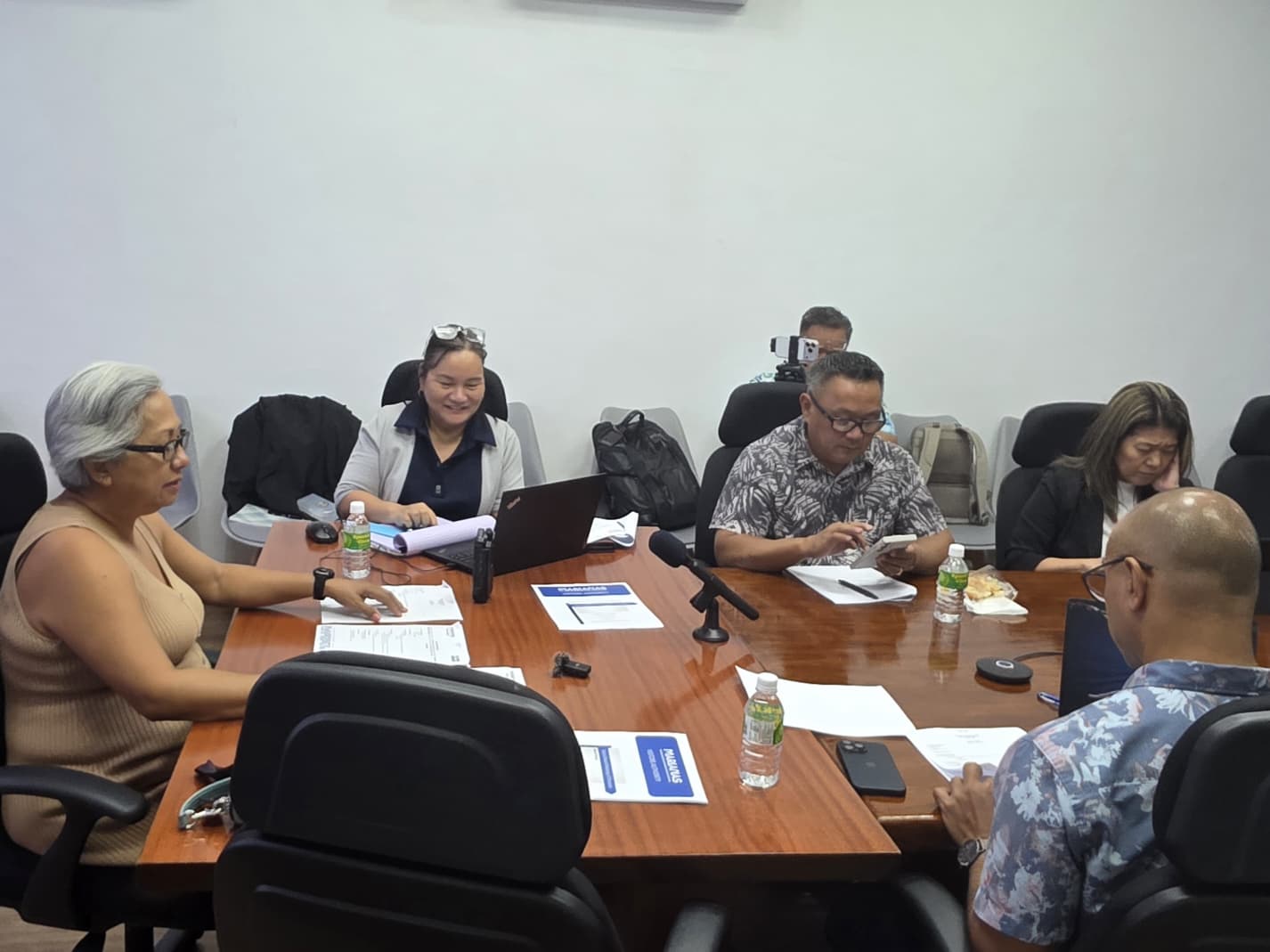




However, Commonwealth Utilities Corp. chief financial officer Charles H. Warren said they have “difficulty” in enforcing disconnection notices.
“A week today the school should be disconnected but we received a lot of attention from ‘higher level’ [officials] so the schools were not disconnected,” he said.
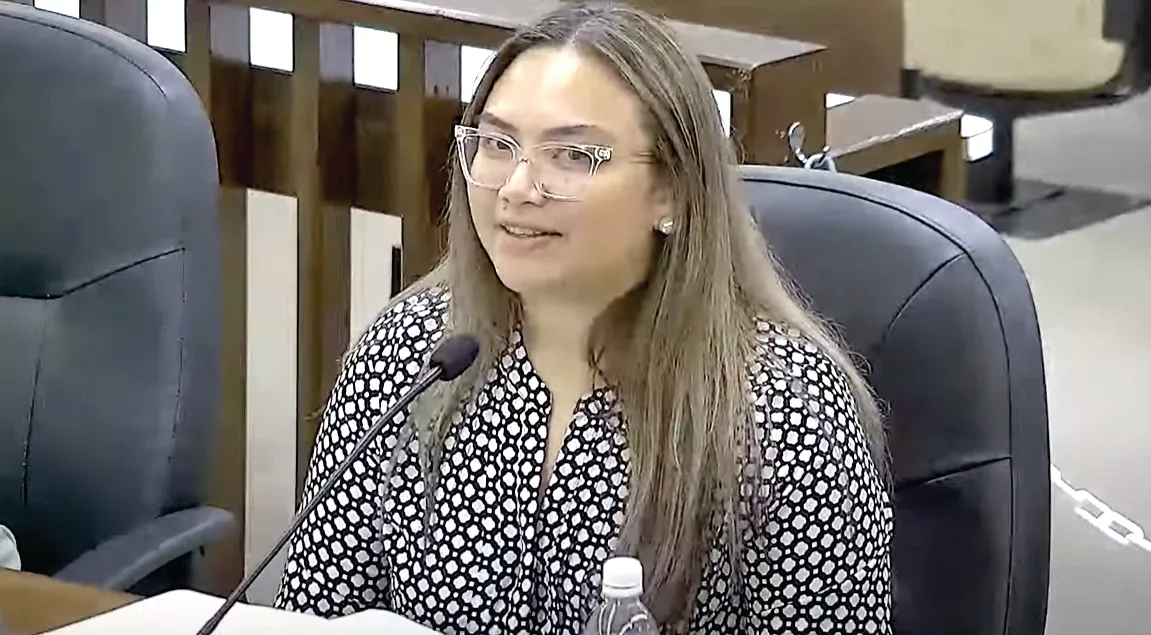
He told the Commonwealth Public Utilities Commission hearing, presided by lone member Viola Alepuyo, that PSS paid $700,000 only.
He said they are anticipating a similar issue with the Commonwealth Health Center.
In its report, CUC said it had $7.025 million in total unpaid receivables from the government as of Sept. 30, 2011.
This included $2.45 million for the central government; $3.67 million for PSS; $117,285 for Northern Marianas College; and $772,511, other agencies.
The government’s unpaid bill for a period of over 75 days reached $3.79 million: central government, $51,834; PSS, $3.06 million; NMC, $37,633; and other agencies, $637,936.
As of Sept. 30, 2011, CUC had $7,714,570 total unpaid receivables from residential, commercial, and government customers. During the same period last year, the figure was $9,187,076, a decline of $1.4 million.
As of Sept. 30, 2011, Warren said residential receivables reached to $13,160,104 but most of them were “old accounts” that should have been written off long ago.
Last year’s figure was $12,072,766.
Warren said the increase in residential receivables can be attributed to the “austerity problem.”
Of the $13,160,140 in receivables, $12,183,277 represented the accounts from Saipan; $417,892, Tinian; and $558,934, Rota.
Warren said $7,855,300 in total residential receivables represented “disputes and easements.”
He said the over 75-day period residential receivable accounts totaled $11,433,913.
For its commercial customers, CUC’s total receivables reached $7,751,761 representing $6,308,840 from Saipan; $1,157,568, Tinian; and $285,352, Rota.
The total dispute and easement amount for commercial accounts was $3,667,073.
The over 75-day period receivables from these customers reached $5,610,109.
Agreement
Warren said they have communicated with the PSS leadership concerning the unpaid bills.
PSS, he added, presented a memorandum of agreement stating that the central government would pay for $1.7 million of the school system’s bill.
But Warren said CUC rejected the MOA since the schedule of payment was not stated.
The PSS leadership asked CUC to defer the power disconnection as it will affect the education of 11,000 school children and jeopardize federal funding.
CUC general legal counsel Deborah Fisher said they are drafting a new memorandum of agreement.
“We don’t believe we will give up such claim,” she said, referring to the school system’s power bill.
Warren said CUC has every right to “disconnect starting today but the reality is it’s beyond my control.”
Subsidize
Alepuyo inquired if the commission has the authority to order CUC to enforce disconnection notices. She also asked CUC if it can start disconnecting facilities of PSS that will not affect school children.
“We don’t want to put the kids out of school. We don’t want to lose federal funding but we also want to make sure to keep PSS on its toes,” she said, adding that the school system should act in good faith and come up with a payment plan.
Alepuyo then asked CUC to enforce its disconnection policy.
She said CUC continues to pay for fuel and its customers are subsidizing it. “That’s troublesome,” she added.
According to Fisher, CUC is facing difficulty disconnecting government accounts because it doesn’t have a board.
The head of CUC, she added, remains the government.
CUC is like a part-time government agency and a part-time autonomous organization, she said, adding that as a result they don’t function as a normal, separate corporate entity.
“As far as enforcing our rules, we are enforcing our rules but when anything you supposedly are enforcing is against your master then I think the legal situation is different and much more difficult for CUC,” she said.
There are political issues involved, she added.
Sen. Juan M. Ayuyu, who attended the hearing, expressed disappointment over CUC’s inability to disconnect delinquent customers.
“The poor get poorer and the rich get richer,” said Ayuyu, Ind.-Rota.
Rep. Frank S. Dela Cruz, R-Saipan, questioned the treatment of average customers who immediately get disconnected if they fail to pay.
“If someone is not paying utilities he should be disconnected just like everyone else. What makes the administration and even the Legislature different for that matter,” he said.
He said the average power consumers are subsidizing the shortfall because of CUC’s failure to disconnect government entities.
“Because the government is not paying now who is suffering? Not only the parent but the children that are not able to do homework because they have no light,” he said.
Government buildings continue to have a power supply even without paying their bills.
“CUC needs to wake up now and start treating each customer fairly,” Dela Cruz said.
Warren said their vendors are the ones who are subsidizing CUC’s costs and not ordinary customers.
“Our vendors are acting as a bank that is not subsidized by customers,” Fisher said.
Warren said CUC pays $1.5 million for fuel every week.
