

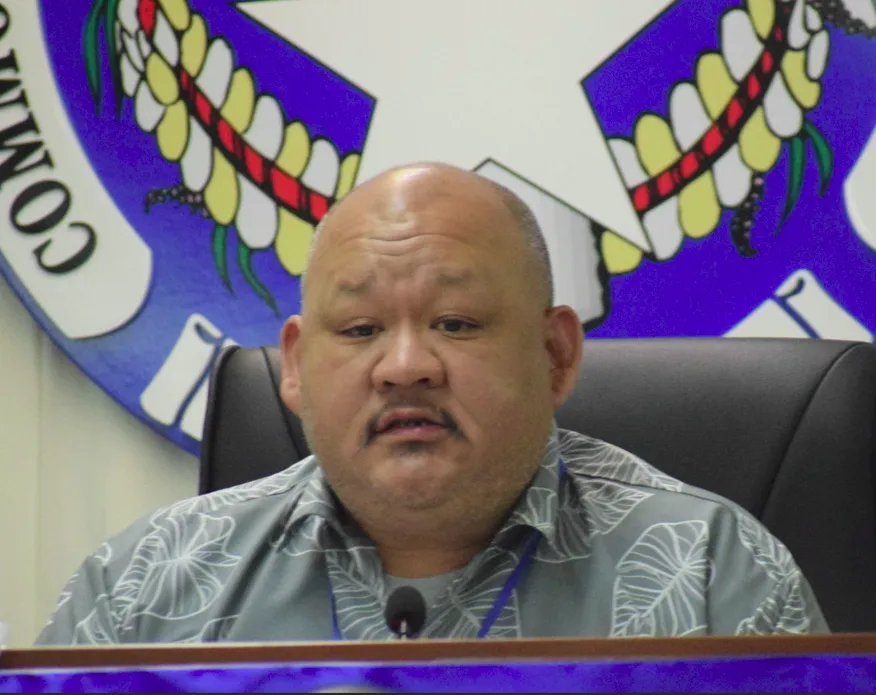


Speaker Eli D. Cabrera said there’s no reason to delay the budget if everybody already agrees that the government is collecting less.
Cabrera, R-Saipan, noted that the governor’s council, composed of the four mayors of the CNMI and the Carolinian Affairs Office, already agreed on the administration’s proposed budget.
He said right now, “there’s not much we can do to bring in new money.”
The lack of flights has crippled the CNMI’s capability to bring in more tourists, he added.
The administration has also made it very clear that the government does not have the financial resources “so whatever is available now, we just have to live with it,” the speaker said.
If there is new revenue later, the governor can submit a supplemental budget.
Cabrera doesn’t anticipate a repeat of last year’s contentious budget deliberation.
There’s nothing left to argue if the budget amount is low, he added.
“We cannot prolong the deliberation just because we are looking for more,” he said.
The House passed the first budget bill early September last year but the Senate sent it back with major amendments, prompting the creation of a conference committee tasked to draft a version acceptable to both houses.
But the deliberations became more contentious and resulted in an unprecedented 10-day partial government shutdown.
Senate President Paul A. Manglona, in a separate interview, said it’s good to know that the House is passing the new budget in two weeks.
“When we do something early, it’s good,” he said.
The House early action will give them more time to review it, Manglona said.
If the Senate proposes amendments, he added, the House will also have ample time to review them so the Legislature can act on the budget months before the Oct. 1 deadline, thus avoiding a government shutdown.
“We now know how difficult it was. The shutdown was not good to anyone. It was the purpose of the Constitution to allow a shutdown to make sure the Legislature will act promptly on the budget,” he said.
Manglona, Ind.-Rota, said the Senate Committee on Fiscal Affairs has been working on its own version of the FY 2012 budget.
“I told [the chairwoman, Jovita M. Taimanao] that although the House will pass the budget bill first, we should be on top of the issue and we don’t have to wait for the House,” he said.
He also stressed the importance of identifying essential employees before a shutdown happens again.
For his part, Sen. Frank Q. Cruz, R-Tinian, said he does not want to just follow whatever is passed by the House.
He said they will have to look at the budget bill and review it thoroughly before they act on it.
