




(The Nature Conservancy) — Researchers from the Palau International Coral Reef Center have completed a new round of coral restoration work in Ngaraard State, in northern Palau. The team identified and planted corals that naturally tolerate higher temperatures, aiming to help reefs recover and better withstand future marine heatwaves.
This work is part of a collaborate project between PICRC, Stanford University and The Nature Conservancy, Micronesia and Polynesia, a three-year project funded by the G20 Coral Research & Development Accelerator Platform or CORDAP, titled Scaling up identification, protection, and local management of coral reefs resistant to future climate stress, aimed at building the capacity of Pacific Island researchers to identify and manage climate-resilient reefs.
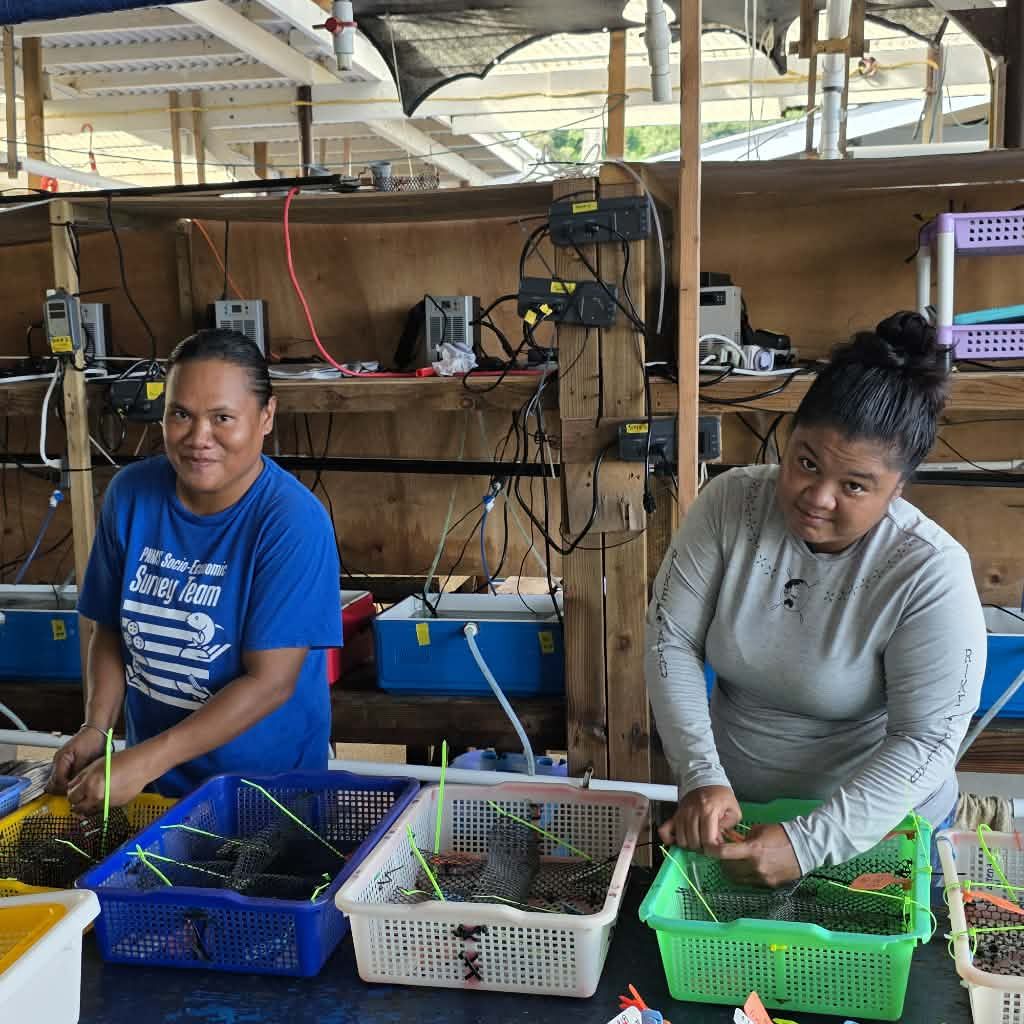
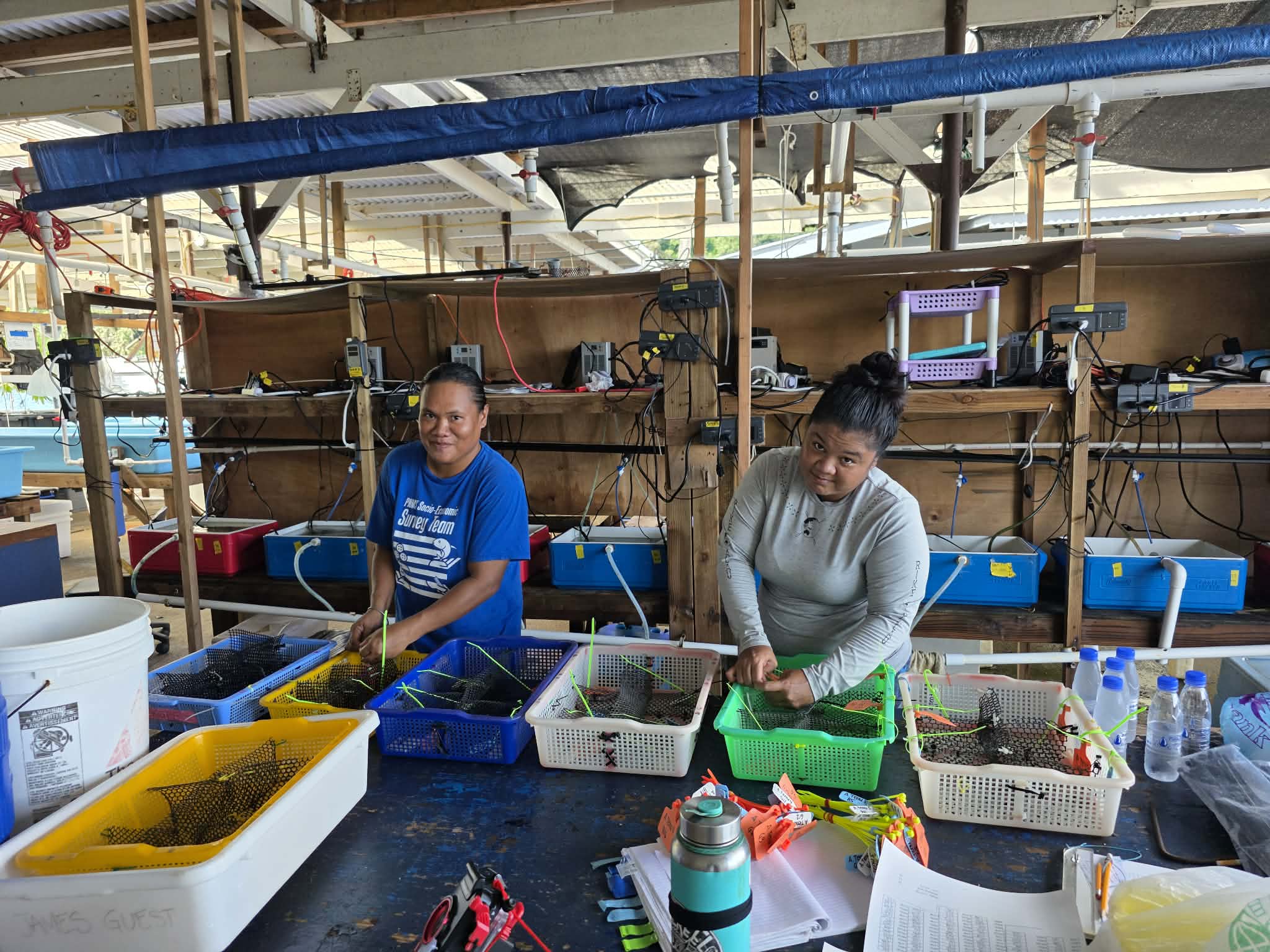
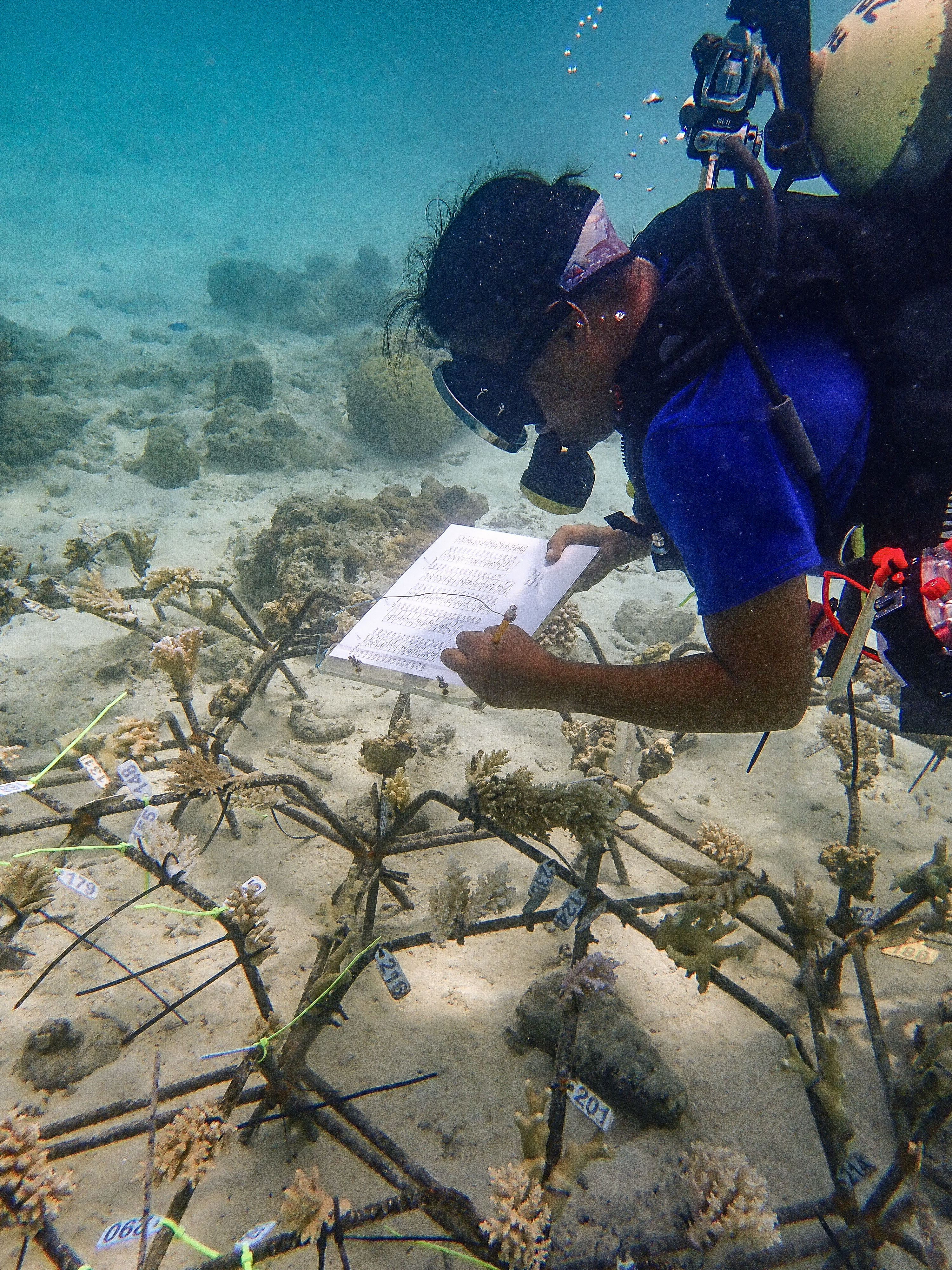
PICRC researchers Dawnette Olsudong, Mengiau Sasao and Dr. Jue Lalas led the recent activity to collect coral fragments from source colonies from Ngaraard, test their heat tolerance in PICRC’s lab, and outplant them onto the restoration site. So far, the team has outplanted about 1,000 corals from 24 species. The outplanted corals are regularly monitored to track their survival and growth and to compare how well laboratory results match real-world conditions.
Dr. Yimnang Golbuu, coral resilience director at The Nature Conservancy, Micronesia and Polynesia, emphasized the broader significance of the work:
“This work in Ngaraard is more than coral planting — it is about safeguarding the future of our reefs and the communities that depend on them. By combining the expertise of PICRC, Stanford University, and The Nature Conservancy, Micronesia and Polynesia, we are building a powerful partnership that blends local knowledge, cutting-edge science, and global support. Together, we are demonstrating that resilience is not just a scientific concept, but a shared commitment to ensure Pacific reefs thrive in the face of climate change.”
The restoration work in Ngaraard will continue in the coming years, with additional coral testing, outplanting, and site assessments planned, along with broader efforts across Micronesia under the CORDAP project. More activities that will involve local community members in the restoration efforts will also be conducted.
To learn more about the project Scaling up identification, protection, and local management of coral reefs resistant to future climate stress, visit CORDAP at https://shorturl.at/gVl82
