




By Bryan Manabat
[email protected]
Variety News Staff
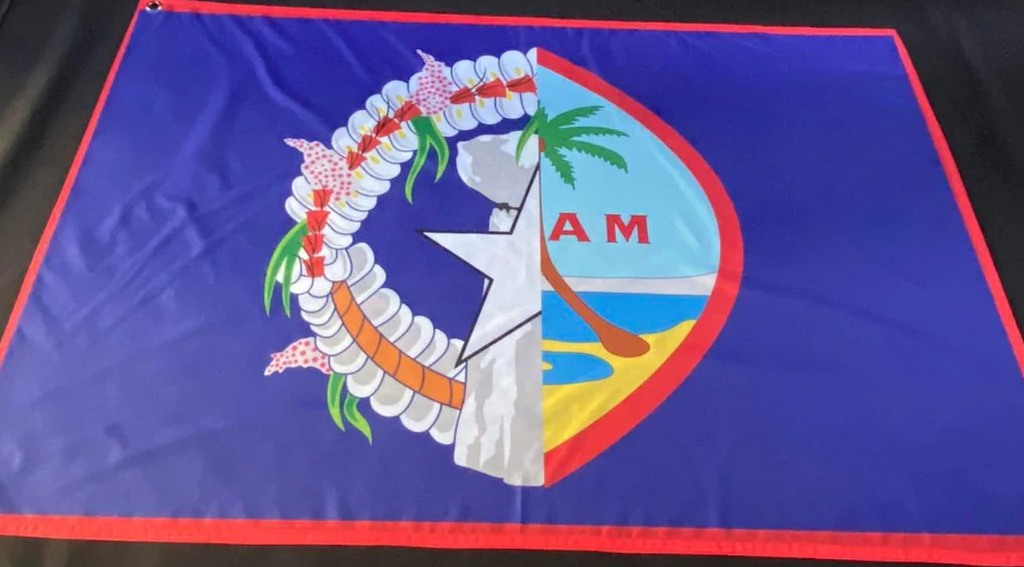
AS conversations about Guam–CNMI statehood and political union resurface in U.S. policy circles, a little-known federal statute underscores Washington’s intent to support such a move without reducing benefits to either territory.
48 U.S.C. § 1844 authorizes and directs federal agencies to ensure that if Guam and the Commonwealth of the Northern Mariana Islands unify politically, residents will not lose rights, entitlements, or federal funding.
The law requires that:
• No federal action may discourage unification.
• Existing federal funds and programs for Guam or the CNMI must continue without disruption.
• Where differences exist in benefits or matching grants, the most favorable terms must apply to the unified entity.
The statute was passed as part of Public Law 96–597 on Dec. 24, 1980, which authorized appropriations and technical assistance for American Samoa, Guam, the Northern Marianas, the U.S. Virgin Islands, and the Trust Territory of the Pacific Islands. It also laid the groundwork for closer integration of Guam and the CNMI, reflecting congressional intent to encourage stronger ties between the two territories. While it does not itself create a union, it sets the legal framework for how federal agencies must respond if Guam and the CNMI decide to unify.
The provision has gained renewed relevance as conservative think tanks and regional analysts discuss potential statehood or integration as part of a broader U.S. defense strategy in the Pacific.
Asked about Guam–CNMI reintegration, Dr. Robert A. Underwood, co-founder of the Pacific Center for Island Security, said the issue is complex and rooted in history.
“But the question is, how can Guam and the CNMI work together moving forward? In that sense, they can work together on specific issues,” Underwood said. “It seems to me that deep seabed mining is one of those issues. Of course, military buildup is another, because both Guam and the CNMI are focal points in the second island chain conversation. And because it’s the focal point for the second island chain conversation, and both want economic advantages from military activity, then why aren’t they planning together? Or how could they plan together to maximize that benefit?”
Underwood is a former Guam delegate to the U.S. Congress and a past president of the University of Guam.
Bryan Manabat was a liberal arts student of Northern Marianas College where he also studied criminal justice. He is the recipient of the NMI Humanities Award as an Outstanding Teacher (Non-Classroom) in 2013, and has worked for the CNMI Motheread/Fatheread Literacy Program as lead facilitator.
