




By Bryan Manabat
[email protected]
Variety News Staff
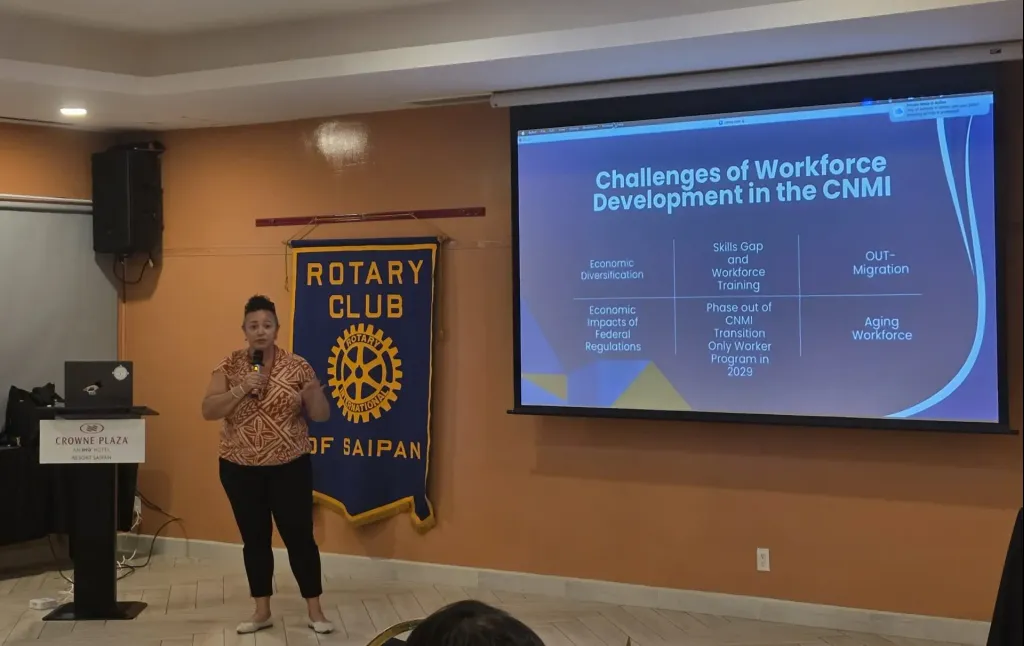
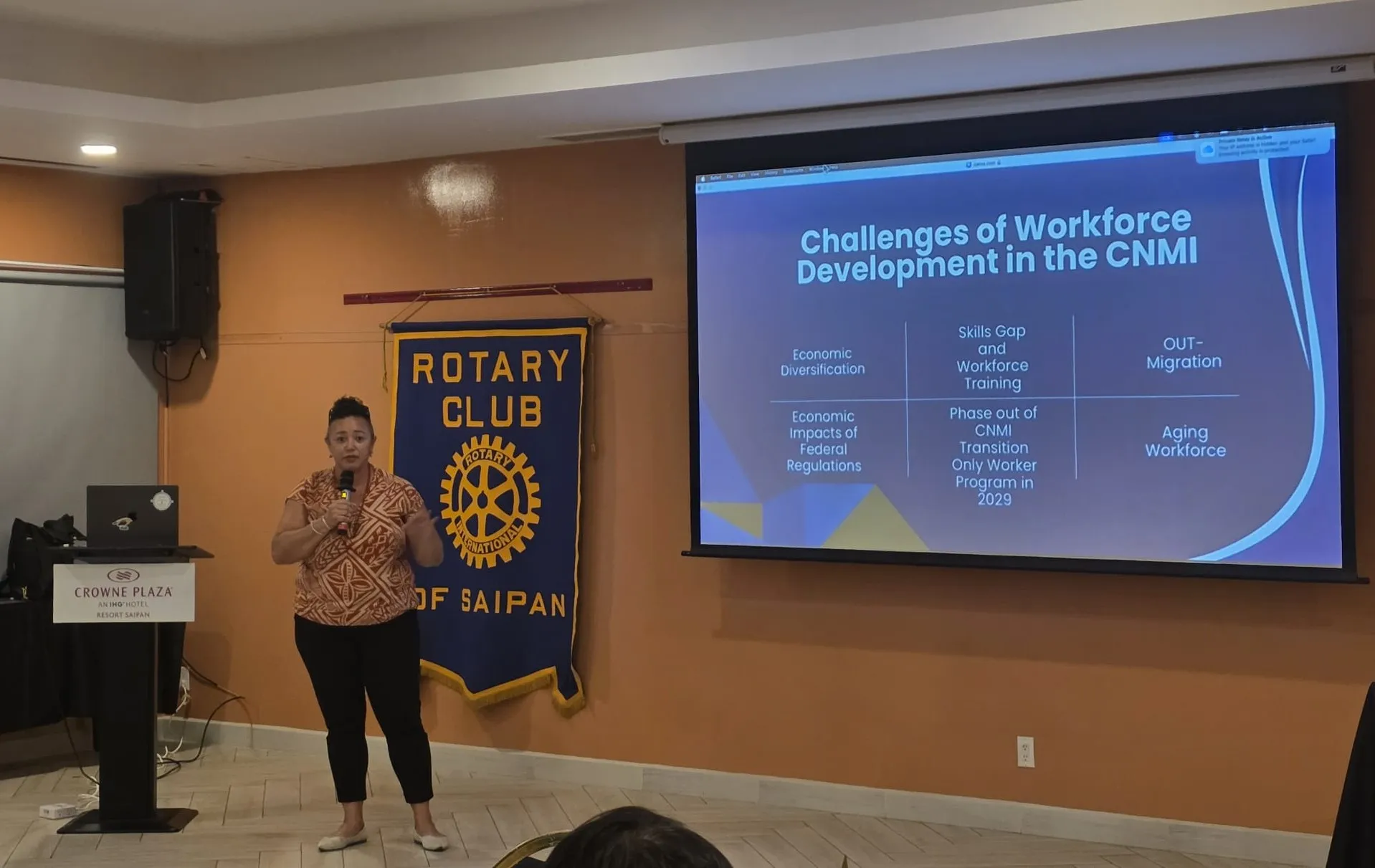
PHARMACEUTICAL manufacturing, electric vehicle technology, renewable energy, agriculture, and a growing interest in regenerative tourism are among the industries showing new promise in the Northern Marianas, according to CNMI Labor Secretary Leila Staffler. But she said the Commonwealth must strengthen its workforce data and training systems if it hopes to attract and retain those investors.
Staffler said her department’s ability to support economic planning depends heavily on accurate, timely reporting from businesses — an area where compliance remains uneven.
“When I think about what we do and what we collect, we are a key part of any economic circle. How do you make predictions? How do you plan forward? It’s really important that we have good data,” she said during a recent Saipan Rotary Club meeting at Crowne Plaza Resort.
While job vacancy reporting is strong and “pretty vetted,” Staffler said the CNMI’s quarterly census of employment continues to suffer from low participation.
“Since I came to Labor, I won’t lie, there have been some gaps in what we collect,” she said. “The census of employment is where we have a lot of noncompliance among businesses, largely because they may not be aware of the rules. I can relate — I was a small business owner once, and I didn’t know this was a requirement either.”
Staffler emphasized that the census is the only real-time quarterly dataset showing the number of actual jobs in the community. Without it, economists and policymakers lack a clear picture of the labor market.
“It is something that could show us trends we don’t see yet because we don’t have someone analyzing it the way they could,” she said, adding that improving compliance will be the department’s primary focus over the next year. The next census report is due Jan. 31.
Despite the data challenges, Staffler said the CNMI has real opportunities ahead. She pointed to a recent Commonwealth Economic Development Authority-led investment mission that engaged companies in pharmaceutical manufacturing, EV technology, and renewable energy. Agriculture continues to show potential, and regenerative tourism — a model that emphasizes environmental restoration and cultural stewardship — is beginning to gain traction.
“These are areas that we’d love to see expand our economic impact and diversify the economy,” she said.
But she said attracting new industries is only half the equation. The Commonwealth must also ensure that its workforce is prepared.
“We need to know what skills these types of jobs require, so that we can start developing programs now, and offer those trainings to the people they want to hire when the time comes,” she said. “Otherwise, they’re going to have to bring in more workers from outside, and that’s where the challenge lies.”
Whether workforce readiness becomes a deciding factor for investors remains uncertain, she added, but it is a critical issue the CNMI must confront as it courts emerging industries.
Staffler said her department will continue working with training partners and urging businesses to comply with reporting requirements to strengthen the Commonwealth’s economic foundation.
Bryan Manabat was a liberal arts student of Northern Marianas College where he also studied criminal justice. He is the recipient of the NMI Humanities Award as an Outstanding Teacher (Non-Classroom) in 2013, and has worked for the CNMI Motheread/Fatheread Literacy Program as lead facilitator.
