





By Bryan Manabat
[email protected]
Variety News Staff
A CONTRACTING population will continue to shrink the local economy, CNMI Labor Secretary Leila Staffler said, underscoring the need for both returning residents and a stable foreign-worker pipeline as federal officials weigh the future of the CW program.
In an interview with reporters last week, Staffler said the CNMI’s labor needs remain acute and that population loss is already driving economic contraction.
“What I do understand and know clearly is that a contracting population equals a contracting economy,” she said. “The more people leave the islands, the fewer we have to do the work that’s needed, and the more our economy will contract.”
Staffler said bringing home CNMI students and residents who have gained skills abroad is a priority, but foreign labor will still be needed to fill gaps.
“I definitely think that there is a need for labor regardless of where it comes from,” she said. “Finding ways to bring people home…but also making sure that they have access to jobs when they do come home — those are the things that I’m interested in.”
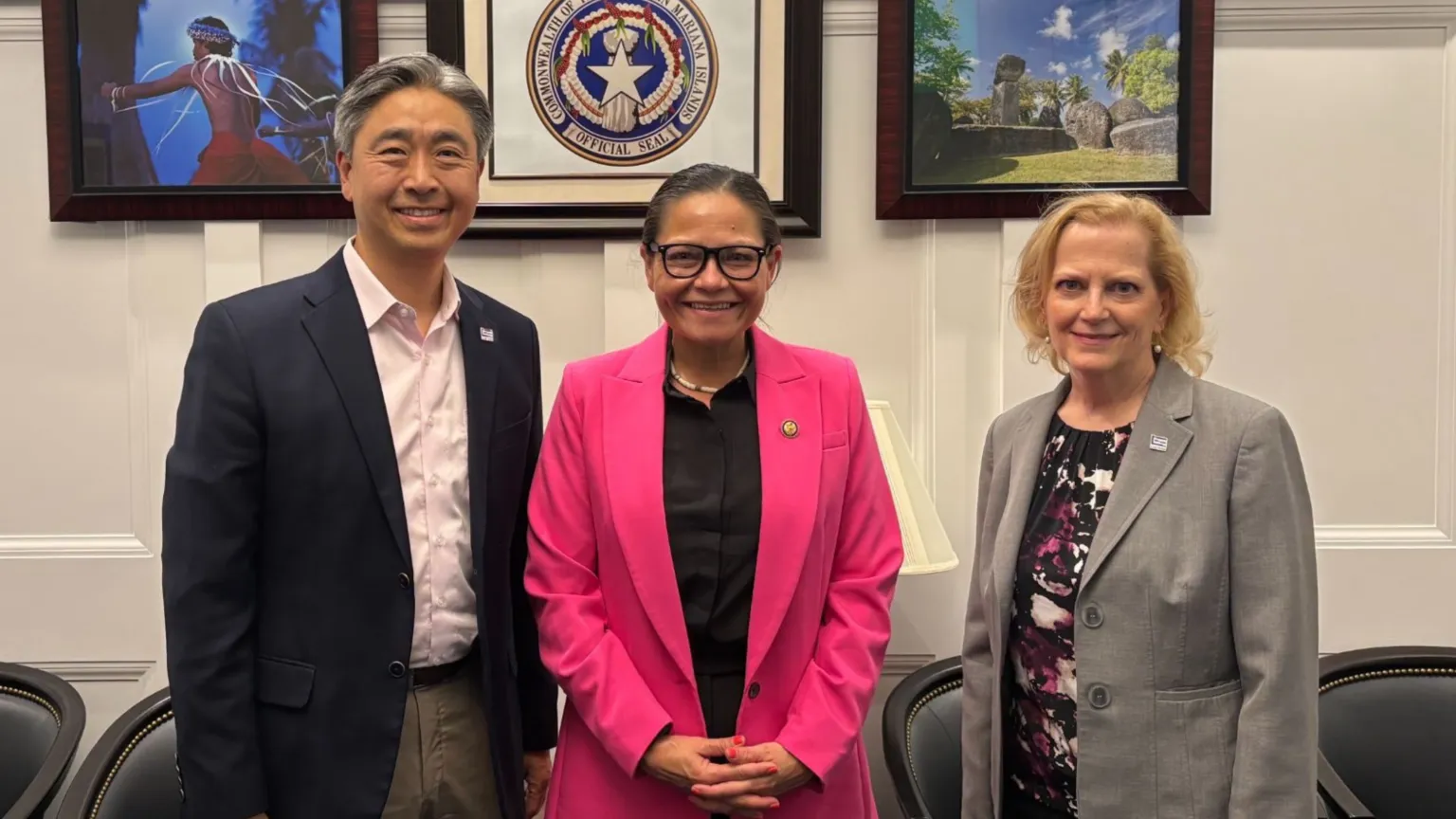
Staffler said she remains in communication with U.S. Congresswoman Kimberlyn King-Hinds’ office, though there are no new updates on CW program negotiations.
“As soon as she went into office, she reached out to try and find out what kinds of needs there are,” Staffler said. “I gave her as much information as I could that would help inform any decisions or negotiations she would be making on behalf of the Marianas.”
Any extension or modification of the CW program, Staffler noted, is ultimately a congressional decision. She said the program has areas that could be improved, including employer requirements that may unnecessarily exclude local workers.
The CNMI-Only Transitional Worker program, known as CW-1, allows employers in the Commonwealth to hire foreign workers who do not qualify for other U.S. nonimmigrant categories. It was created to help the CNMI transition from its former local labor permit system to the federal immigration system.
“If you’re a business looking for a dishwasher and requiring three months of experience, I really have a hard time with that,” Staffler said. “How is anybody ever going to have experience if they don’t even have a chance to get the opening position?”
Staffler also criticized the federal requirement for a $100,000 bond under a Trump-era executive order, calling it a major obstacle for businesses trying to transition workers to other visa categories.
“That’s definitely a big barrier,” she said. “The H‑1B visa is critical for construction needs, but if it costs that much, I don’t know how many businesses can afford it for the number of construction workers we need here. Construction has been our top job vacancy for 20 consecutive years.”
She said the CNMI’s geographic isolation and economic vulnerability should be considered in federal workforce decisions.
“We are unique. We cannot fit into the same box as the states,” Staffler said. “Enticing U.S. citizens to come out here is hard because of our distance. $100,000 for visas is a major burden for a struggling economy.”
On the CW‑1 touchback rule, Staffler said she has not received recent concerns from employers. Some workers must depart the CNMI for a period before renewing, depending on their status and time spent in the program.
“To be honest, I have not heard much from businesses on that topic,” she said. “Immigration is handled by USCIS, and the CNMI Department of Labor has no jurisdiction, so I’m not really aware.”
In related news, Congresswoman Kimberlyn King-Hinds she wrote to the Department of Homeland Security last October about the impact of Presidential Proclamation 10973, which increased H‑1B visa application fees to $100,000 for new applicants.
King-Hinds said she raised concerns about how the change affects critical service areas in the CNMI that rely on skilled nonimmigrant workers.
“This week, we received a response outlining DHS’s position and the limited process available for exemptions,” she said. “DHS confirmed exemptions are extremely rare, but a formal pathway exists for employers to request one. Requests must include supporting documentation sent to [email protected]/. DHS also provided guidance on how Proclamation 10973 is being implemented.”
She said her office will continue monitoring the impact of the changes on employers and workers in the Marianas and will provide updates as more information becomes available.
Bryan Manabat was a liberal arts student of Northern Marianas College where he also studied criminal justice. He is the recipient of the NMI Humanities Award as an Outstanding Teacher (Non-Classroom) in 2013, and has worked for the CNMI Motheread/Fatheread Literacy Program as lead facilitator.
