





By Bryan Manabat
[email protected]
Variety News Staff
A LOCAL investor has accused the Commonwealth Utilities Corp. of abusive and opaque billing practices after receiving a retroactive electricity bill of about $275,000 tied to alleged meter reading failures more than a decade old.
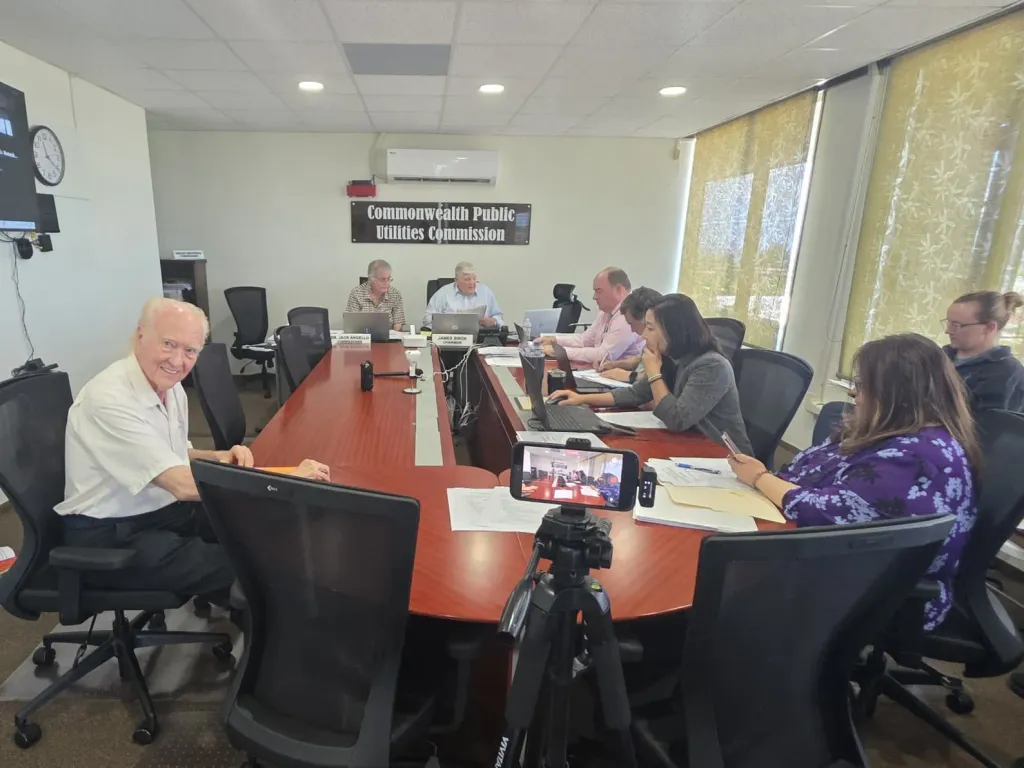
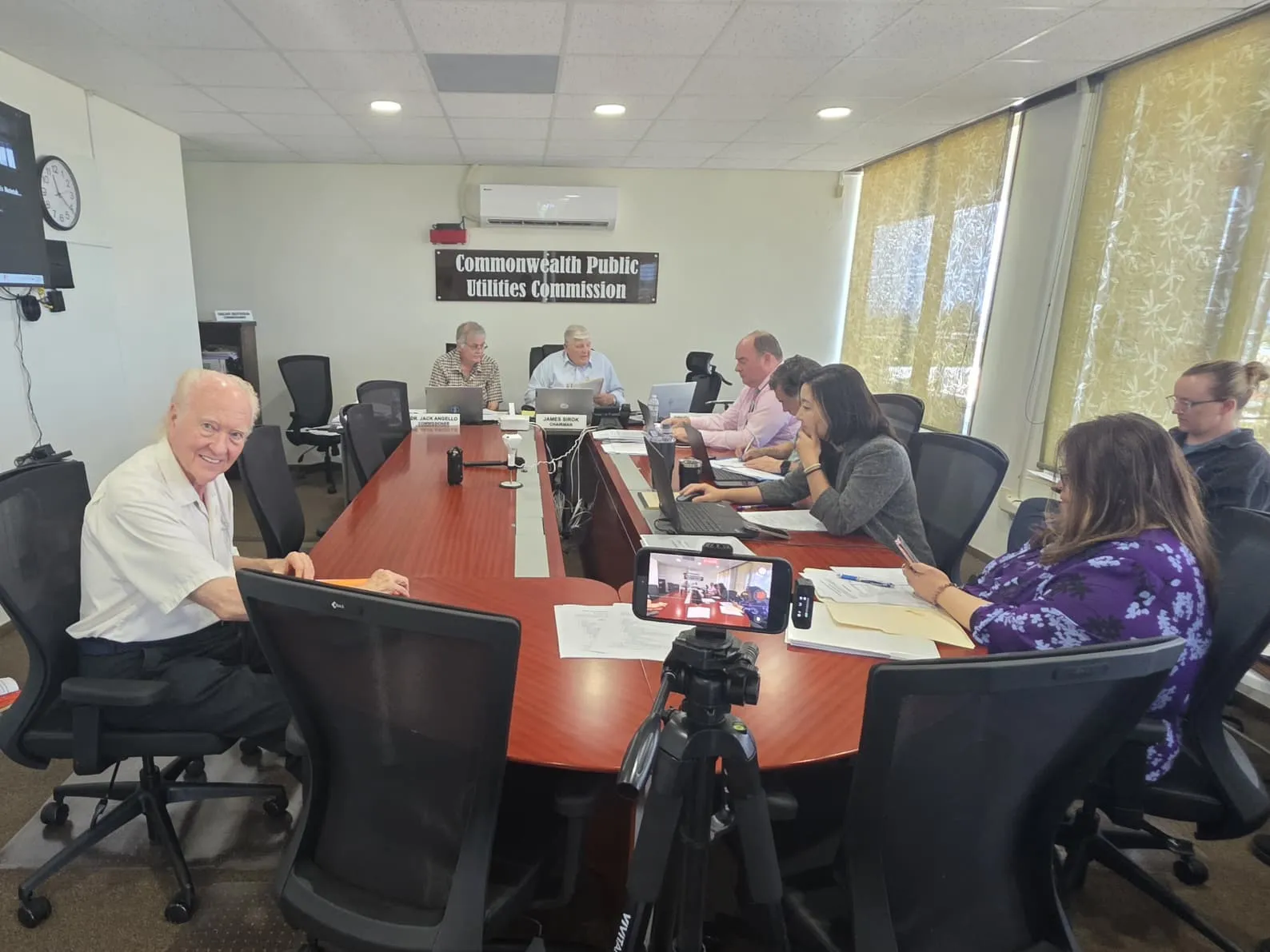
Dr. Gene Eagle‑Oden, an 80‑year‑old former oncologist and 38-year CNMI resident, appeared before the Commonwealth Public Utilities Commission on Friday to challenge what he called a “fabricated” and “unfair” back billing by CUC.
Eagle-Oden owns properties on Saipan and Rota and formerly operated Mango Hotel & Resort. He said the dispute centers on two of 42 electric meters at the resort. According to his testimony, CUC failed to read or properly register those two meters for 12 to 20 years, while he and subsequent owners consistently paid monthly bills on the other 40 meters, averaging about $300 per meter.
In 2021 — long after the relevant period and multiple ownership changes — Eagle-Oden said he began receiving lump sum “demand” letters, not itemized bills, totaling roughly $275,000 for the two meters. One meter was billed at about $102,000; the other at $175,000.
Eagle‑Oden presented a statement from a senior CUC customer service representative acknowledging that the two meters “were never updated in our system,” “were not functioning,” and “were never billed” until later updates were made. He argued the statement amounts to an admission that CUC’s errors created the issue and that the charges are estimates, not recorded usage.
“There’s no way two meters would have come up to $275,000,” Eagle‑Oden told commissioners, noting that the documents he received are essentially ledger snapshots or computer printouts labeled “ledger” or “all periods,” with no breakdown of usage, rates, or calculations. “Who in this room would like to get a bill for 12 years ago, lump sum, no real justification, no real itemization of that bill?”
Eagle‑Oden and his attorney, James Kingman, also criticized CUC regulations that allow unlimited retroactive billing with no statute of limitations, even when non‑billing results from CUC’s own negligence.
Kingman said CUC is “obligated to show its work, and it doesn’t,” not only in back billing disputes but also in its fuel adjustment charges. He warned that opaque billing practices, combined with the threat of large retroactive bills, undermine public confidence and deter outside investors who cannot reliably price the cost of doing business in the CNMI.
He cited a similar Superior Court case involving Coca‑Cola Co., which reportedly received a $575,000 back bill covering about 20 years. Judge Teresa Kim‑Tenorio criticized CUC’s demand letters as deficient and remanded the matter back to the utility. Kingman said despite court orders highlighting these problems, CUC has continued sending similar demand‑style letters, including in Eagle-Oden’s case.
Eagle-Oden accused CUC of operating as a “criminal organization…preying on the people,” through what Kingman described as an “extractive” system that relies on selective enforcement, opaque formulas, and limited meaningful recourse for ratepayers. They also raised broader concerns that CUC’s inability to collect millions of dollars in overdue payments from large government entities, such as the Commonwealth Healthcare Corp., shifts costs onto ordinary ratepayers through higher charges and fuel surcharges.
Eagle-Oden highlighted his own solar installations at three executive beachfront villas, saying he has avoided blackouts, maintained stable service, and reduced his CUC bill to about $9 per month. He urged the CNMI government to support individual solar systems islandwide, saying residents should not rely on what he called CUC’s “inconsistent billing” and “erroneous, fabricated, made‑up billing.”
Chairman James Sirok of the Commonwealth Public Utilities Commission instructed Eagle-Oden to assemble a complete packet of documents — including the recent decision by Judge Tenorio — and deliver it directly to CUC by the end of next week.
Kingman urged the commission to fully use its statutory powers to compel records, hold public hearings, and enforce transparent, fair billing standards, warning that without reform, more ratepayers will turn away from CUC and public trust will erode.
Sirok said he received Eagle-Oden’s complaint on Feb. 2. After reviewing the filing and attachments, including the Superior Court decision, he said the threshold under the commission’s rules had been met.
“I’m finding that the complaint provides a prima facie case for us to consider, under Rules 13 and 14,” Sirok said. He explained that once a prima facie case of an unlawful or unreasonable act by a regulated entity is established, the matter proceeds as a formal complaint and must be served on the utility, which then has 20 days to respond.
Sirok added that CUC could resolve the issue under Rule 14, file an answer, or submit a proposed statement of relief before the commission sets the matter for hearing. “It doesn’t mean you’re going to succeed. It doesn’t mean you’re going to fail. It just means that right now, that’s how we’re going to deal with this as a commission,” he said.
CUC counsel Michael Ernest told the commission that the Superior Court decision referenced by Sirok is currently on appeal before the CNMI Supreme Court, cautioning that the utility may face limitations while that appeal is pending.
Bryan Manabat was a liberal arts student of Northern Marianas College where he also studied criminal justice. He is the recipient of the NMI Humanities Award as an Outstanding Teacher (Non-Classroom) in 2013, and has worked for the CNMI Motheread/Fatheread Literacy Program as lead facilitator.
