






SUVA (Fiji Sun/Pacnews) — Fiji’s HIV epidemic is worsening and spreading beyond its initial outbreak groups, Health Minister Dr. Ratu Atonio Lalabalavu has warned in Parliament.
Responding to the President’s address in parliament, Lalabalavu said the latest figures show a sharp increase in HIV cases across the country.
“The latest figures confirm that HIV is worsening and spreading beyond the initial outbreak.”
He said Fiji recorded 2,003 new HIV diagnoses in 2025, compared with 1,583 in 2024, while the national diagnosis rate has surged significantly.
“In 2025, Fiji recorded 2,003 new diagnoses, up from 1,583 in 2024, with the national rate diagnosis rising to 226 per 100,000, up from 13 per 100,000 in 2019 — a 17-fold increase.”
Lalabalavu warned the disease is increasingly affecting women and families.
“Men remain more affected, but the gap is narrowing, showing that infection is increasingly affecting women and families.”
He said the rise in HIV cases among pregnant women shows the virus is spreading within the wider community.
“When HIV is rising in antenatal clinics, it tells us this is no longer an outbreak in one population group — it is increasingly present in the wider community, and babies are now at risk.”
To address the growing crisis, the minister called for a strengthened national response involving multiple sectors of society.
“First, I seek Parliament’s support for a high-level, multi-sector national HIV, STI and BBV response, working in close collaboration with communities, civil society and technical partners, and operationalized through the National HIV Outbreak and Cluster Response Task Force.”
He said stronger mobilization across government agencies would be required as the epidemic spreads beyond initial groups.
“The task force model is working because it brings together the right technical expertise and community reach; however, the epidemic is now affecting the wider community and requires stronger whole-of-government mobilization across the social drivers of infection.”
Lalabalavu also called for an emergency operational approach to speed up the national response.
“Second, I request that government enable an emergency response footing for this national effort, so that we can remove bottlenecks and accelerate approvals for recruitment, procurement, infrastructure, and the enabling legal instruments required to expand services quickly and safely.
“Put simply, we need to move from planning and coordination to visible, sustained delivery on the ground in every division.”
The minister also urged Parliament to commit to a long-term response.
“Third, and most importantly, I am asking Parliament to support a minimum five-year national commitment to this response. This is not a short campaign; it is a multi-year national recovery effort.”
He said a dedicated project management structure would help drive implementation.
“I therefore seek support to establish a dedicated SRH and HIV Project Management Unit to drive implementation, performance management and field delivery under the strategic direction of the task force — so that plans translate into sustained action, year after year.”
Lalabalavu stressed that tackling HIV must remain above politics.
“HIV does not recognize political lines. The country needs an apolitical, united stance that will hold through this year’s election and beyond, so the response remains stable, funded and accountable over the full five-year period required to turn the epidemic around.
“With Parliament’s support — and with the continued leadership of the cabinet — Fiji can still reverse this trajectory, protect mothers and babies, and restore national health security.”
Lalabalavu has revealed that at least one baby died every month from HIV in Fiji in 2025 as the country’s growing HIV crisis increasingly affects newborns.
Lalabalavu said the rise in infections among pregnant women showed the epidemic was spreading beyond its initial outbreak groups and into the wider community.
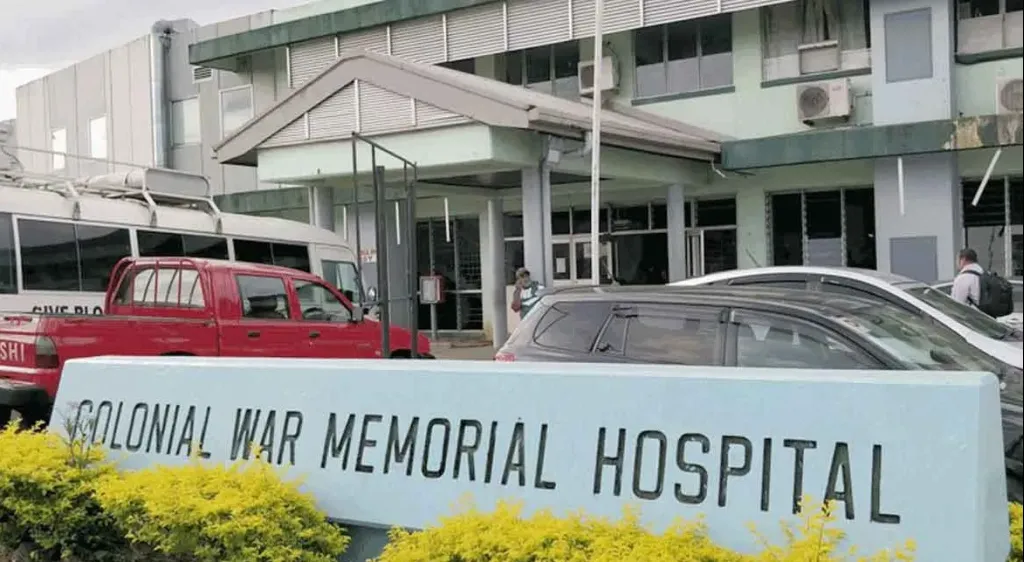
“National antenatal HIV prevalence is now estimated at 3.1%, and at [the Colonial War Memorial Hospital] it has risen sharply to 3.7% in 2025.”
He said the numbers highlighted the serious risks facing newborns.
“Last year, we estimate that 59 babies were born with HIV, up from 31 cases in 2024, on average at least one baby died of HIV each month in 2025.”
The minister warned that the country must urgently strengthen its response to the epidemic.
“In light of this, government action must now match the urgency of the epidemic.
“With Parliament’s support — and with the continued leadership of the cabinet — Fiji can still reverse this trajectory, protect mothers and babies, and restore national health security,” said Lalabalavu.
