






By Bryan Manabat
[email protected]
Variety News Staff
THIRTY-FOUR (not 36 as earlier reported) members of the U.S. House of Representatives have asked the Department of Homeland Security to review the federal EVS-TAP parole program for the CNMI, a development Delegate Kimberlyn King-Hinds says reflects how national debates over birth tourism and geopolitics are increasingly shaping federal decisions that affect the Commonwealth’s fragile tourism economy.
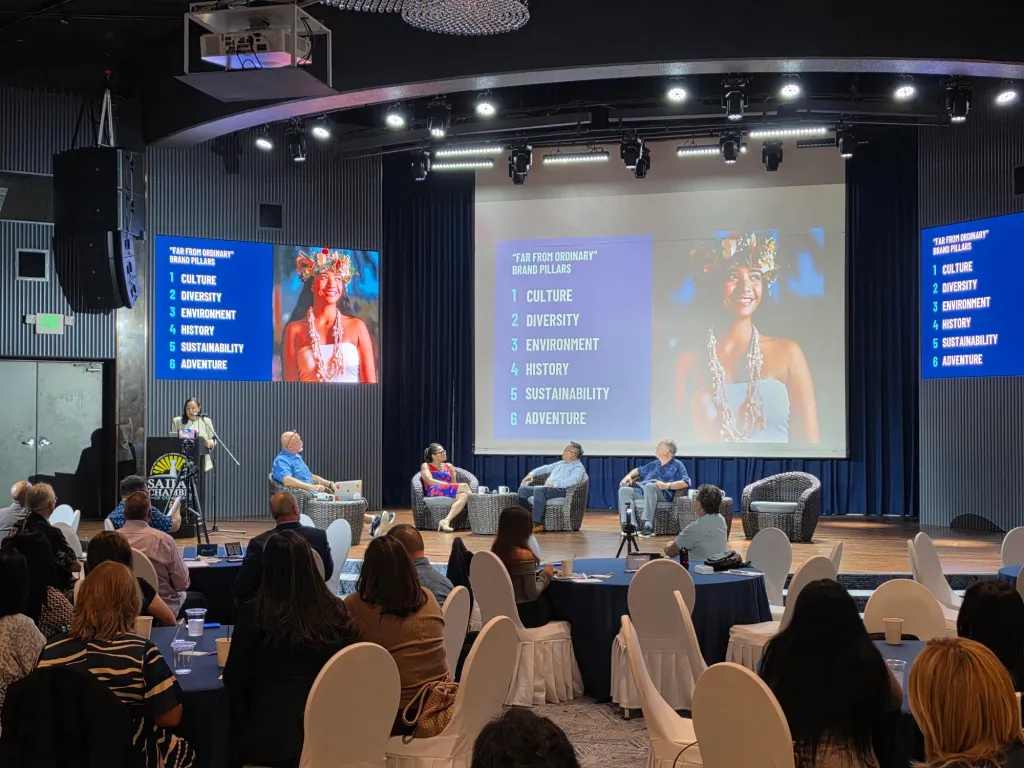
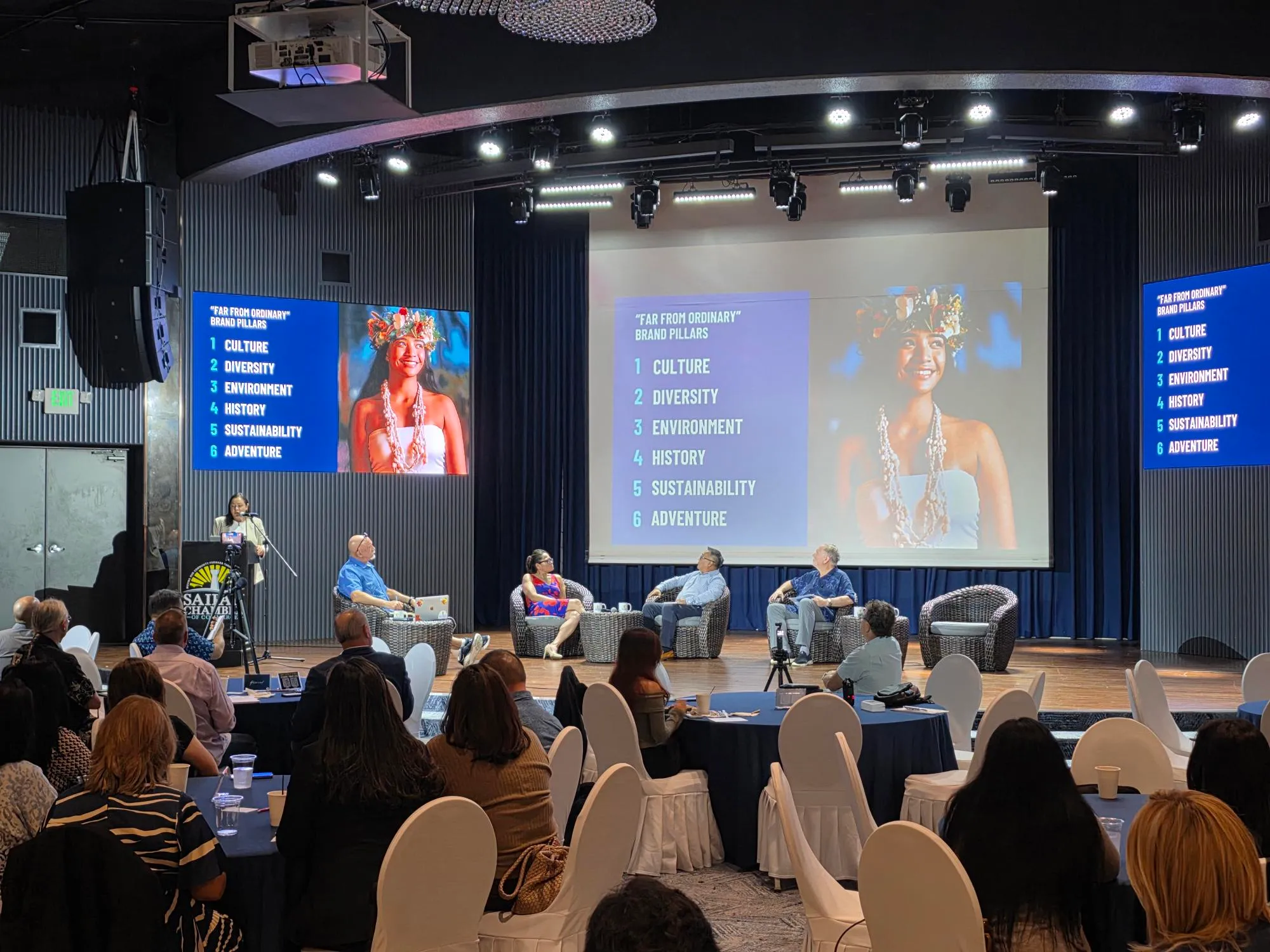
Speaking at the Saipan Chamber of Commerce’s Economic Forum on Wednesday at the Kensington Hotel alongside Hotel Association of the Northern Mariana Islands Chair Ivan Quichocho, Marianas Visitors Authority Managing Director Jamika Taijeron, and Guam Travel and Tourism Association Director Jay Merill, King-Hinds described the congressional letter as “breaking news” and said it adds to the uncertainty surrounding the program.
King-Hinds said discussions in Washington about the CNMI and EVS-TAP are often driven by misperceptions, particularly around the politically charged issue of birth tourism.
She emphasized that her focus is not on defending or prioritizing any single national market, but on ensuring the CNMI has enough paying visitors to sustain its private sector and government services.
“One thing that has hurt our ability to push forward with these policies in the past is disagreements over particular markets,” King-Hinds said.
“I’ve been put in a corner, as if I’m favoring one market over another. I don’t care where the tourists come from. What matters is customers, because every business needs customers to survive.
“When I look at the tourism industry and arrivals from a particular market, I don’t view them nationally. I view them as customers, and we need as many as we can possibly get.”
King-Hinds said the recent 902 consultations and annual IGIA meetings in Washington, D.C., allowed CNMI leaders — including the governor and the business community — to present a unified message that federal tourism policy for the islands must be viewed through a national security lens.
“If federal concerns about certain markets are rooted in national security, then the U.S. defense establishment should take the lead in clarifying those risks or explaining why they do not exist,” she said.
“One of the things we’ve been stressing to the Department of Defense is that the concern regarding a particular market is national security. There is no one better to speak about national security concerns than the Department of Defense.
“And if you’re telling the CNMI government, the delegate’s office, and the business community that tourists are not a national security concern, then you need to relay that message to your federal counterparts and begin educating them on what the impact would be to national security if the CNMI economy were to fail.
“You can’t have all these military activities without a strong, sustainable local government supported by a robust private sector.”
King-Hinds warned that the stakes for the CNMI are both strategic and immediate. While framing tourism in national security terms is helping shift federal perspectives, she said day-to-day work remains focused on securing concrete policy changes within federal agencies.
Despite what she called the “plot twists” of new developments like the U.S. House letter, King-Hinds said her office’s mission remains the same: stabilize and grow the economy.
She also linked her tourism agenda to a broader legislative push to expand air access to the CNMI by easing long-standing U.S. cabotage restrictions. King-Hinds said the effort is gaining traction because of support from the Department of Defense.
“One piece of legislation that [Guam Delegate James Moylan] has recently introduced, more than I, is to exempt us from cabotage restrictions. The goal is to open the market and allow foreign carriers to serve routes where U.S. airlines currently do not operate.
“What I’m particularly excited about is that the Department of Defense is supporting these efforts. They’re looking at it from the perspective that troops are coming into Guam, and it’s incredibly costly to return to the mainland, which affects the quality of life for our service members.”
King-Hinds noted that similar proposals have failed in the past, but the current Indo-Pacific security environment has created a new opportunity.
“Some of these requests, like cabotage, have been proposed many times before but never gained traction due to the nature of politics in Washington.
“What seems to be working now is framing these discussions through a national security lens. At this point, everyone sees this region as a strategic access point for military needs.
“But the conversation needs to tie national security needs with economic stability in order to support the U.S. posture in the Pacific.”
She reiterated a central message: CNMI tourism policy — including EVS-TAP and market access — must be grounded in facts, framed through national security, and focused on the economic survival of the islands.
The annual economic forum, organized by the Chamber, brought together public- and private-sector stakeholders from across the CNMI.
Bryan Manabat was a liberal arts student of Northern Marianas College where he also studied criminal justice. He is the recipient of the NMI Humanities Award as an Outstanding Teacher (Non-Classroom) in 2013, and has worked for the CNMI Motheread/Fatheread Literacy Program as lead facilitator.
