





By Chea’Lee Erb
MV Correspondent
AS Typhoon Sinlaku churned closer to the Northern Mariana Islands, a small, but determined group of Saipan Southern High School students and their teachers showed up anyway despite multiple organizations cancellations. The SSHS groups didn’t just show up for club commitments, but for their community.
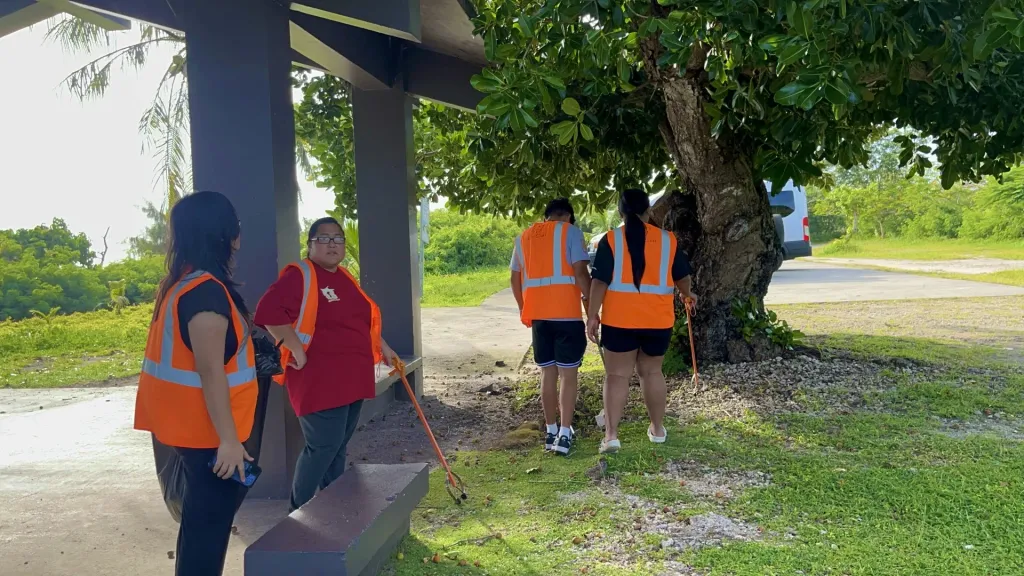
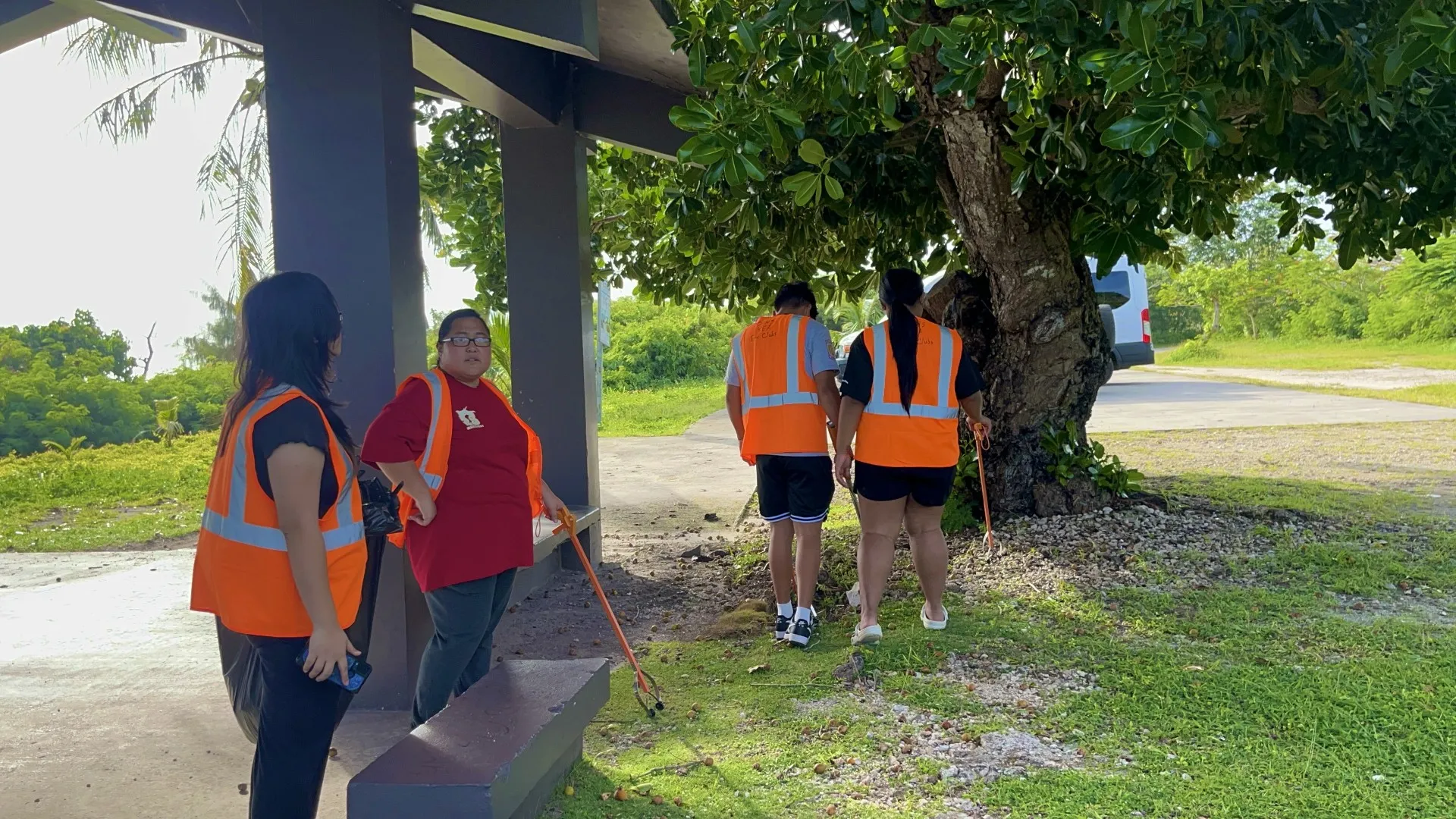
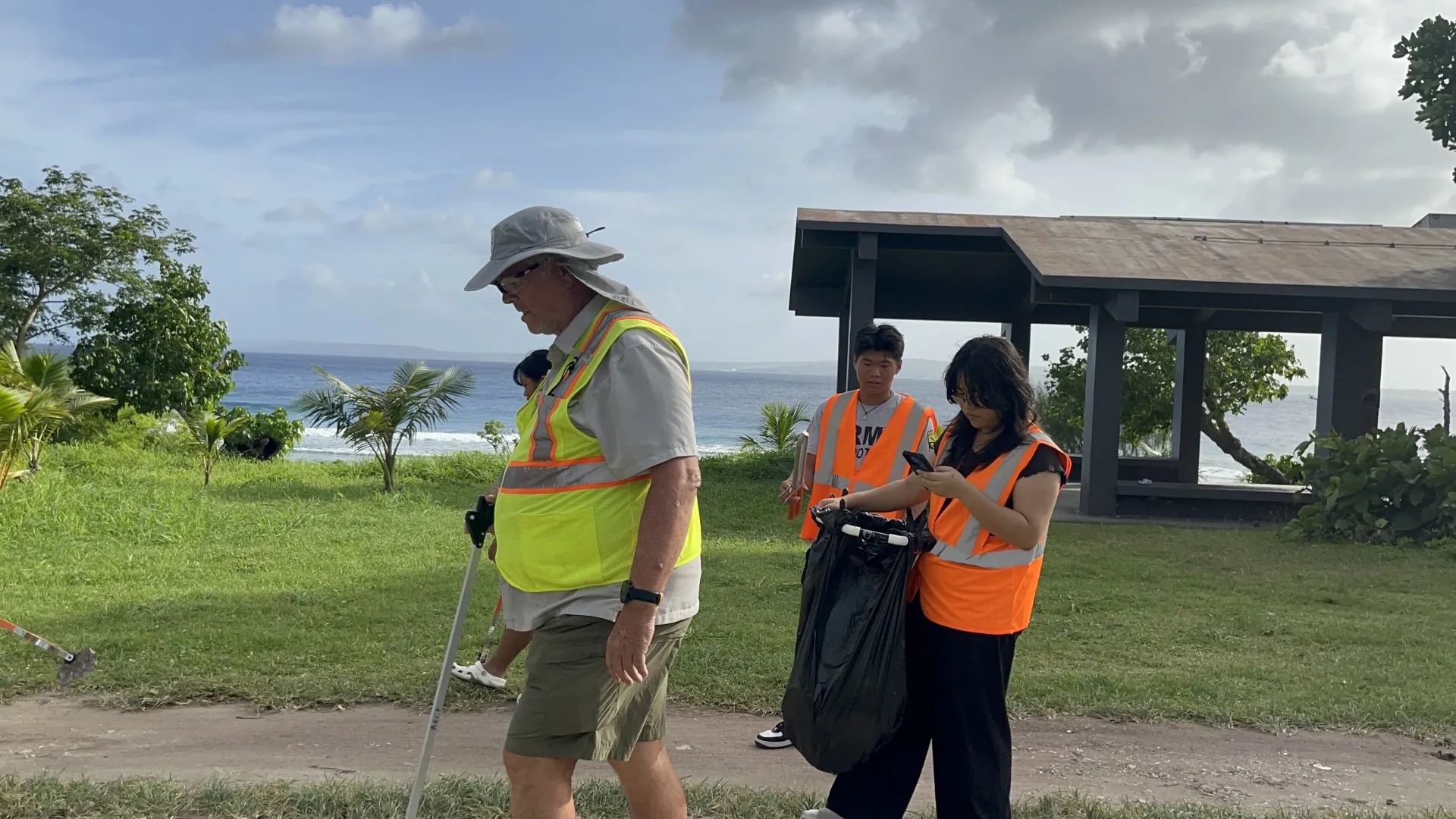
On April 10, three student volunteers from the Ocean Science Club and Interact Club, joined by two faculty advisors, spent two hours collecting trash behind Coral Ocean Resort as part of the Bureau of Environmental and Coastal Quality’s annual Islandwide Cleanup.
The group gathered 10.76 pounds of trash that day; cigarette butts, plastics, and assorted litter among the most common finds. The Ocean Science club uses the Clean Swell app, which logs and organizes trash by type each outing. It was a modest haul compared to the club’s record of roughly 154 pounds of litter and debris collected during the 2024 International Coastal Cleanup, but with a Category 4-5 storm closing in, simply showing up said something.
The group deliberately avoided direct beach access due to unpredictable surf driven by the approaching typhoon, keeping their efforts to the roadway corridor behind the resort’s golf course to ensure student safety, their top priority.
The cleanup was coordinated by Roy Adsit, SSHS science teacher and faculty advisor of the Ocean Science Club, alongside Jenelyn Camacho, advisor of the school’s Interact Club. Adsit, who has taught at Southern High for 15 years, leads the Ocean Science Club under the Solving for X grant program through Friends of the Mariana Trench, a three-year grant now nearing its end. The Ocean Science Club revolves around a commitment to monthly, hands-on community environmental work. Each month the club takes on three types of initiatives: beach cleanups, trail repair, and coral watch monitoring at Obyan Beach, all elevated to citizen science through data-tracking apps and systematic water quality testing conducted during cleanup events. Water testing was not conducted on April 10th due to typhoon conditions, but it is standard protocol during Ocean Science Club outings. Coral watch at Obyan similarly contributes data to broader reef health monitoring efforts, giving students a direct role in tracking one of Saipan’s most ecologically sensitive coastlines. Whether another grant will be written to continue the program is uncertain, and falls outside of Adsit’s role as the school’s classroom lead.
When asked what he wants people to know about his club, Adsit kept it simple.
“We try to help the island,” he said. “It’s our goal to make it a better place for everyone. We would love to have clean beaches one day.”
He added that when students encounter WWII artifacts during cleanups, they leave them undisturbed. A reflection of the historical sensitivity woven into Saipan’s coastline and terrain.
The Interact Club brings its own organizational depth to these efforts. Founded in Florida in 1962 as the youth arm of Rotary International, Interact operates around seven areas of focus benefiting school and community with environmental stewardship among them. SSHS chartered its chapter in 2017, and the two clubs collaborate approximately three times a year. Camacho noted that beach parties are among the leading drivers of illegal dumping and shoreline trash, reinforcing why coastal cleanup remains a consistent priority.
For Yu, a junior who joined the Ocean Science Club one year ago, the April 10th cleanup was part of a longer environmental journey. Before finding her way to the club, she had already been active with the Mariana Islands Nature Alliance, known as MINA, a Saipan-based nonprofit that has been advancing community conservation efforts across the CNMI since 2005.
“Before ocean club I was in the MINA advocacy group,” Yu said, a brief answer that speaks to the depth of environmental commitment these students carry into the field.
Trishtonky, an 11th grader and Interact Club member for two and a half years, described what Earth Day means to her personally,
“Earth Day for me means that we should appreciate all that God has created around us,” she said. “Island cleanup is a great way for me to appreciate that.”
Stephen, a 16-year-old junior and Interact Club member, framed Earth Day around accountability, both personal and collective.
“For me, Earth Day is a day where everybody picks up trash and fixes the violence we do to the Earth,” he said. “Plant trees to replace what we cut, get trash from the ocean that we throw in.”
When asked whether Saipan has a pollution problem, Stephen didn’t hesitate. “Yes, definitely,” he said. “People should use more environmentally friendly materials, like how China uses sugar cane foam that dissolves easier.”
The islandwide cleanup is organized annually by BECQ as part of Environmental Awareness Month each April. Participating groups register designated cleanup zones and submit trash data after the event. This year’s effort proceeded despite the looming storm system. A testament, perhaps, to what Adsit has spent 15 years trying to build at Southern High: students who feel personally responsible for the health of the island they call home.
