



By Bryan Manabat
[email protected]
Variety News Staff
THE owners of the M/V Mariana, the offshore supply vessel that capsized during Super Typhoon Sinlaku and left nearly its entire crew dead or missing, have filed a federal action in the District Court of Guam seeking exoneration from or limitation of liability, arguing that the tragedy occurred “without the privity or knowledge of Plaintiffs” and that the vessel was “in all respects seaworthy at the time of its departure.”
Tutor Micronesia Construction LLC, the vessel’s registered owner, and Black Micro Corporation, its bareboat charterer, filed the complaint on May 26, 2026 — just weeks after the Mariana was found overturned northwest of Saipan with only one deceased crewmember recovered.
The filing marks the first public statement by the owners since the vessel vanished during Sinlaku’s devastating assault on the Northern Marianas.
According to the complaint, the Mariana departed Saipan on April 11, 2026, after the U.S. Coast Guard set Port Heavy Weather Condition X-Ray and warned that gale-force winds were expected within 48 hours. The vessel sailed north and east, placing “more than 100 nautical miles between her and Saipan to avoid the center of the storm.”
However, as Sinlaku intensified into a Category 5 typhoon with sustained winds of 180 mph, its track shifted north, bringing a direct hit to Tinian and Saipan. The complaint states that on April 14, the captain altered course south and southwest — back toward Saipan — at the same time the typhoon stalled over the islands and slowed to just 3 mph.
According to the filing, the vessel remained operational until April 16, when its starboard propeller “seemingly became fouled,” forcing the Mariana to proceed on a single engine. Hours later, all communications were lost.
The U.S. Coast Guard launched aircraft to locate the missing vessel, but a C-130 aircraft was unable to approach within 100 nautical miles of the Mariana’s last known position because of extreme winds and violent seas.
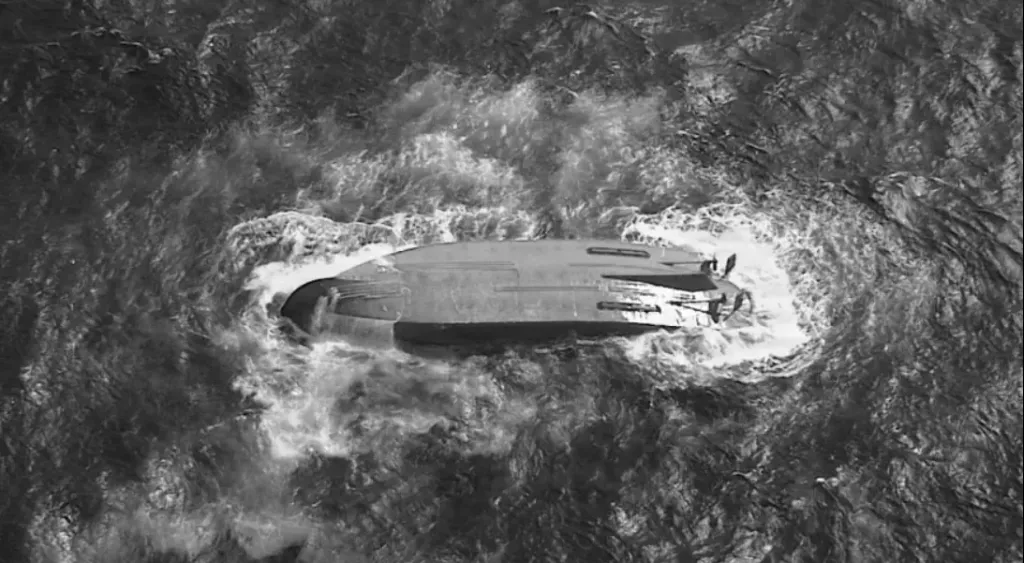
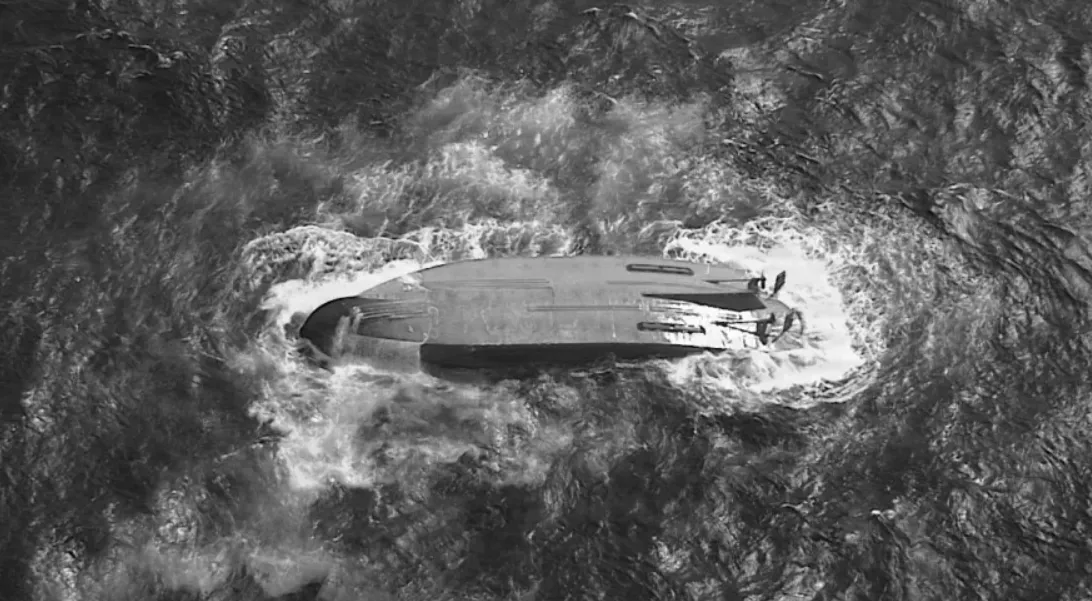
On April 18, search teams spotted an overturned hull northwest of Saipan. Divers from the U.S. Coast Guard, U.S. Air Force, and Japanese Coast Guard later confirmed it was the Mariana. They found no survivors and recovered only one body.
“After a ten-day search, the USCG suspended its search for the remaining missing crewmembers” on April 28, the complaint states.
The capsized vessel later drifted away and was lost from sight. It has not been relocated.
The disappearance of nearly the entire crew — many believed to be from the CNMI, Guam, and the Philippines — has left families with few answers about the vessel’s final hours. Several relatives have publicly questioned why the Mariana altered course back toward Saipan while the storm was still raging and why it remained within reach of Sinlaku’s destructive core.
The owners’ filing does not address the captain’s decision-making. Instead, it maintains that the vessel was properly maintained and that the casualty resulted solely from the typhoon’s unprecedented conditions.
Owners seek to limit liability
Because the Mariana was lost at sea and has “zero ($0.00) value,” the owners are invoking the federal Limitation of Liability Act, which allows vessel owners to cap damages at the post-casualty value of a vessel plus any pending freight.
Because the vessel had no freight and is considered unrecoverable, the owners propose a limitation fund of $226,800, calculated under 46 U.S.C. § 30524 using the vessel’s gross tonnage (540 GT multiplied by $420).
If the court approves the stipulation, all claims — including any wrongful-death actions — would be consolidated into a single federal proceeding, and any related lawsuits filed elsewhere would be stayed.
Filing a limitation action is a procedure available under federal maritime law that allows vessel owners to ask a court to determine liability and, if appropriate, limit damages. The filing itself does not constitute a finding by the court that the owners are free from fault.
Owners argue they are not at fault
The complaint states that the incident “was not caused or contributed to by any fault, neglect, or unseaworthiness on the part of the Vessel, Plaintiffs, or anyone for whom Plaintiffs are responsible.”
Alternatively, the owners argue that if liability is found, it should be limited to the amount of the proposed limitation fund.
Bryan Manabat was a liberal arts student of Northern Marianas College where he also studied criminal justice. He is the recipient of the NMI Humanities Award as an Outstanding Teacher (Non-Classroom) in 2013, and has worked for the CNMI Motheread/Fatheread Literacy Program as lead facilitator.
