






LONDON (Reuters) — Global stocks edged higher on Tuesday after a rally the day before on news of a U.S.-Iran peace deal, while the dollar held firm against the yen after the Bank of Japan raised rates to a 31-year high.
Markets settled into a more measured tone on Gulf developments as the initial excitement over the preliminary agreement between Washington and Tehran began to fade.
Technology stocks got a lift as investors took heart from SpaceX’s blockbuster IPO late last week that pushed its shares up nearly 20% on Monday, taking the space exploration company’s market value past the $2 trillion mark. They were up another 10.7% in premarket trading on Tuesday. Nasdaq futures rose 0.1%, while S&P 500 e-mini futures were flat.
The Nikkei 225 hit the 70,000 mark for the first time after the Japanese central bank voted 7-1 to raise its benchmark policy rate to 1%, levels last seen in 1995. Against the dollar, the yen was flat at 160.31.
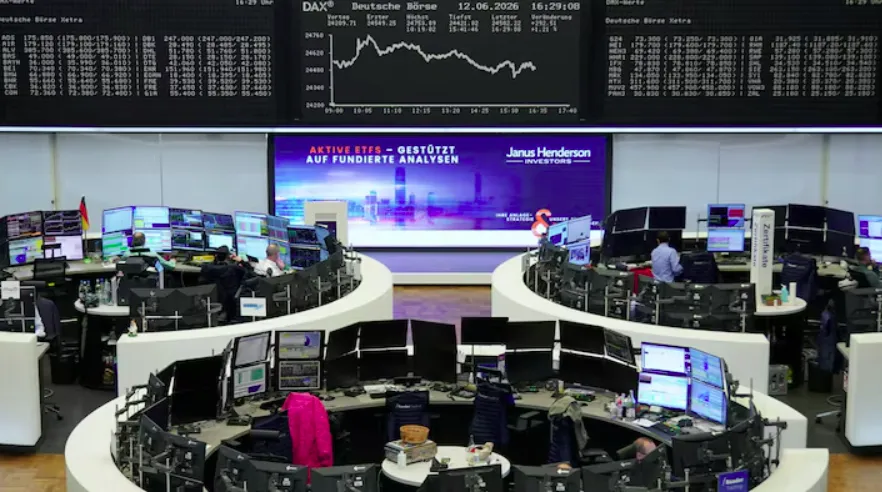
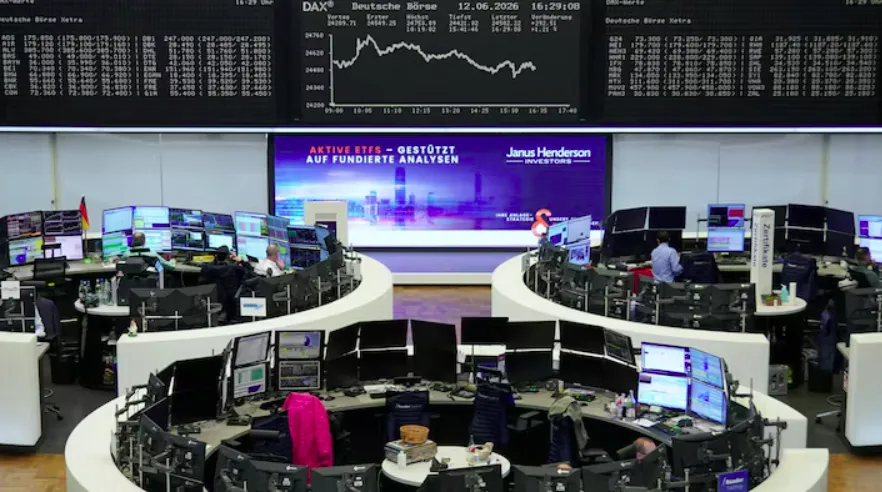
In Europe, the STOXX 600 rose 0.6% to hover near Monday’s record high, led by gains in Schneider Electric, which caters to data centers, and ASML, which rose 2.7% and 0.6%, respectively.
Nvidia, the world’s most valuable maker of AI chips, surprised investors by tapping the bond markets for $25 billion. The company said the cash would be used for general corporate purposes and the debt sale was to establish a liquid benchmark for future issuance. Nvidia shares were a touch lower in premarket trading.
“The reality is we’re one step further from worst-case scenarios, and we’re one step closer to seeing the codification of the optimism of the market,” Mitch Reznick, group head of fixed income at Federated Hermes, said.
“The key thing is to what extent we have systemic inflation, how far it has permeated the economy, and the effect on the consumer,” he added.
Oil slid another 2.2% to a three-month low just above $81 a barrel, even though shippers in Asia and Europe said rebuilding confidence in resuming transit through the Strait of Hormuz could take weeks.
Oil consumers will likely scramble to restock inventories depleted over the past weeks of war, meaning prices may not have much room to fall in the near term, according to ING strategist Warren Patterson.
President Donald Trump’s announcement of a deal with Iran drew initial investor relief on Monday, but it also puts Washington on a collision course with Israel.
“While it is an important diplomatic breakthrough that should remove a key source of market volatility, the durability of the deal is likely to be tested in the future,” Westpac analysts wrote in a research note. “Many sticking points, including the fate of Iran’s nuclear program, were left to be resolved in subsequent negotiations.”
The dollar index, which tracks the U.S. currency against six others, was steady around 99.6. The euro rose 0.1% to $1.1605, as did the pound, which traded at $1.342, with two days to go before a Bank of England meeting that is unlikely to yield any change in monetary policy.
The Australian dollar was little changed after the Reserve Bank of Australia kept interest rates on hold as expected, with the currency 0.4% weaker at $0.707.
The yield on the U.S. 10-year Treasury note fell 2 basis points to 4.45%, while gold, which is also sensitive to U.S. interest rate expectations, rose 0.9% to $4,344 an ounce.
