





By Bryan Manabat
[email protected]
Variety News Staff
THREE water wells and a sewage lift station on Saipan are expected to be connected to the power grid this week, allowing FEMA to remove all of its generators from the island, Commonwealth Utilities Corporation officials said Tuesday.
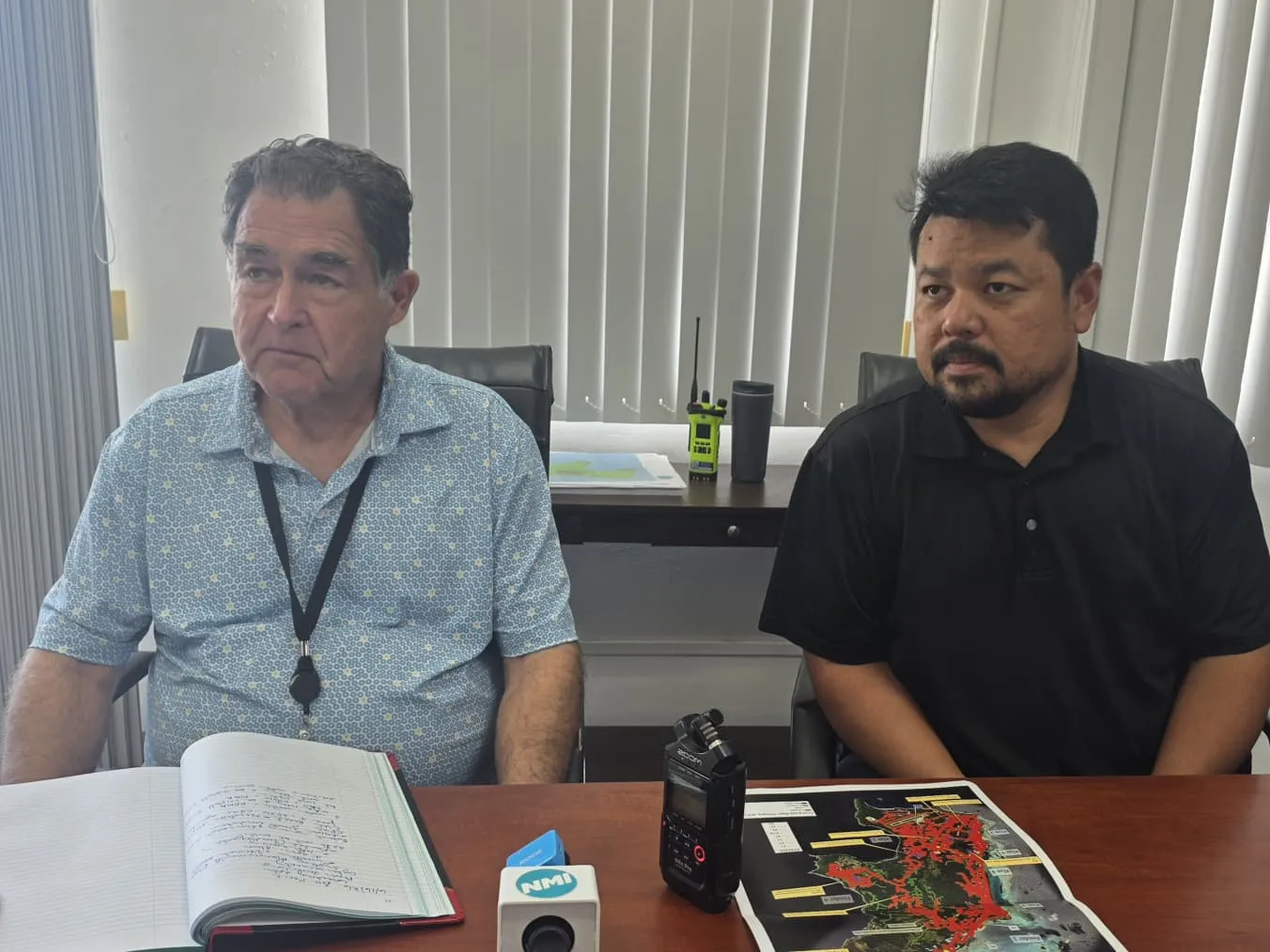
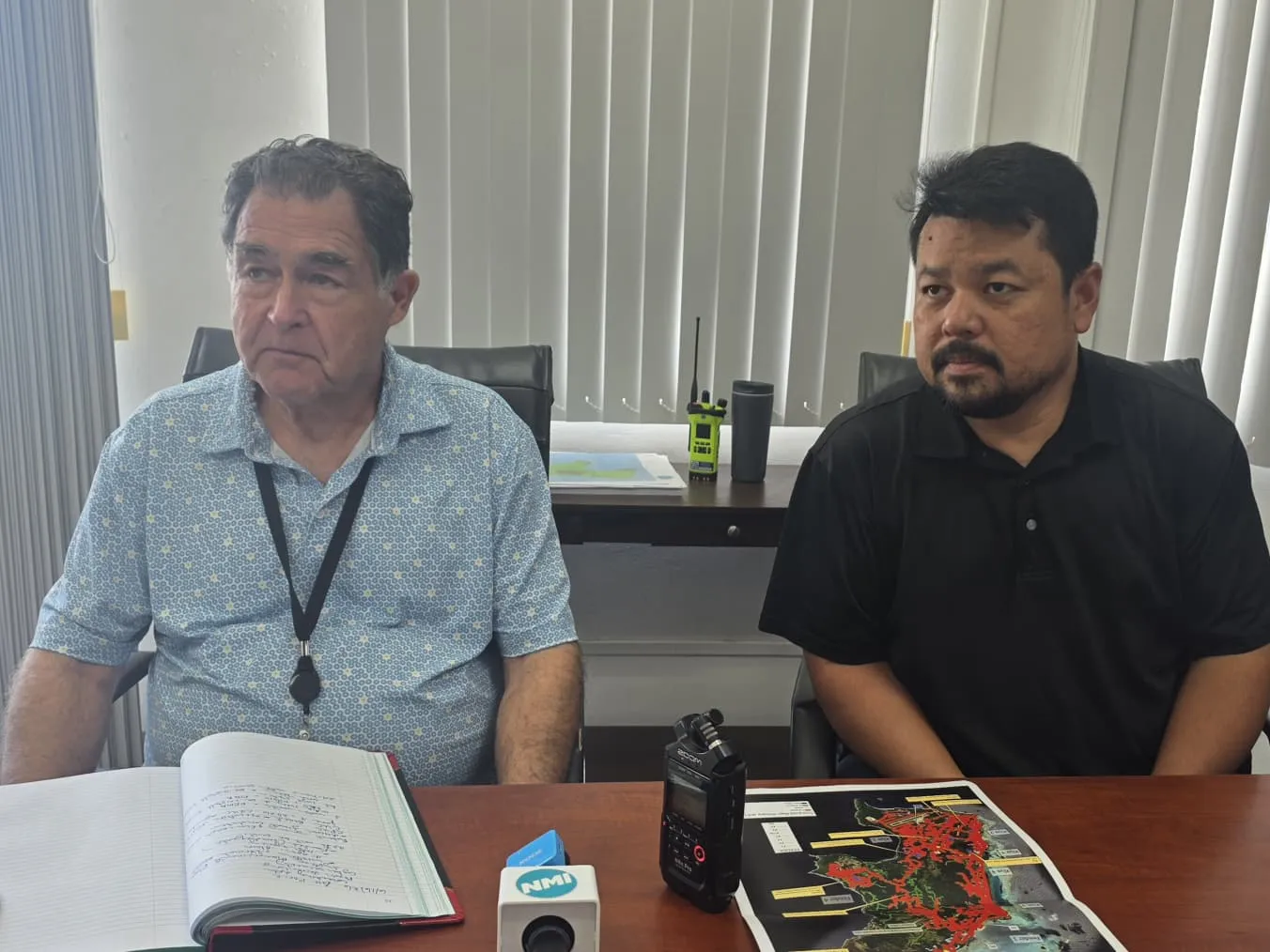
Speaking at a scheduled press briefing at CUC headquarters in Dandan, Executive Director Kevin Watson said the three wells were scheduled to be energized Tuesday, with FEMA planning to remove its generators the following day. The sewage lift station, located in San Antonio, was also slated to be connected to grid power, marking the end of FEMA generator use on Saipan.
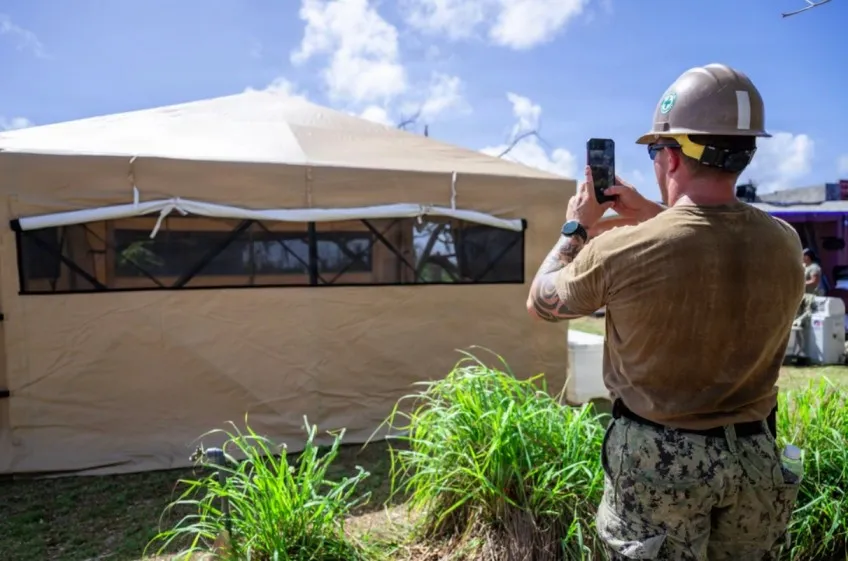
Officials said roughly 60 FEMA generators were deployed to keep Saipan’s water wells operating following Super Typhoon Sinlaku.
Watson said Saipan now has 24-hour water service islandwide. On Tinian, he said crews recently restored water service to Carolina Heights by installing a FEMA generator, a new pump and motor, and a pressure tank, providing customers at the end of the line with 48 pounds per square inch of water pressure.
The transition away from FEMA generators comes ahead of a federal deadline. Watson said FEMA’s full coverage for generator use ends July 9, and continuing to rely on the generators beyond that date would cost an estimated $120,000 per day — an expense he said CUC does not intend to pass on to ratepayers. The U.S. Army Corps of Engineers has also requested that all generators on Saipan and Tinian be removed by June 21 to meet its schedule.
Watson said CUC’s line of credit to fund most of the needed materials remains pending approval, while contracts for additional supplies are moving through the signature process. He said the longest lead time involves heavy copper conductor used on primary lines, with a partial shipment expected within two to three weeks and the bulk of the order arriving in seven to eight weeks.
CUC Power Division Electrical Engineer Jonathan Camacho said the utility’s primary lines and laterals are now about 80% to 85% energized. However, he cautioned that a red line on restoration maps does not mean every customer along that line has power. Nearly 480 damaged transformers remain the most common reason homes may still be without electricity even when neighboring residences have been energized.
He said restoration efforts have shifted from rapidly energizing main lines to the more time-consuming task of reconnecting individual homes. With about 35 to 40 CUC lineworkers and roughly 55 Guam Power Authority lineworkers working across Saipan’s 15,000 electric accounts, Camacho said restoring service islandwide takes time. He urged residents whose neighbors have power to contact customer service rather than assume CUC is already aware of their outage.
With sufficient materials and additional crews in place, Camacho said restoration for approximately 95% to 98% of customers could be completed within 30 to 45 days. The remaining customers, he said, would likely be those whose homes cannot be energized because of damaged weatherheads or unsafe conditions.
Camacho added that crews continued restoring service even during a week-and-a-half period when CUC had exhausted its supply of materials, salvaging and splicing usable wire to keep work moving forward.
On Tinian, Camacho said a crew from Polyphase Systems, made up of retired Guam Power Authority linemen, arrived to assist with power restoration efforts. However, their heavy equipment was temporarily returned to Guam after inspectors found insects — including a rhinoceros beetle — along with eggs, fire ants and snakes on the barge. The equipment has since been decontaminated, and bucket trucks and an auger truck were expected to return to Tinian. The crew had initially been expected to complete its work in about three weeks, depending on the availability of materials.
Camacho said CUC received a small shipment of transformers and conductors from Rota and has installed 100 wooden poles from an initial shipment, nearly exhausting that supply. The first shipment of concrete poles was expected Wednesday, while a larger shipment of transformers and poles was scheduled to arrive between June 21 and 23.
The Joint Information Center, in its latest Sinlaku recovery update, said roughly 50% of Saipan’s 15,493 electric customers were connected to the CUC grid, with feeder demand at 24.5 megawatts. The utility reported total generation output of 26.3 megawatts as of Tuesday evening and available capacity of 34.7 megawatts, surpassing pre-typhoon levels.
“Although current generation capacity has been restored to 34.7 megawatts, surpassing pre-Super Typhoon Sinlaku operational levels, full power restoration has not yet been achieved,” the JIC said. “Full restoration can only be realized once both generation capacity and distribution infrastructure repairs are completed, as these systems work hand in hand to reliably deliver power to all affected communities.”
As for water service, the JIC said Saipan now has 24-hour service islandwide, with production at 10.5 million gallons per day out of a capacity of 11.5 million gallons. The center noted that CUC is transitioning wells from generator power to the electrical grid, a process that “may result in fluctuations in water service hours.”
Bryan Manabat was a liberal arts student of Northern Marianas College where he also studied criminal justice. He is the recipient of the NMI Humanities Award as an Outstanding Teacher (Non-Classroom) in 2013, and has worked for the CNMI Motheread/Fatheread Literacy Program as lead facilitator.
