




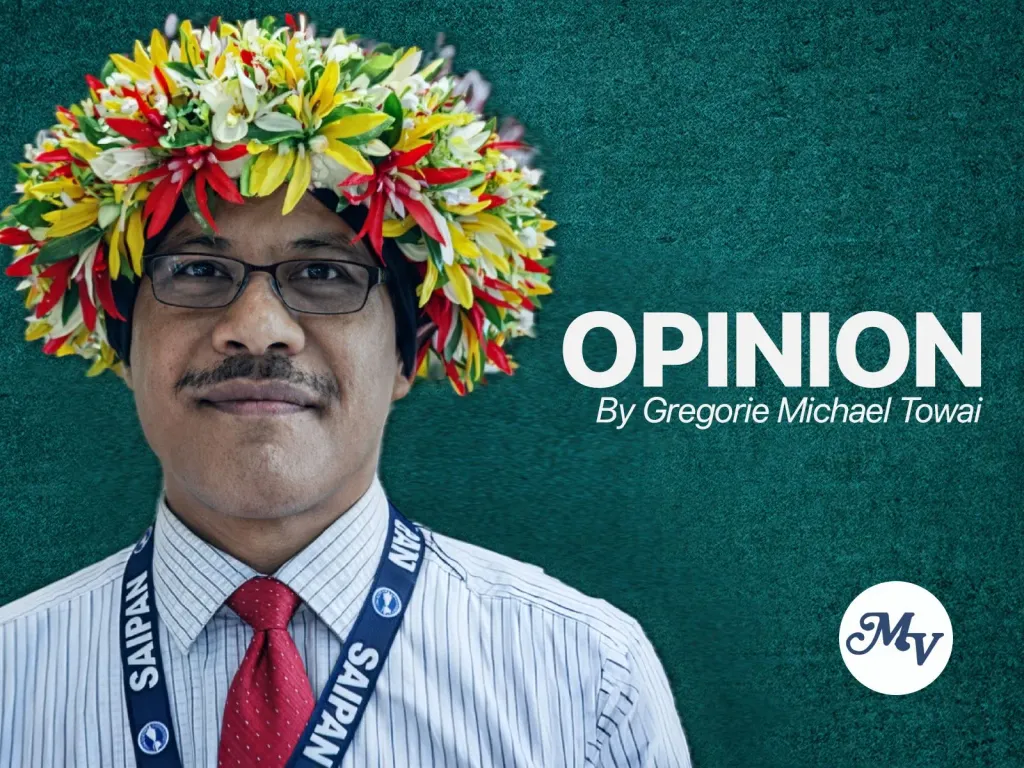
By Gregorie Michael Towai
For Variety
THERE comes a point after every disaster when the chainsaws fall silent, the generators are shut off, the emergency shelters close their doors, and the headlines begin to fade. To the outside world, these are signs that life has returned to normal. But those who have lived through catastrophe know that this is often when the most difficult part of recovery begins. The cameras leave. The federal response begins to wind down. The urgency that once united governments, organizations, volunteers, and communities slowly gives way to everyday life. Yet for the families still rebuilding their homes, the small businesses struggling to stay afloat, and the communities wondering what comes next, the disaster has not truly ended. It has simply entered a new chapter.
Super Typhoon Sinlaku tested the Commonwealth in ways few storms ever have. It exposed weaknesses that had accumulated over many years while simultaneously revealing the extraordinary strength that has always existed within our people. We witnessed neighbors helping neighbors without hesitation. Churches became sanctuaries of hope. Volunteers worked tirelessly under difficult conditions. Local businesses gave generously despite suffering losses themselves. Federal agencies, military personnel, nonprofit organizations, and countless individuals answered our call with compassion and urgency. Their efforts deserve our deepest gratitude, and history should remember that in one of our darkest hours, we were not left to stand alone.
But gratitude must never become complacency.
Federal disaster assistance was never intended to be permanent. It was designed to stabilize communities in crisis, to help us regain our footing, and to create an opportunity for recovery. It was never meant to become the foundation upon which our future rests. That responsibility has always belonged to us.
Today, the Commonwealth stands at a defining moment. Visitor arrivals have declined dramatically. Government revenues are under increasing pressure. Businesses continue to recover from months of disruption. Infrastructure repairs remain unfinished in many places. Families are still trying to restore a sense of normalcy while confronting rising costs and economic uncertainty. These are not isolated challenges. Together, they tell a larger story. The emergency response is ending, but the work of rebuilding our future has only just begun.
Perhaps the greatest lesson every disaster teaches is that resilience cannot be borrowed. It cannot arrive on an airplane, be delivered through a grant, or be sustained indefinitely by outside assistance. True resilience is built long before the next storm appears on the horizon. It is reflected in diversified industries, sound infrastructure, responsible fiscal planning, strong local institutions, and leaders willing to make difficult decisions before circumstances leave them no other choice.
For decades, we have spoken about diversifying our economy. We have acknowledged the risks of relying too heavily upon a single industry. We have discussed renewable energy, food security, marine science, innovation, entrepreneurship, cultural tourism, education, and countless other opportunities that could strengthen our economy. Yet too often these conversations have remained aspirations rather than action. If there was ever a moment to transform those discussions into reality, it is now.
History has an interesting way of judging societies. It rarely asks how much aid they received. It asks what they did with the opportunity that aid created.
Our ancestors crossed thousands of miles of open ocean guided by knowledge, courage, and an unwavering belief that the horizon was never something to fear, but something to pursue. They did not wait for certainty before setting sail. They understood that survival depended upon preparation, adaptability, and vision. Those same values carried our islands through colonization, war, economic uncertainty, and countless storms. They remain just as relevant today.
The question before us is not whether we survived Super Typhoon Sinlaku. We already know that answer. The question is whether we possess the collective wisdom to transform this difficult chapter into a turning point for generations yet to come. Will we simply rebuild the Commonwealth that existed before the storm, or will we build one that is stronger, more diversified, more resilient, and better prepared to meet the challenges of an increasingly uncertain world?
That responsibility belongs not only to those elected to lead, but to every one of us. It belongs to business owners willing to invest despite uncertainty. It belongs to educators preparing the next generation of leaders. It belongs to civic organizations that continue serving long after emergency declarations expire. It belongs to every citizen who believes that our Commonwealth is capable of becoming more than it has ever been.
One day, our children and grandchildren will look back on this chapter of our history. They will not remember every press conference, every funding announcement, or every emergency proclamation. They will remember whether this generation had the courage to think beyond the immediate crisis and lay the foundation for a stronger Commonwealth. They will ask whether we merely recovered from a storm or whether we seized the opportunity to redefine our future.
The federal response is ending.
Our real test starts now.
Gregorie Michael Towai is a native Refaluwasch son of the Commonwealth of the Northern Mariana Islands, an independent researcher, published author, and founder of the Refaluwasch Journal of Knowledge and Culture. His work focuses on Indigenous knowledge systems, public policy, environmental stewardship, governance, and the future of the Northern Mariana Islands.
