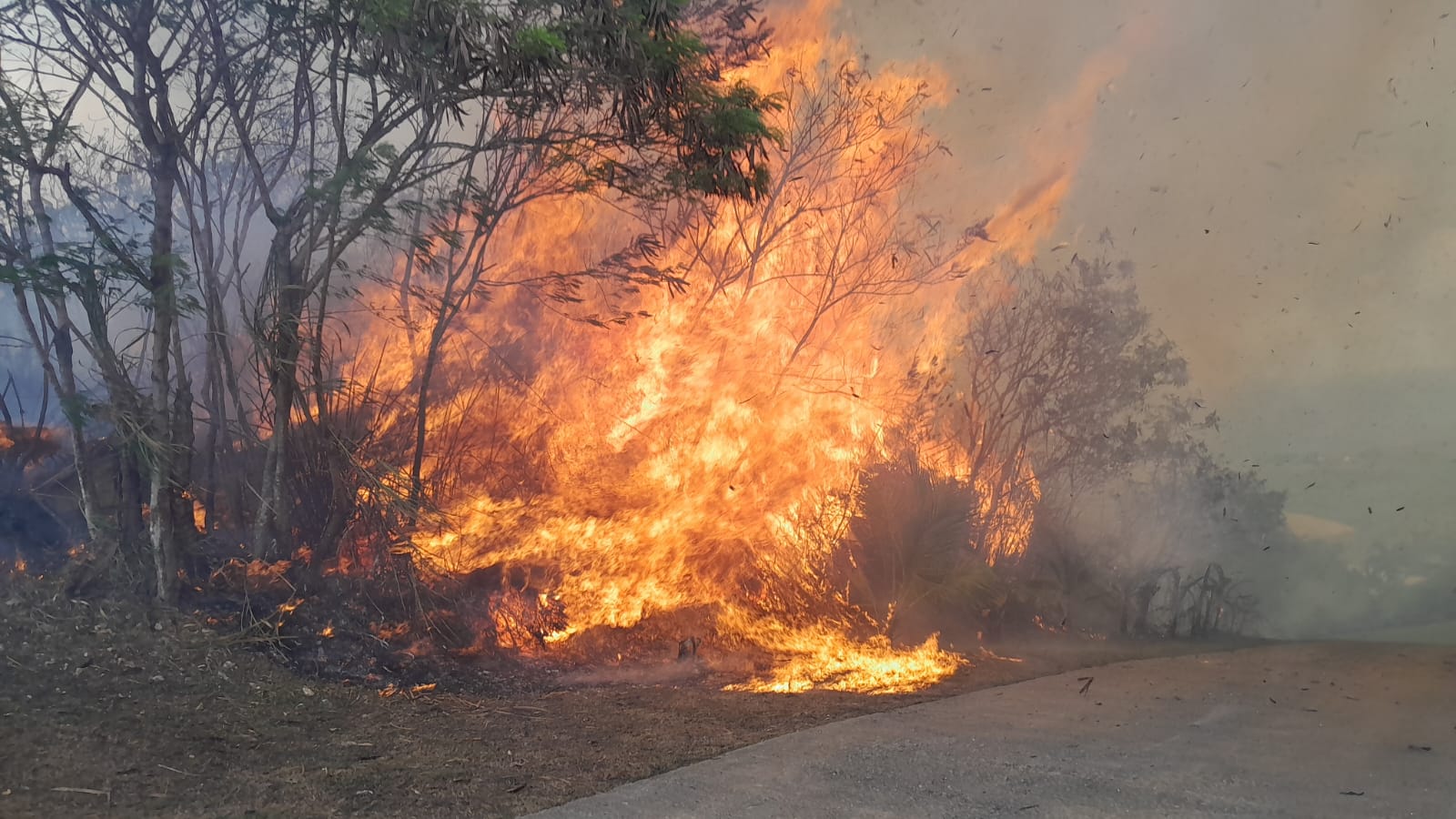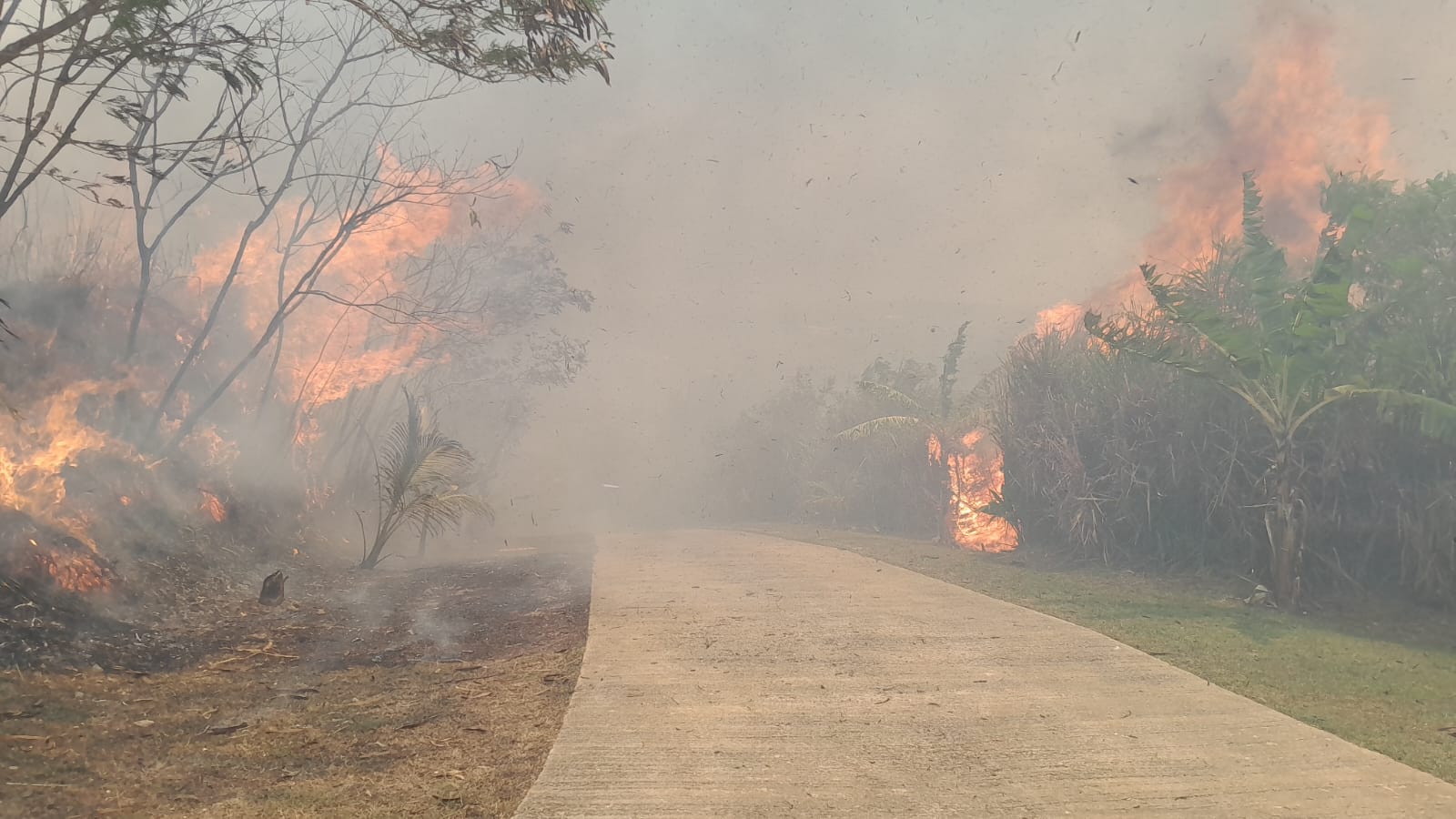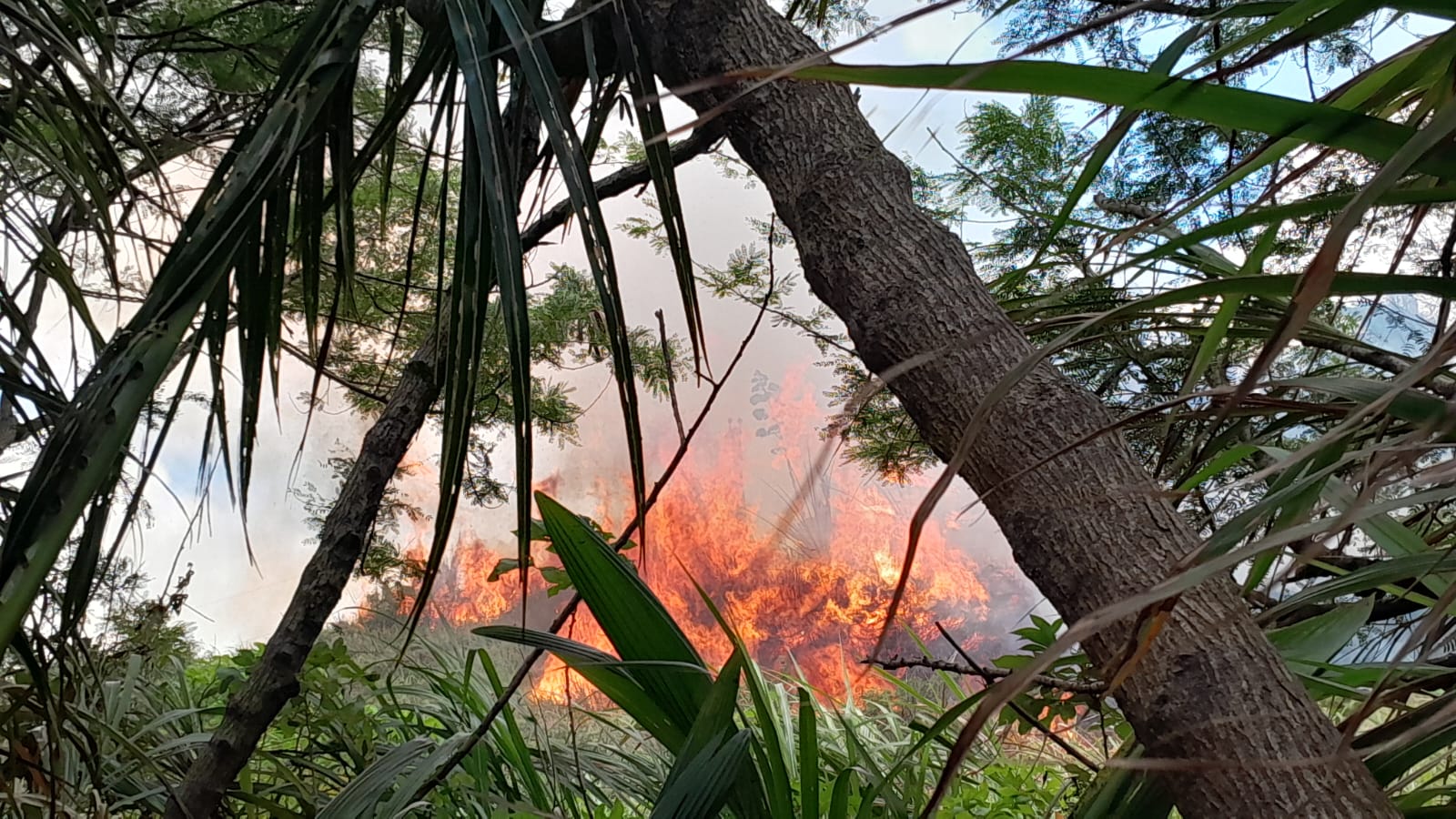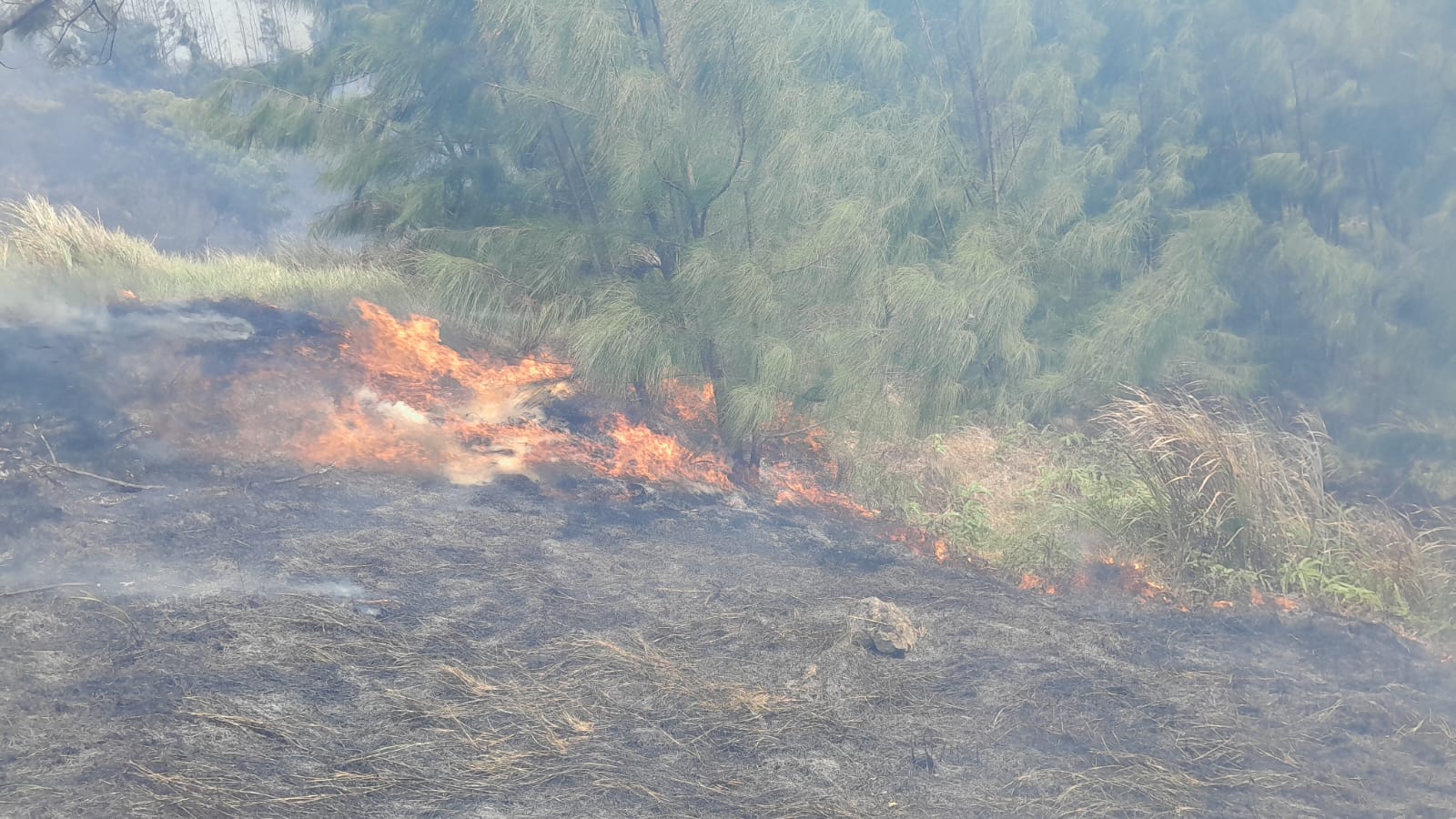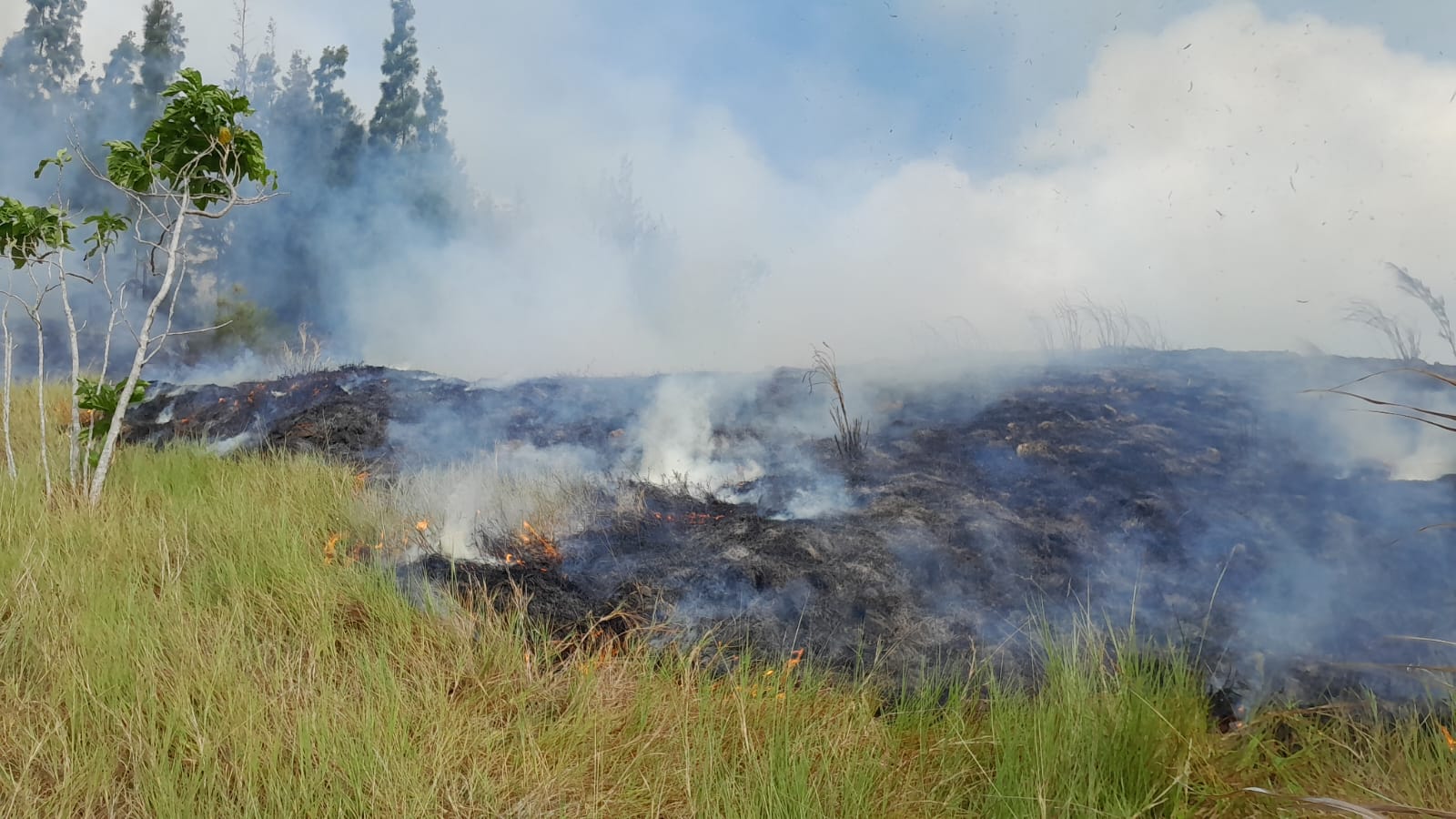





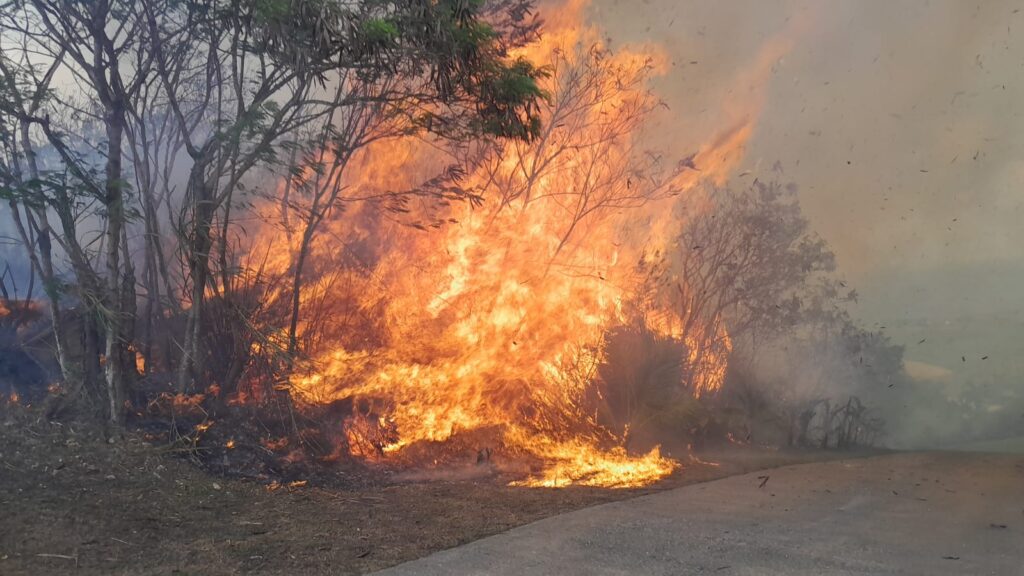
AS of press time Wednesday evening, the Department of Fire and Emergency Medical Services was still battling the grassfire at Mount Susu on Capital Hill that started on Tuesday.
As of 6:41 p.m., there were no injuries and no property damage in the nearby Wireless Ridge area, DFEMS Public Information Officer Robert Mojica said.
On Tuesday, April 2 at approximately 3:21 p.m., a female caller reported that she could see smoke at Mount Susu.
At 3:25 p.m., DFEMS personnel in the area saw heavy black smoke while passing Isa Villa, and at 3:30 p.m. the fire was spotted from a lookout point at Mount Susu.
“Flames were seen in the valley between Mount Susu and Chalan Matuis Road. Multiple DFEMS personnel and units were posted at this lookout point throughout the night and made spot checks along Chalan Matuis Road to see the path of the fire,” Mojica said.
“At around 12:30 a.m., April 3, the fire made its way up the ridge towards the top of Mount Susu. At 5:40 a.m. the fire looked like it started to die down and only small spot fires were still burning,” he said.
Fire personnel made their way down into the valley to assess the situation.
“At around 12 p.m. the winds picked up speed and helped move the fire towards Wireless Ridge,” Mojica said.
DFEMS Engine, Forestry and other units were battling the fire, he added.
“We urge the public to remain indoors if they have any respiratory health issues and avoid the smoke and ashes coming from the fire. Most of the affected areas of smoke and ash are Capital Hill, Garapan, San Roque and As Matuis,” Mojica said.
“DFEMS…will push out more information once it is under control and contained,” he added.
For its part, CNMI Homeland Security and Emergency Management said it was coordinating with the Commonwealth Healthcare Corporation.
“It is advised for all residents and visitors, especially those with asthma, chronic conditions, Chronic Obstructive Pulmonary Disease (COPD), other pre-existing respiratory conditions, children, or pregnant people to minimize time outdoors and avoid being outdoors when smoke is visible or can be smelled,” HSEM PIO Bernard Villagomez said.
“If being outdoors is necessary, consider wearing an N95 facemask to reduce smoke exposure. If you have a medical condition like asthma, COPD, or metabolic and cardiovascular disease that puts you at risk for a severe outcome from wildfire smoke exposure, monitor your symptoms, seek medical care when needed, and ensure that your prescriptions are up-to-date and that you have an adequate supply on hand,” he added.
“Symptoms to watch out for: wheezing, shortness of breath, difficulty breathing, chest heaviness, light-headedness, dizziness. If symptoms are not relieved by usual medication, seek medical attention. Contact your physician for any questions or concerns.”