

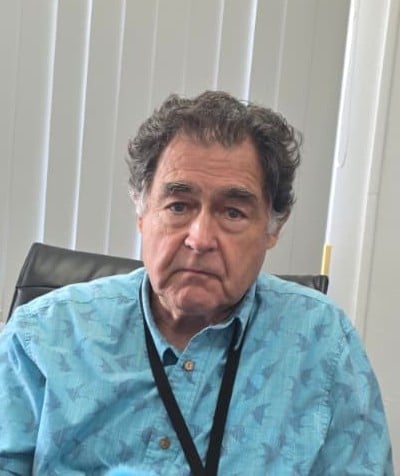

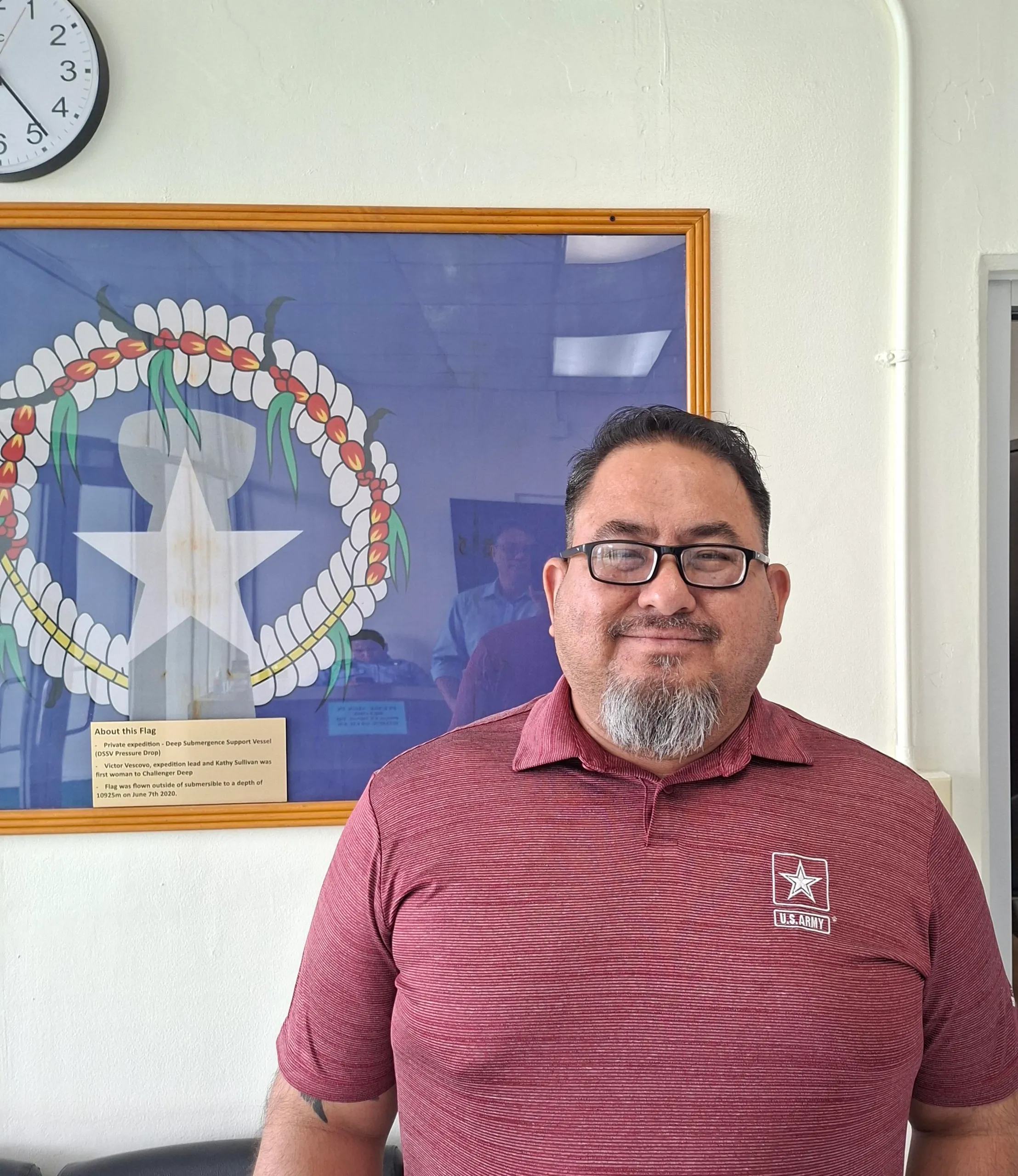
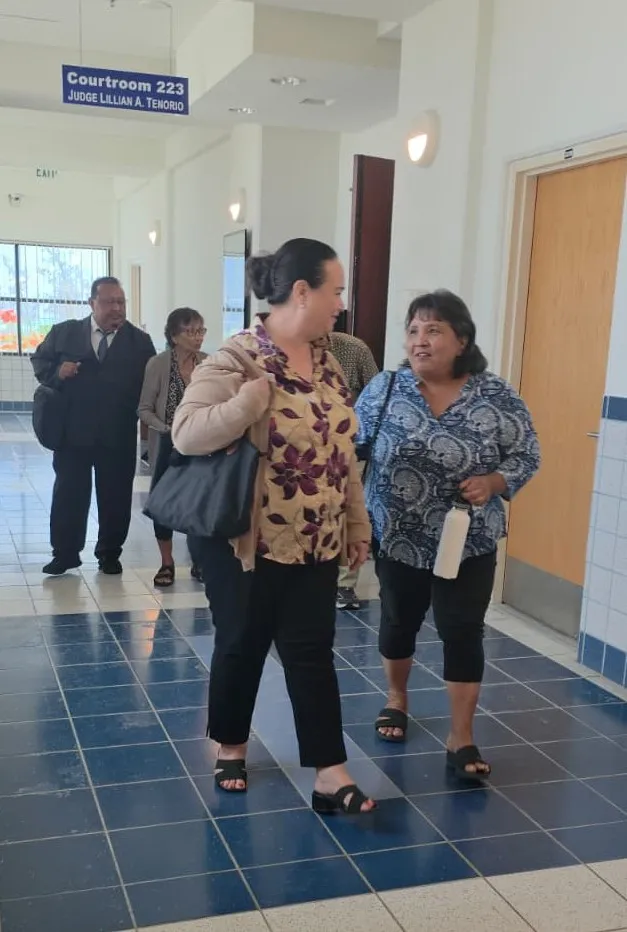



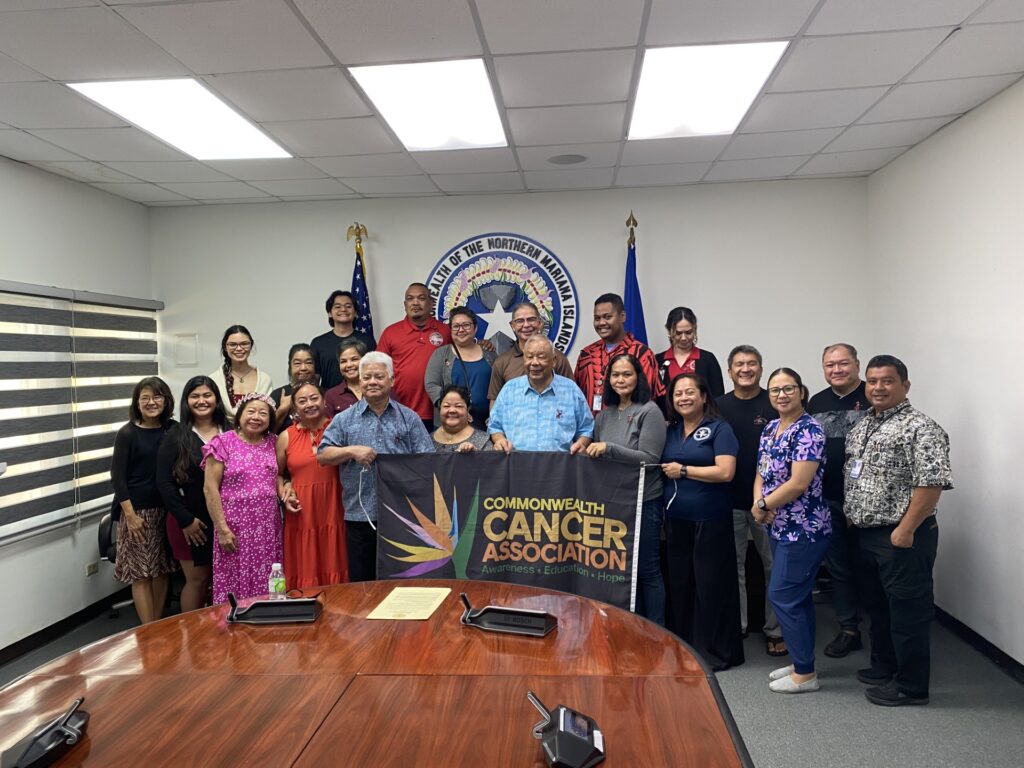
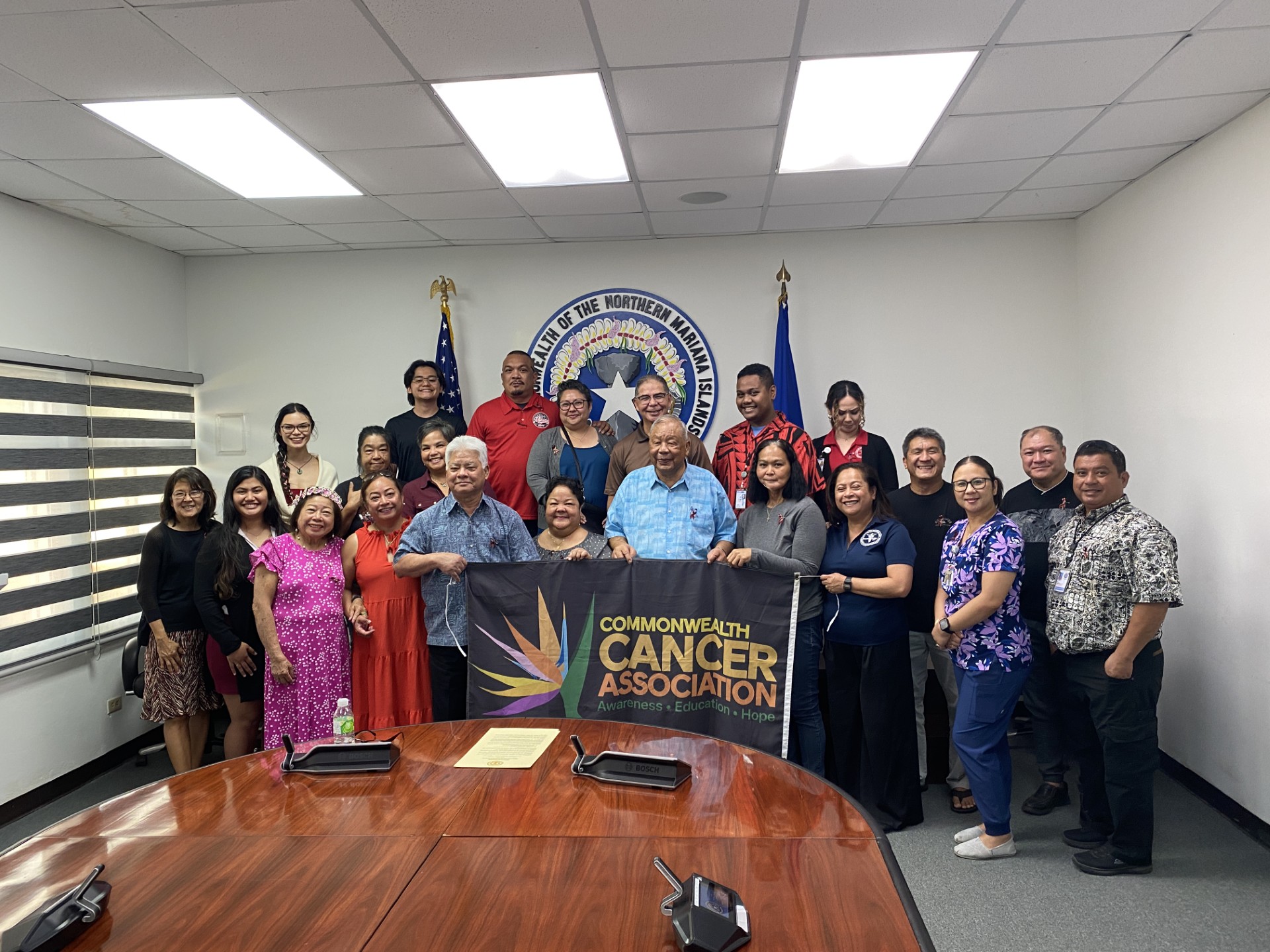
Commonwealth Cancer Association members pose for a photo with Commonwealth Healthcare Corporation officials, Gov. Arnold I. Palacios, Lt. Gov. David M. Apatang, oral cancer survivors, health advocates and other community members during the Oral Cancer Awareness Month proclamation signing ceremony in the governor’s conference room on Wednesday.
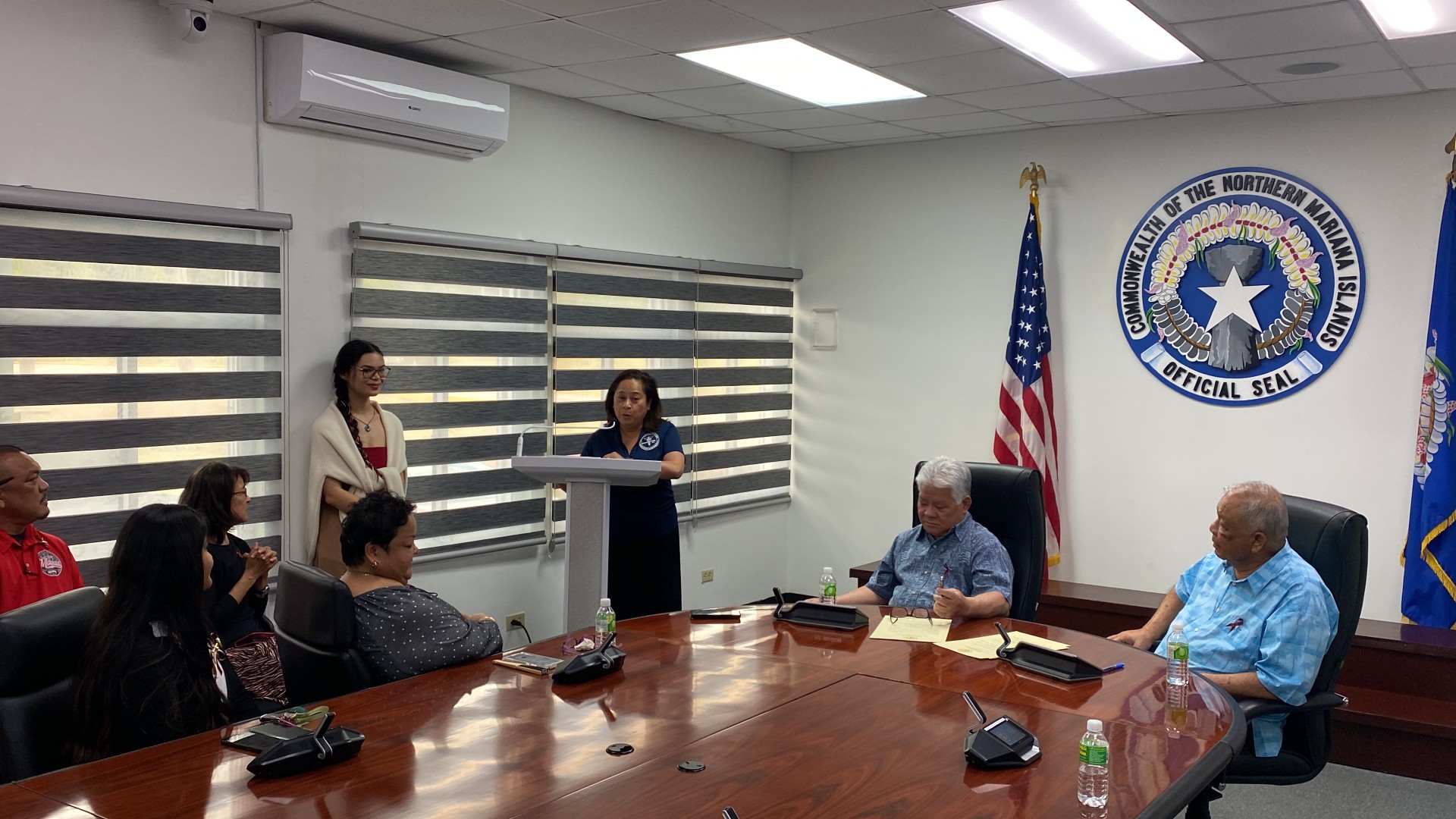
Dr. Angelica Sabino speaks during the Oral Cancer Awareness Month proclamation signing.
AT the proclamation signing ceremony designating April as Oral Cancer Awareness Month, Dr. Angelica Sabino, the chief dentist at the Commonwealth Healthcare Corporation, advocated against betelnut and tobacco chewing, and supported increased oral cancer community education.
Sabino said oral cancer is the “third leading cancer in the CNMI.”
According to data presented by the Commonwealth Cancer Association, from January 2018 to February 2024, 103 cancer survivors registered for CCA programs. Sabino said 33 died in that same timeframe.
Only 30% of people surveyed by CCA regularly saw a dentist.
CCA said one in three high school students, and one in five adults chew pugua, with 88% of those surveyed reporting that they chew pugua with tobacco.
CCA said the majority of survivors are diagnosed between ages 20-60, or “the most productive years of their life.”
Sabino said oral cancer has wide reaching effects in the community.
“Many of us, if not all of us, have been affected by oral cancer,” she added. “We know someone who has oral cancer, who is a survivor of oral cancer, who has passed away from oral cancer. Oral cancer is a beast that is taking the livelihood of our community.”
Sabino also noted the financial burden that oral cancer places on CNMI family members, who will have to go on leave from or quit their jobs to care for cancer survivors.
She said people also “take to the roadsides or gofundme sites” to raise money for those with oral cancer.
In addition, she said treating the cancer with surgery results in mental health concerns. “Patients who return from surgical treatment often are ashamed of their appearance, their speech, and other physical changes that are not considered normal to them,” she said. “The mental anguish associated with this debilitating nature, which includes the disfigurement from surgery, is not spoken about much. But this is the reality that we must also address —the mental states of patients who have oral cancer and their families.”
Sabino said culture cannot be used to justify the use of pugua and tobacco.
“We have other cultural norms that we can promote: respect for our elders, our dances, our language. We do not need to continue a culture that promotes addiction and death, a culture that continues to cause our community to suffer,” she added.
She said there is a need for increased community education to combat the use of pugua and tobacco among the youth.
Sabina likewise announced that on Wednesday, April 10 from 11:30 a.m. to 2:30 p.m. at the Rota Mayor’s Office, CHCC will conduct oral cancer screenings and presentations.
She said CHCC will be on Tinian on April 26 from 9 a.m. to 1 p.m., and from 1 p.m. to 3 p.m. at the Tinian Public Library to also conduct oral cancer screenings and presentations.
Sabino said on Saipan, all dental clinics provide free oral cancer screenings.
