





HAGÅTÑA (The Guam Daily Post) — The Office of Public Accountability has found inconsistencies in the evaluation of award tiers and grant amounts for the Guam Visitors Bureau’s Tourism Assistance Program, or TAP, and has determined that program eligibility requirements need more stringent criteria.
According to the audit report, GVB initiated TAP in June 2023 to help small tourism-related businesses recover from Typhoon Mawar, which battered the island in May of that year. GVB budgeted about $2 million for the program.
“TAP grants were distributed on a first-come, first-served basis, where GVB mainly utilized a tiered system based on annual revenue, with consideration for damage and the loss of revenue from the typhoon. Grants ranged from $1,000 to $25,000 per recipient dependent on tier determination, subject to the availability of funds. According to GVB, 537 businesses applied for the TAP and GVB distributed a total of $1.96 million among the 261 applicants,” OPA said in the audit report.
After the OPA’s audit testing, an exit conference and the subsequent submission of GVB’s management response, the bureau provided an additional list of 31 applicants who had been approved for TAP awards and disbursed an additional $57,000 between June and November 2023. This brought total disbursements to nearly $2.02 million among 292 applicants by the conclusion of the program, the OPA stated.
The program audit revealed disparities in the evaluation process, as damage was not consistently factored into award determinations.
“Notably, one company received TAP awards for both revenue and aftereffects of the typhoon, while others who submitted claims did not. Additionally, variations in tax filing criteria, along with prioritization of damage in other applicants, prevented recipients from obtaining higher awards,” the audit report stated.
Another issue came from media companies receiving TAP awards, which the OPA said deviated from financial and damage considerations. The audit stated that allowing subjectivity in awarding funds and considerations of budget availability were the root cause of these cases.
Moreover, the OPA stated that the tourism-related eligibility criteria raised concerns, as it relied only on an applicant’s self-certification and lacked a stricter evaluation.
“Small business eligibility hinged on revenue alone, as long as it didn’t exceed $10 million. The ‘one application per corporation’ rule was misaligned with the intent of the program requirement, leading to multiple submissions from business owners with different employer identification numbers. Additionally, an extended operation requirement was needed to achieve the program’s intention and some TAP applications lacked key documents or signatures in the review process raised completeness concerns,” the OPA stated in the audit report.
In its conclusion and recommendations, the OPA stated that it acknowledged the urgency GVB had in helping tourism-related businesses recover in the aftermath of Typhoon Mawar and the complexities of implementing TAP.
“However, we must also ensure government funds and resources are distributed effectively and fair to those who qualify,” OPA said in the audit report.
The OPA made four recommendations to enhance future TAP or similar programs:
- Establish a standardized approach for assessing gross revenues, the aftereffects of the typhoon and any other relevant factors before award distribution.
- Ensure a uniform evaluation process with defined fields for each business structure within tax filings when gross revenues are the deciding factor. Implement an objective calculation method for damage and loss of revenues. Set a clear priority in cases involving both factors.
- Formulate stricter program requirements, including objective testing for small-sized businesses or the limitation of one corporation. Introduce measures to ensure businesses remain in operation for an extended period, enhancing the intended impact of the program.
- Adopt rigorous reviewing practices, including a “reviewed by” field in application forms or a comprehensive checklist to track and ensure thorough review completeness.
In a management response submitted Jan. 23, then-acting GVB President and CEO Gerry Perez said the bureau agreed with the OPA’s recommendations, but added that GVB dedicated resources and incorporated the insights shared by the government and private sector leaders when it established the TAP program.
“In hindsight, GVB agrees with the recommendation to establish a uniform evaluation process. The bureau will initiate a corrective action plan and perform a thorough review of the TAP program. The bureau will work with its legal counsel and invite comments and discussion from the OPA to develop a defined framework to guide future grant programs,” Perez wrote.

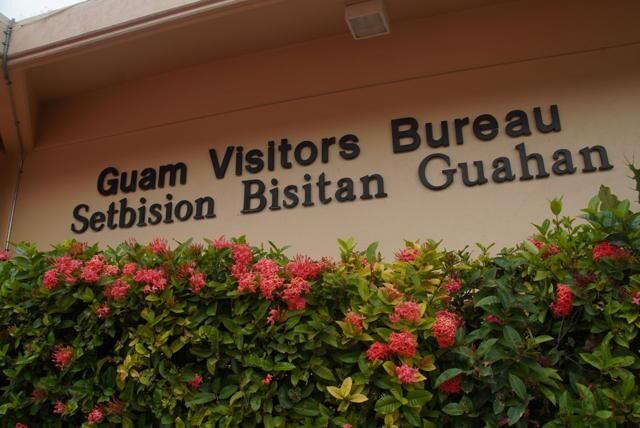
The Guam Visitors Bureau headquarters in Tumon is seen on Monday, Feb. 26, 2024.
