





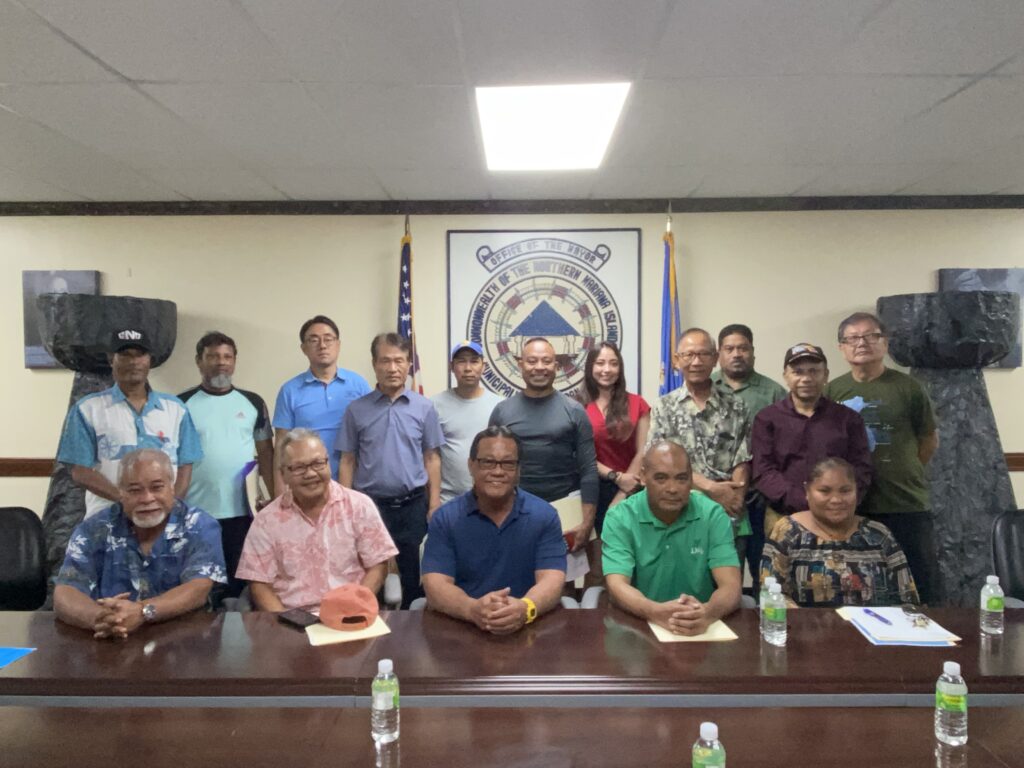
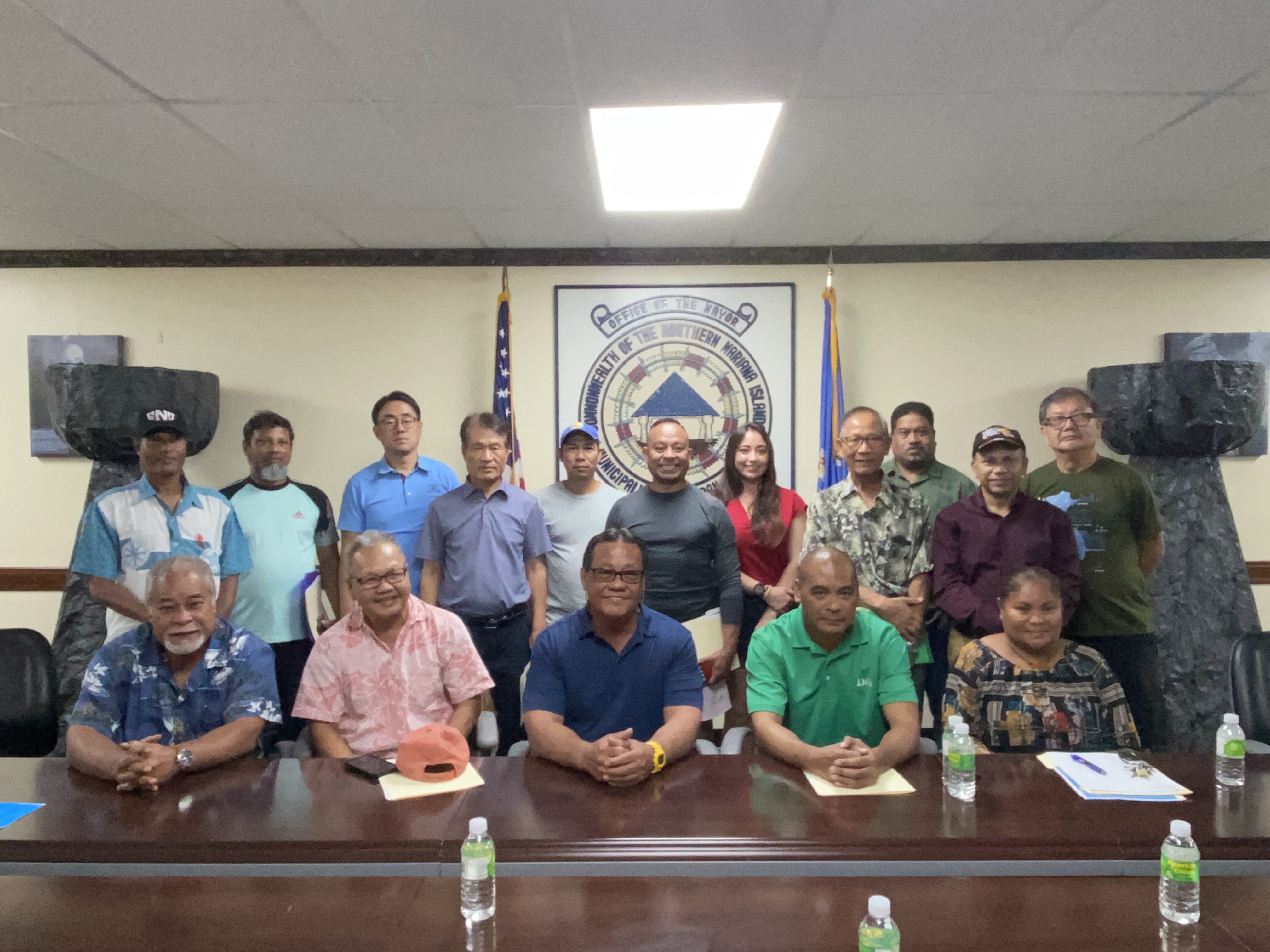
Saipan Mayor RB Camacho poses for a photo with officers of the United Filipino Organizations, the Chamorro Association, the Bangladeshi Cultural Group, the Palau Community Association, the Thailand Community Association, Carolinian Affairs Office Executive Assistant Felix Nogis as well as members of the Korean, Vietnamese, Chinese, Chuukese, and Japanese communities.
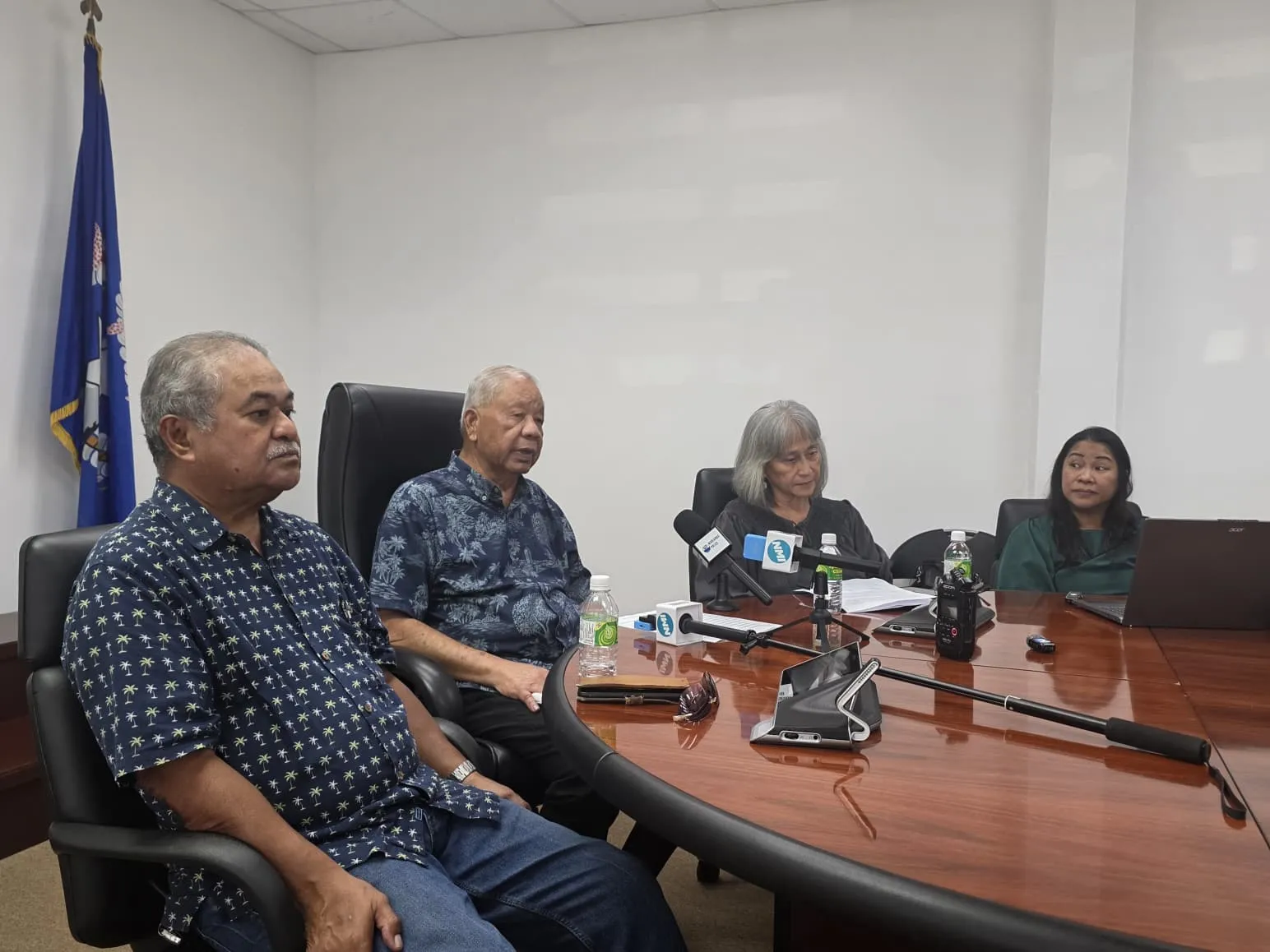
SAIPAN Mayor RB Camacho on Friday met with leaders of the various ethnic groups on island, the first of such meetings he plans to hold to address village cleanliness and safety.
Present at the meeting, which was held at the mayor’s office, were officers of the United Filipino Organizations, the Chamorro Association, the Bangladeshi Cultural Group, the Palau Community Association, the Thailand Community Association, the Korean, Vietnamese, Chinese, Chuukese, and Japanese communities as well as Carolinian Affairs Office Executive Assistant Felix Nogis.
Camacho said he wants ethnic and other community groups on Saipan to form a working relationship with his office.
“As the mayor for this municipality I want to establish a connection … to all the communities here,” he said. “We have a lot of community issues, especially crime. … The police cannot handle it [all] themselves. Where are the resources here on our island? The community.”
As in his meeting with the island’s religious leaders in November 2023, the mayor requested ethnic group officers to identify the concerns they may have and, in their next meeting, to offer suggestions that can help address those concerns.
Camacho likewise shared information about his office’s Adopt-a-Place program.
“[Ethnic groups] can adopt an area that’s manageable, and we’ll put a landmark [of] ownership that [for example] the Chuukese community is beautifying this place,” he said.
He also shared his tentative plan to establish after-school sports programs that will make use of the island’s 40 or so basketball courts. Camacho said he would also like to establish a “precinct to precinct” youth basketball competition. Ethnic groups could encourage their youth to be participants, and perhaps even sponsor teams, he added.
In addition, the mayor said ethnic groups could work together to establish a non-profit organization that can raise funds for their community activities and projects.
Camacho would also like to see a cultural festivities event.
“I’m proposing to hold it at Sugar King [Park],” he added. “A booth for the Chuukese, a booth for the Chinese, a booth for Bangladesh to promote their cultures. We’ve never seen each other, the whole diverse community, so let’s promote each other.”
Camacho said his office will also host town hall meetings to which he will invite all the island’s ethnic communities.
Concerns
Ian Otobed, an avid hiker who is also a member of the Palau Community Association, expressed concern about the state of the island’s northern coastline. He said that along hiking trails near Banzai Cliff, he has encountered discarded fishing lines and empty boxes, which he believes may have been left there by fishermen.
He also expressed interest in adopting a portion of Naftan. Otobed said in the past, the Palau community signed a memorandum of understanding to maintain a hiking destination on the island’s southernmost point, but government regulations stalled their group’s efforts.
CAO Executive Assistant Nogis, for his part, noted that a document provided by the mayor indicated that in Garapan alone, there were 948 open cases before the Department of Public Safety. In total, the mayor’s office listed over 4,400 open cases on Saipan.
“I tend to wonder whether [homelessness] is a factor in that and illicit drugs,” Nogis said. “If that’s one of the major things affecting our community now, I hope that whatever effort is developed by this group will address those issues.”
John Oliver Bolis Gonzales, a local culture advocate, shared some suggestions regarding fundraising. He said one source of funding could be the CNMI Office of Grants Management. He also detailed some experiences he had soliciting funds from private businesses as well as leveraging the educational tax credit.
Gonzales said non-profit organizations can also help fund cultural projects.
“I think it would also be very, very beneficial that we form a non-profit organization, so that way, companies and people will be able to gladly donate,” he said. “And that way it’s transparent.”
The meeting concluded with the ethnic group leaders sharing contact information with the mayor’s office. They expect to reconvene in two to three weeks.
