






HAGÅTÑA (The Guam Daily Post) — Gov. Lou Leon Guerrero said she wouldn’t want to completely shut Guam out of any energy options without thoroughly understanding how that energy works, and she will have to obtain more information before deciding whether she would veto a measure proposing to ban nuclear energy on the island, should the bill come to pass.
Bill 151-37 would prohibit the production and use of nuclear energy on Guam. Sens. Sabina Perez and Chris Barnett and Speaker Therese Terlaje introduced the measure in July 2023, after it was publicized that language in the U.S. Senate version of the fiscal year 2024 National Defense Authorization Act directed a briefing on the potential use of microreactors on Guam.
The briefing language was ultimately stripped out of the final compromise version of the NDAA. However, discourse on nuclear power recently resurfaced with the arrival of lead officials from Project Pele, the program to develop a mobile nuclear reactor for the military.
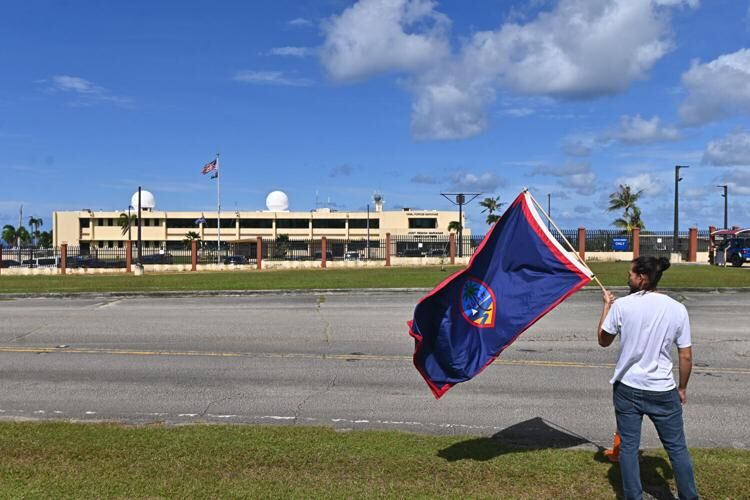
As evidenced by the introduction of Bill 151, nuclear energy presents a controversial issue on the island. Meetings held last week between the Project Pele leads and local media and lawmakers were met with demonstrations from local activists who were against the use of nuclear energy in military infrastructure.
Residents spoke for and against the proposed nuclear energy prohibition during the public hearing on Bill 151 late last year. Various grassroots and student organizations supported Bill 151. The Guam Environmental Protection Agency said the island’s capacity to manage spent nuclear fuel or low- to high-level nuclear waste could be described as “challenged” at best, although the agency hadn’t determined its position on Bill 151 at the time of the public hearing.
The Guam Power Authority, on the other hand, testified that there have been major advancements in the past few years regarding nuclear power production technologies without resulting in hazardous nuclear waste byproducts and that the utility had been monitoring these advancements for more than a decade as it looks for ways to provide conventional energy reserve capacity.
While GPA believed it “doubtful” that nuclear energy would be economically feasible on Guam, due to extensive federal permitting requirements and substantially high construction costs, the utility still called the proposed ban unnecessary, as it may limit “future clean, safe energy solutions for Guam.”
Jeffrey Johnson, chairman of the Public Utilities Commission, the rate-setting body on Guam, testified against Bill 151, stating that the Guam Legislature should not prohibit “a fair and open consideration of all technologies that can potentially provide benefits to the islandwide power system.”
“I am just as concerned about nuclear fallout and nuclear accidents, but as science progresses and as technology progresses and as research progresses, the officials and professional scientists are saying it’s becoming less (and) less of a risk. And I don’t want us to shut off from any kind of options of energy without thoroughly understanding it and thoroughly getting the research,” the governor said Monday when asked about Project Pele and her thoughts on Bill 151.
“I don’t know if I will (veto Bill 151) or not. I would have to get more information,” she added.
Like local media and lawmakers, the governor also met with the Project Pele leads to discuss the program.
Program manager Jeff Waksman said they are on an academic trip to learn about power needs and local issues in various locations, with the goal of facilitating a potential future decision from the Department of Defense on whether to build more reactors and where to place them.

A protester waves a flag to protest the Project Pele media roundtable Wednesday, Jan. 24, 2024, at the Joint Region Marianas headquarters on Nimitz Hill.
