





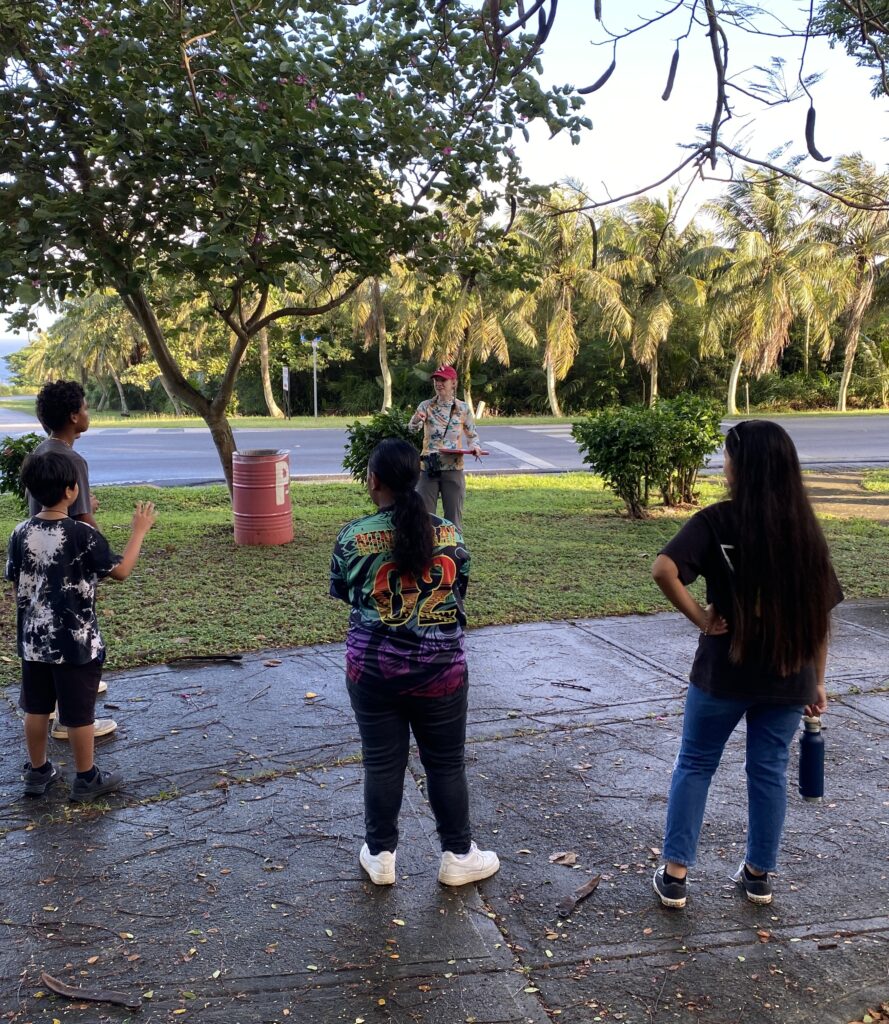

Ellie Roark talks about ornithology with Tanapag Middle School students.
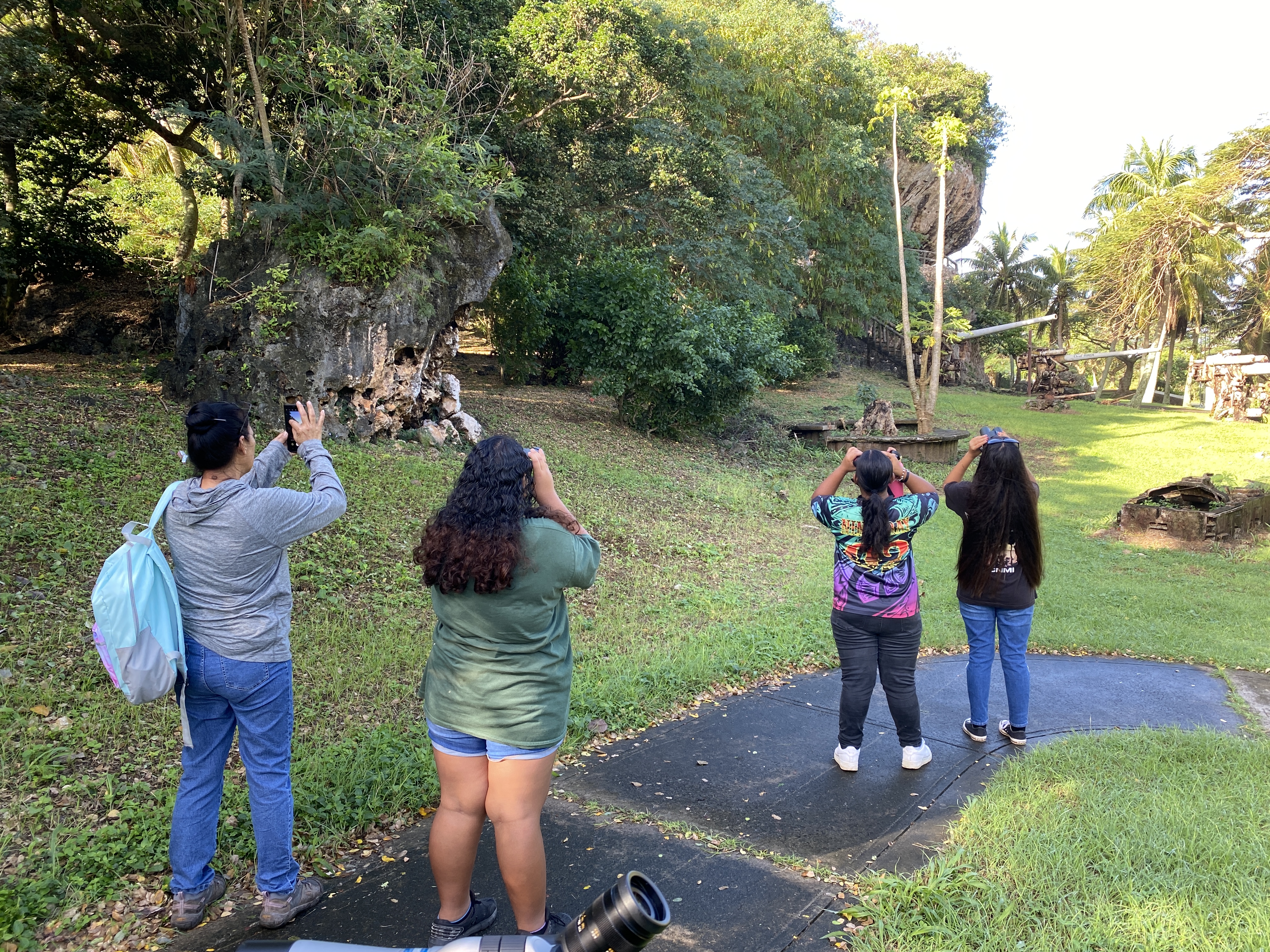
Tanapag Middle School students and their teacher, Acelia Castro, observe a collared kingfisher on a tree at Last Command Post.

Ellie Roark and volunteer Diane DeCristoforo search for shore birds along the mud flats near Gov. Eloy S. Inos Peace Park in Lower Base.
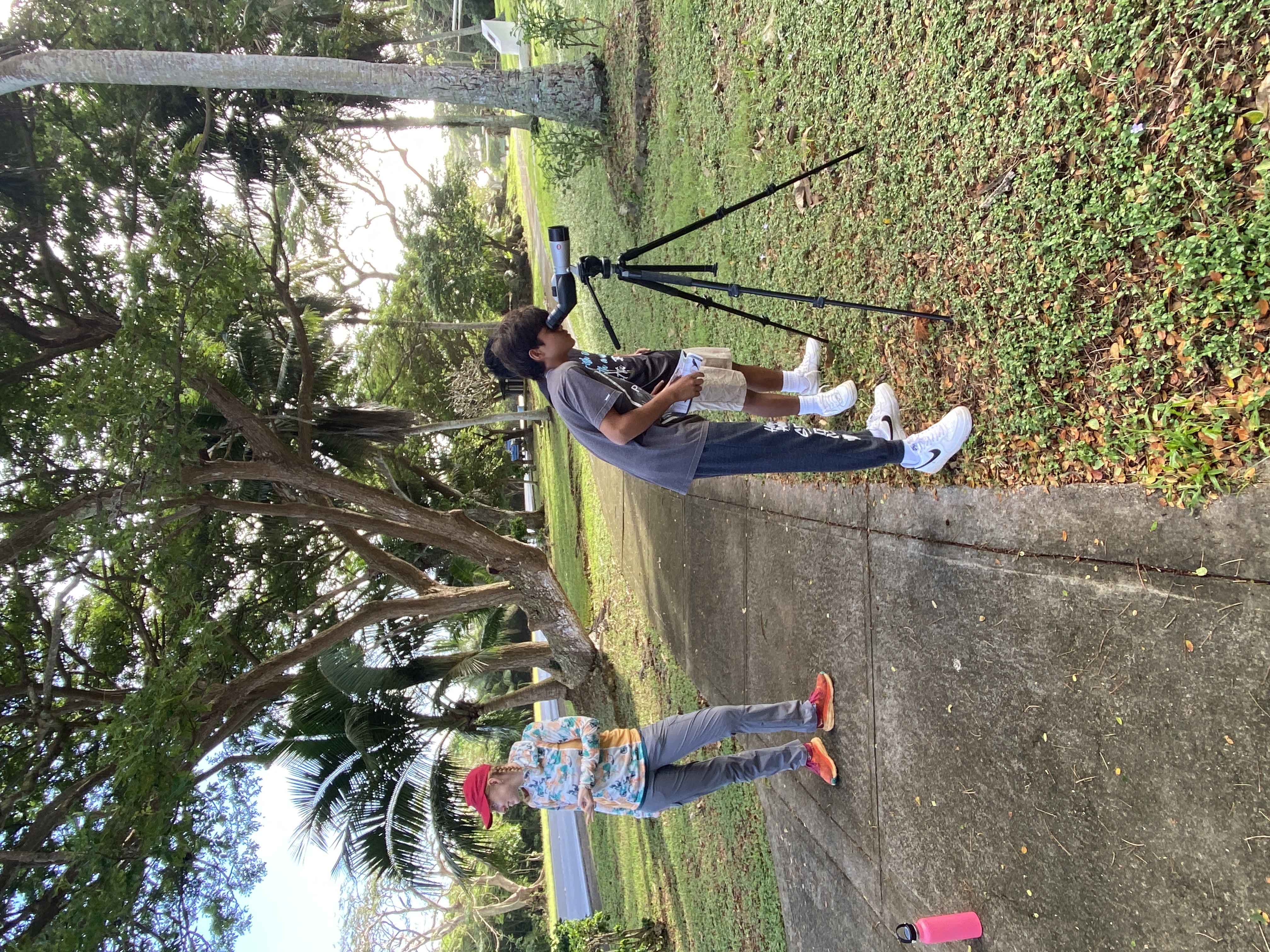
Students use a scope to view a bird off camera. Ellie Roark, left, speaks to students about ways to use a bird song to identify the birds in an area.
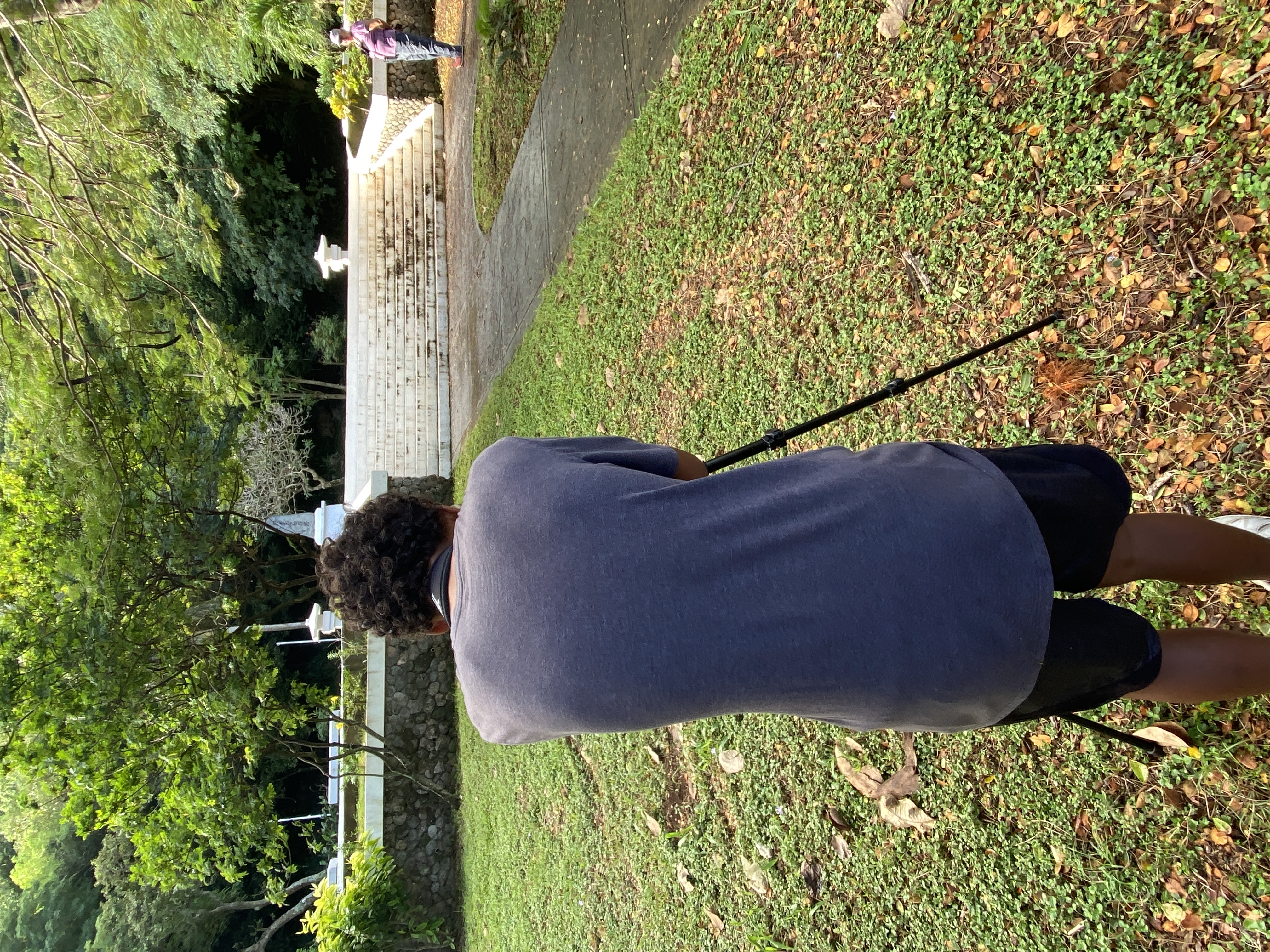
A student from Tanapag Middle School observes a collared kingfisher that landed on a plumeria tree.
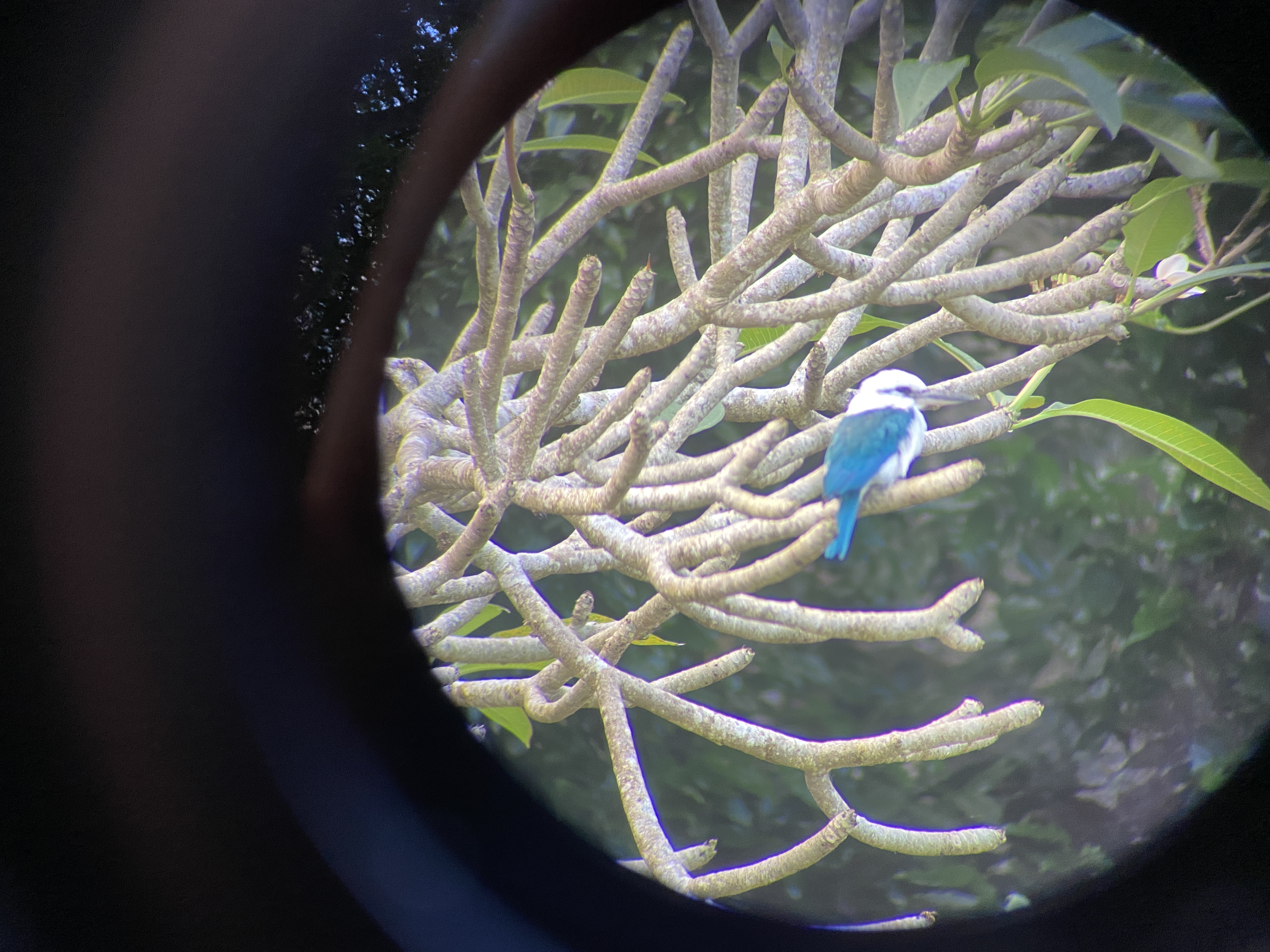
A view of a kingfisher as seen through the scope.
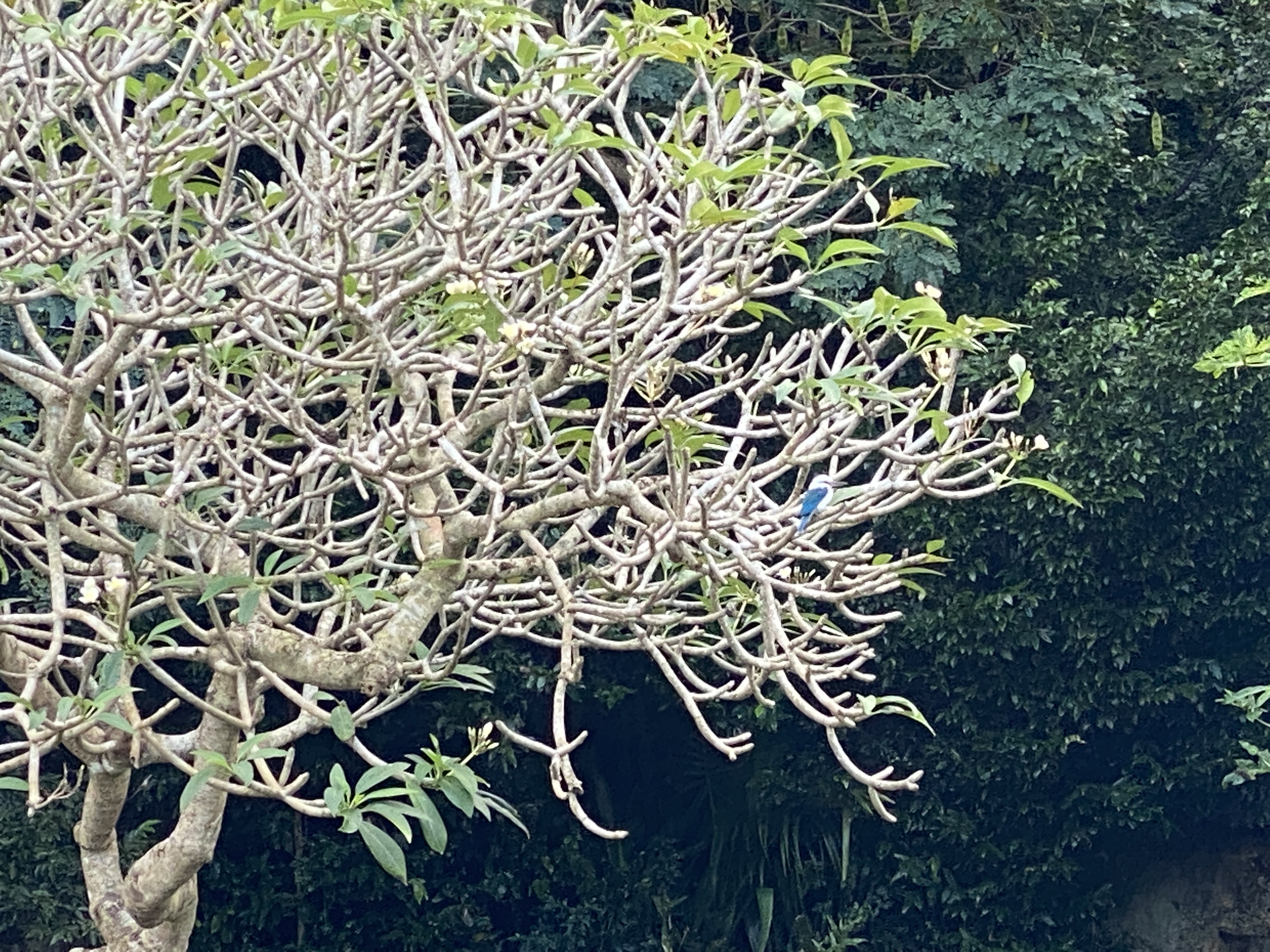
A kingfisher rests on a plumeria tree at Last Command Post.
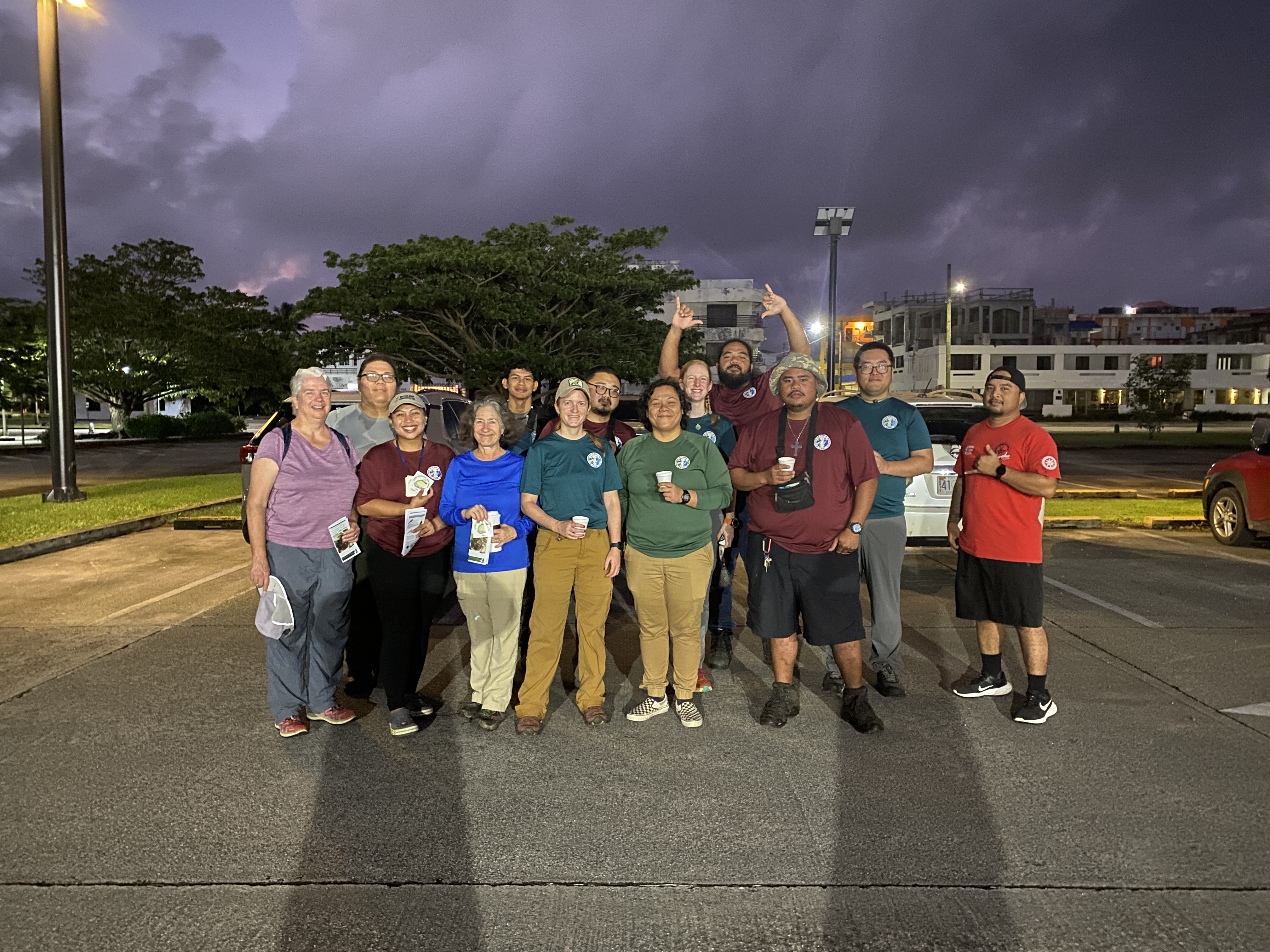
DFW staff and volunteers met at American Memorial Park prior to taking part in the bird count.
THE Division of Fish and Wildlife and volunteers participated in this year’s Audubon Christmas Bird Count on Saipan and Rota on Dec. 19. DFW staff and volunteers traveled to the various parts of both islands to collect data.
DFW ornithologist Ellie Roark said the event was a chance for the public to learn about the various endemic, indigenous, and migratory bird species that live or visit the Marianas.
“In terms of the immediate practical use of the Christmas Bird Count in the CNMI, we’re interested in helping the community learn about our birds, having an opportunity for folks to come out and learn about bird sounds, learn about bird [identification], and feel excited and proud of the birds that we have here in our community,” Roark said.
She added that the overall event, which has been held in the United States since 1900, provides a snapshot of the distribution of birds all over North America.
“The value of having the data set over a really long period of time is we can look at changes in the distribution of bird species across North America over a century,” Roark said.
On Saipan, DFW staff gathered at known bird “hot spots” such as Wireless Ridge, portions of Kagman, Coral Ocean Point, Obyan, and portions of Marpi.
Variety was with Roark and volunteer Diane DeCristoforo, observing migrant and indigenous shorebirds such as the whimbrel, sandpiper, little egret, intermediate egret, golden plover, Pacific reef heron, and a grey heron, an uncommon visitor to the CNMI.
Later, students from Tanapag Middle School took part in bird counting activities at Last Command Post.
Classroom teacher Acelia Castro brought the students as part of their career and technical education class.
“We have [career and technical education] programs and we try to expose students to different careers. We call it career exploration,” Castro said. “Not only job skills but exposing them to the careers that are out there. These kids had no idea what an ornithologist is.”
At Last Command Post, the students learned how to identify forest birds by paying attention to the specific bird calls they make. They also had an opportunity to learn about the scientific work Roark does for DFW while using binoculars to observe the birds in their vicinity.
Variety observed numerous white terns, black noddy, Micronesian starlings, collared kingfishers, Philippine turtle doves, white-tailed tropicbirds, bridled white-eyes, Eurasian tree sparrows, Rufus fantails, and white-throated ground doves.
Variety was also able to identify Marianas fruit doves through their bird calls, but was not able to make visual confirmation.
