



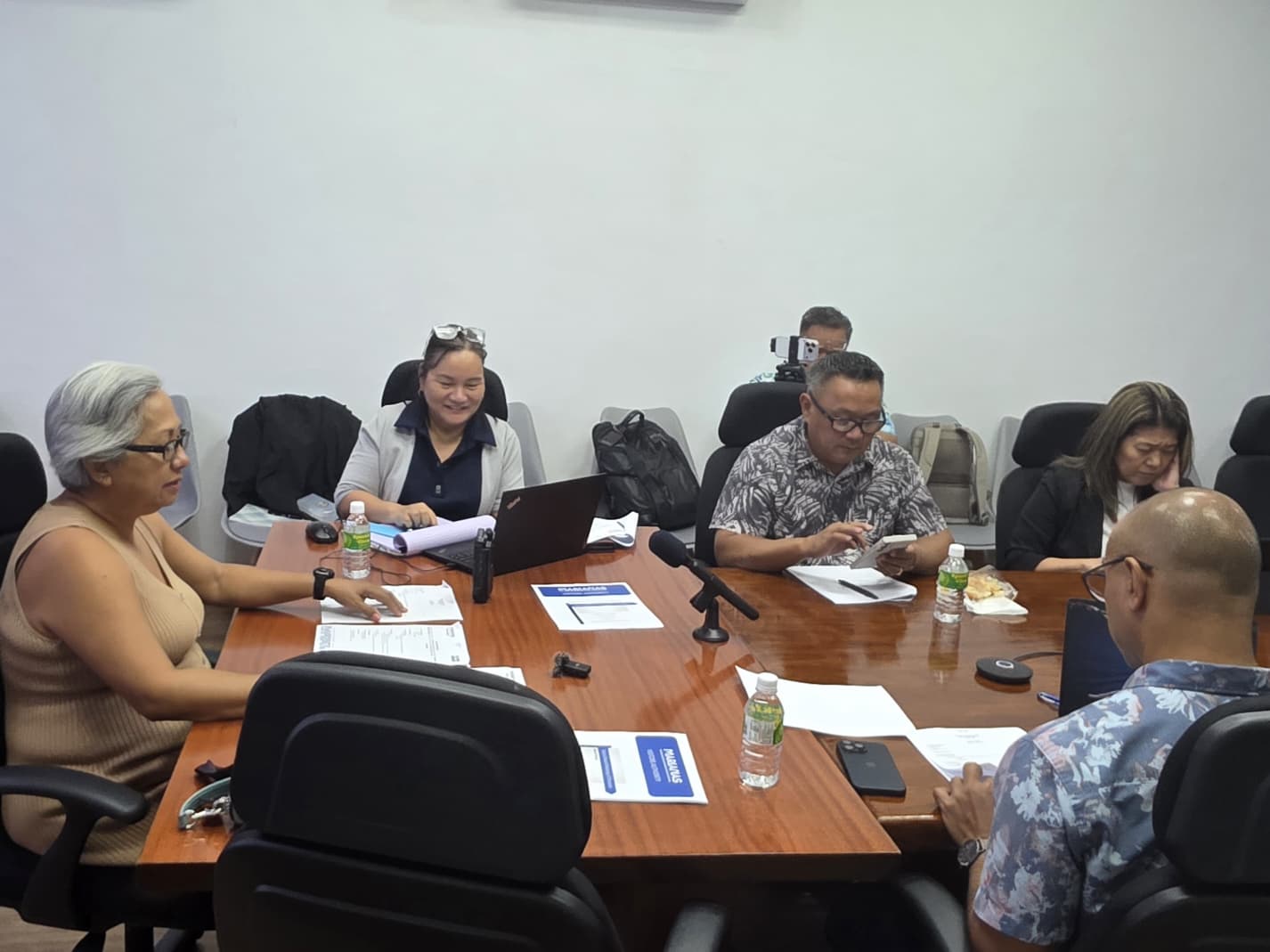




Fabian Nimea, FSM’s director for Office of Statistics, Budget and Economic Management, Overseas Development Assistance and Compact Management, told the U.S. House Subcommittee on Insular Affairs that the world oil crisis continues to take its toll on islanders.
“As I speak, FSM residents are paying upwards of $6 per gallon for regular gasoline. Electric power is increasingly on rolling blackouts. Boats have largely disappeared from the Chuuk lagoon. The FSM patrol boats lie at their docks,” Nimea said in his testimony on Tuesday before the subcommittee that Congresswoman Donna Christensen, D-U.S. Virgin Islands, chairs.
Nimea said no matter what the FSM government does to alleviate the hardship of its residents, external factors such as the global oil crisis undermines their economic growth efforts.
“Food prices have reached such levels as to cause the president to make an appeal for subsistence agriculture. Tourism is diminishing. Fisheries, the mainstay of local revenue, are being adversely affected. Any project previously costed-out must be reconsidered. Health and education budgets are disastrously affected,” he added.
The subcommittee hearing discussed the implementation of FSM’s amended Compact of Free Association with the U.S.
FSM, which became an independent nation in 1986, received more than $1.5 billion from the U.S. from 1987 through 2003 under the Compact which also grants the U.S. exclusive access to the islands’ territorial waters for civilian and military activities.
Nimea and other FSM officials are trying to convince the U.S. not to reduce financial aid to the island nation.
In a separate communication submitted to Christensen’s committee, a U.S. State Department official corroborated Nimea’s testimony regarding the gas price hikes and its impact on FSM’s residents and social services.
Glyn Davis, principal deputy assistant secretary of State for the Bureau of East Asian and Pacific Islands, said the higher cost of fuel and utilities are “severely affecting the ability of education departments (in FSM) to maintain properly functioning school systems.”
“The cost of fuel, topping $6 per gallon in some jurisdictions, is restricting central office staff from making routine trips to outer islands to conduct teacher training, to deliver textbooks and related teaching supplies, to collect data, and to conduct annual student testing,” Davis said.
The federal official said random blackouts in FSM also affect the education of students.
