



But he denied the Settlement Fund motion for a stay of the proceedings, saying that it failed to adequately articulate the grounds for a stay.
Settlement Fund trustee Joyce Tang said the Fund has a vested interest in the CNMI government funds at issue pursuant to the settlement agreement.
“Unless the PSS lawsuit is amended, we are going to have a fight with that money,” Tang added.
She said PSS is after earmarks that include the two funding sources for the Settlement Fund.
“How the court disposes these issues will directly affect the $48 million minimum annual fee [the Settlement Fund] receives and also the 25% that the CNMI government pays voluntarily to supplement retirees’ payment,” Tang said.
If the Settlement Fund is not allowed to intervene, “we will be severely impaired and clearly the government and PSS are not watching out for the Settlement Fund’s interest,” she added.
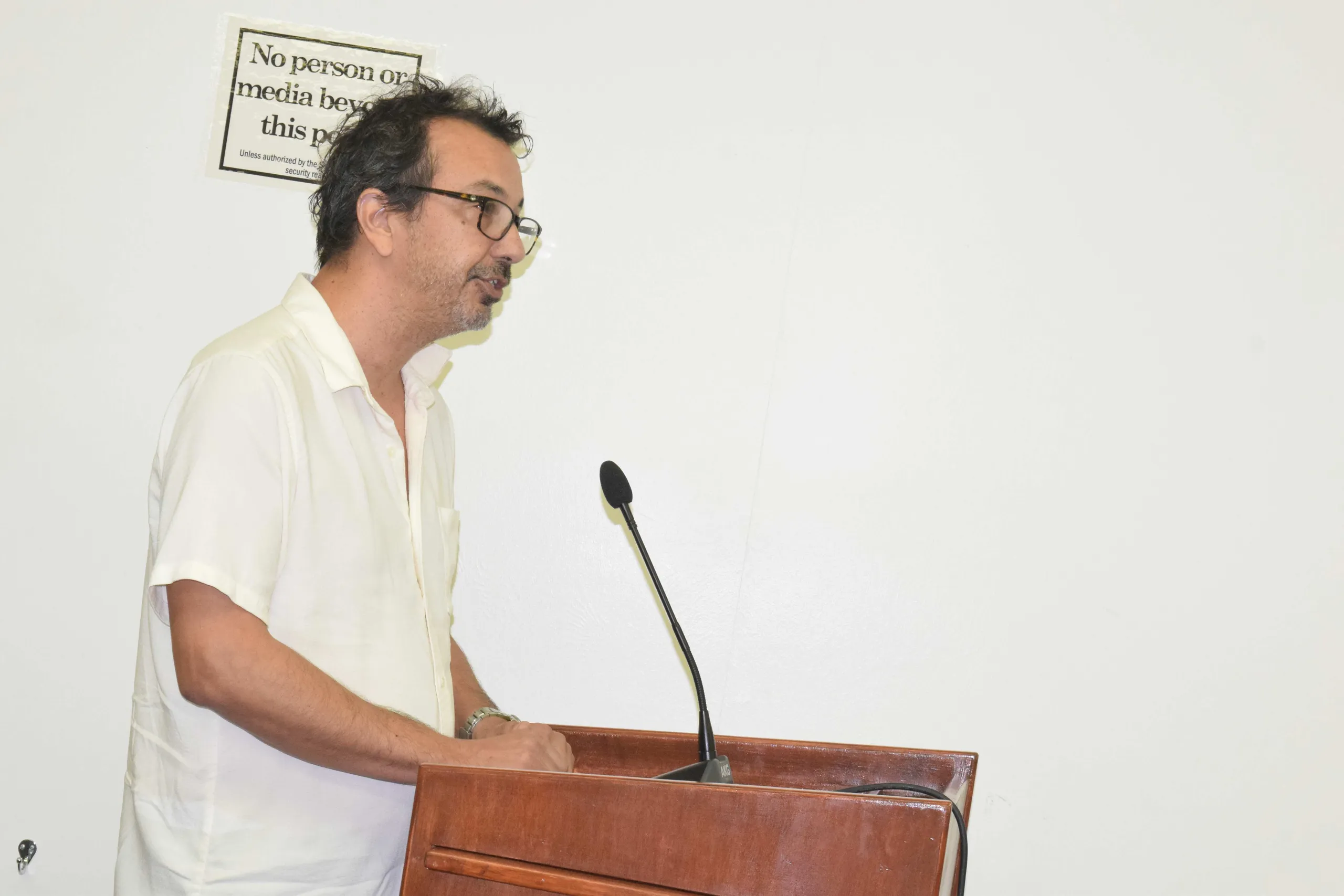
Attorney Tiberius Mocanu who represents PSS, opposed the Settlement Fund motion for intervention.
Mocanu said the only thing PSS desires is the recalculation of the CNMI government budget that will “conform to the Constitution.”
Saying that the litigation has been in court since 2018, “the Settlement Fund…comes at the eleventh hour saying that they have vested interest, and the remedy they seek from this court is for some words to be changed in the complaint. I find that the height of absurdity!”
The CNMI government, represented by Assistant Attorney General John P. Lowrey, said it has no position in the Settlement Fund request to intervene.
“We are neutral on the question of intervention and on the motion to stay and does not join or oppose the motion,” he added.
Settlement Fund attorney Nicole Torres-Ripple stated that the Fund had filed a motion in the District Court of the NMI to resolve the PSS challenges to the mandated payment obligations under the settlement agreement.
Torres-Ripple said because the district court has exclusive jurisdiction on all matters that arise under the Settlement Agreement, the Superior Court should grant the Fund motion for stay.
Torres-Ripple noted that both the CNMI government and PSS are parties to the Settlement Agreement and are bound by its terms.
She reiterated that the appropriation funds at issue in the case directly impact the funding source of the Settlement Fund.
But Mocanu and Lowrey believed that there was no reason for the Superior Court to grant a stay, adding that they favor moving forward with a hearing on the summary judgment motion.
Saying that the argument of the Settlement Fund was unpersuasive, Judge Camacho denied the motion for a stay, adding that the issues before the court are more than just the interest of the Settlement Fund.
The Settlement Fund trustee then said she will oppose the PSS motion for a summary judgment.
Judge Camacho gave the Settlement Fund until July 24 to file an opposition to the summary judgement motion, and set a motion hearing for Aug. 28 at 10 a.m.
PSS had also asked the court to issue a preliminary and permanent injunction to stop Gov. Ralph DLG Torres and Secretary of Finance David DLG Atalig from issuing any payments or disbursements “that do not comply with the CNMI Constitution.”
At Tuesday’s status conference, PSS withdrew the request for TRO and preliminary injunction, but the other portions of its complaint remain.
According to the PSS lawsuit, the CNMI government did not provide the school system the constitutionally required 25% of the general government revenues in fiscal year 2020.
But the CNMI government said that PSS was allotted 25.3% of the total local revenue and resources available for appropriation in FY 2020.
The basis of the PSS lawsuit against the CNMI government is the Commonwealth Supreme Court slip opinion on Jan. 14, 2020, which states that some of the special revenues in the government budget are actually part of the general revenues, and that therefore, PSS is also entitled to 25% of those revenues.
For its part, the Settlement Fund said PSS cannot seek payments from amounts appropriated to the Settlement Fund because these amounts are constitutionally and contractually obligated payments under Article III, Section 20(a) of the CNMI Constitution and the settlement agreement.
In 2009, retiree Betty Johnson sued the CNMI government for its failure to pay the amounts that it was required by law to pay to the Retirement Fund since 2005.
Johnson said the Fund would run out of money by June 2014 and would no longer be able to pay retirement benefits.
In Sept. 2013, the parties agreed to settle the lawsuit and the federal court approved a $779 million consent judgment in case the CNMI government does not meet its obligations to the Settlement Fund.
The Settlement Fund was created by the federal court as part of the settlement between the CNMI government and its retirees.
