



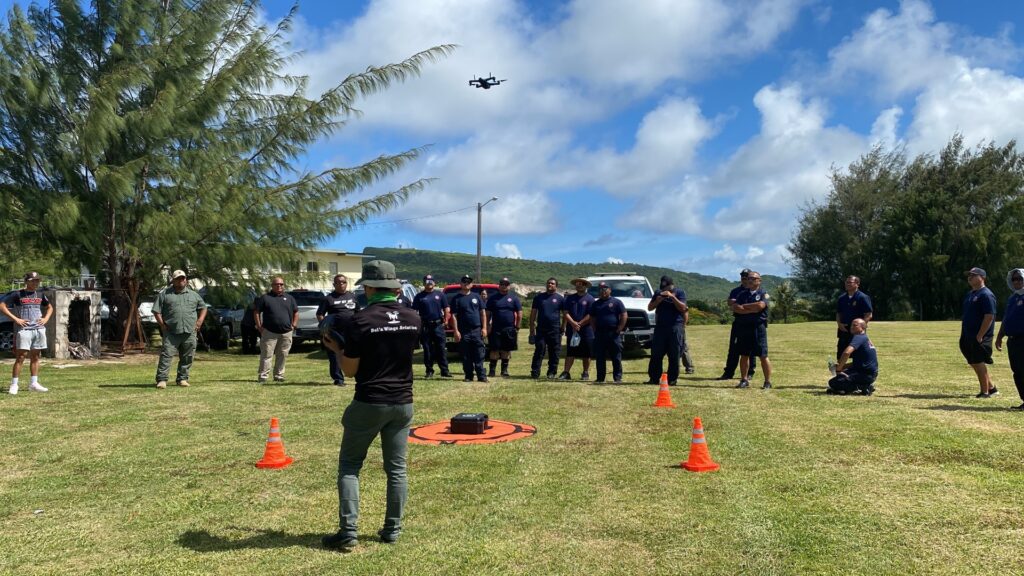
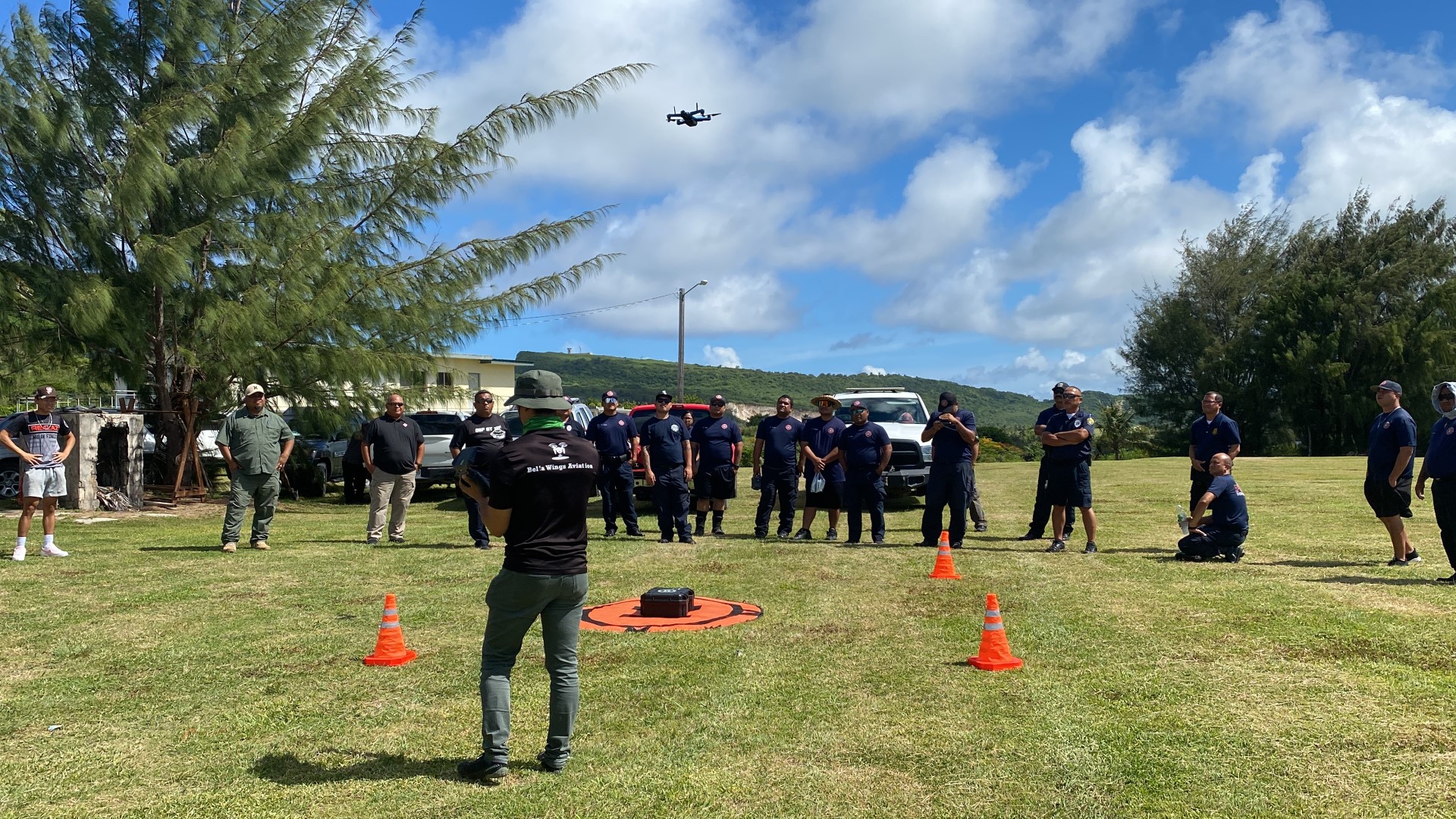
A Bella Wings Aviation drone pilot instructs CNMI first responders at a training exercise on June 21.
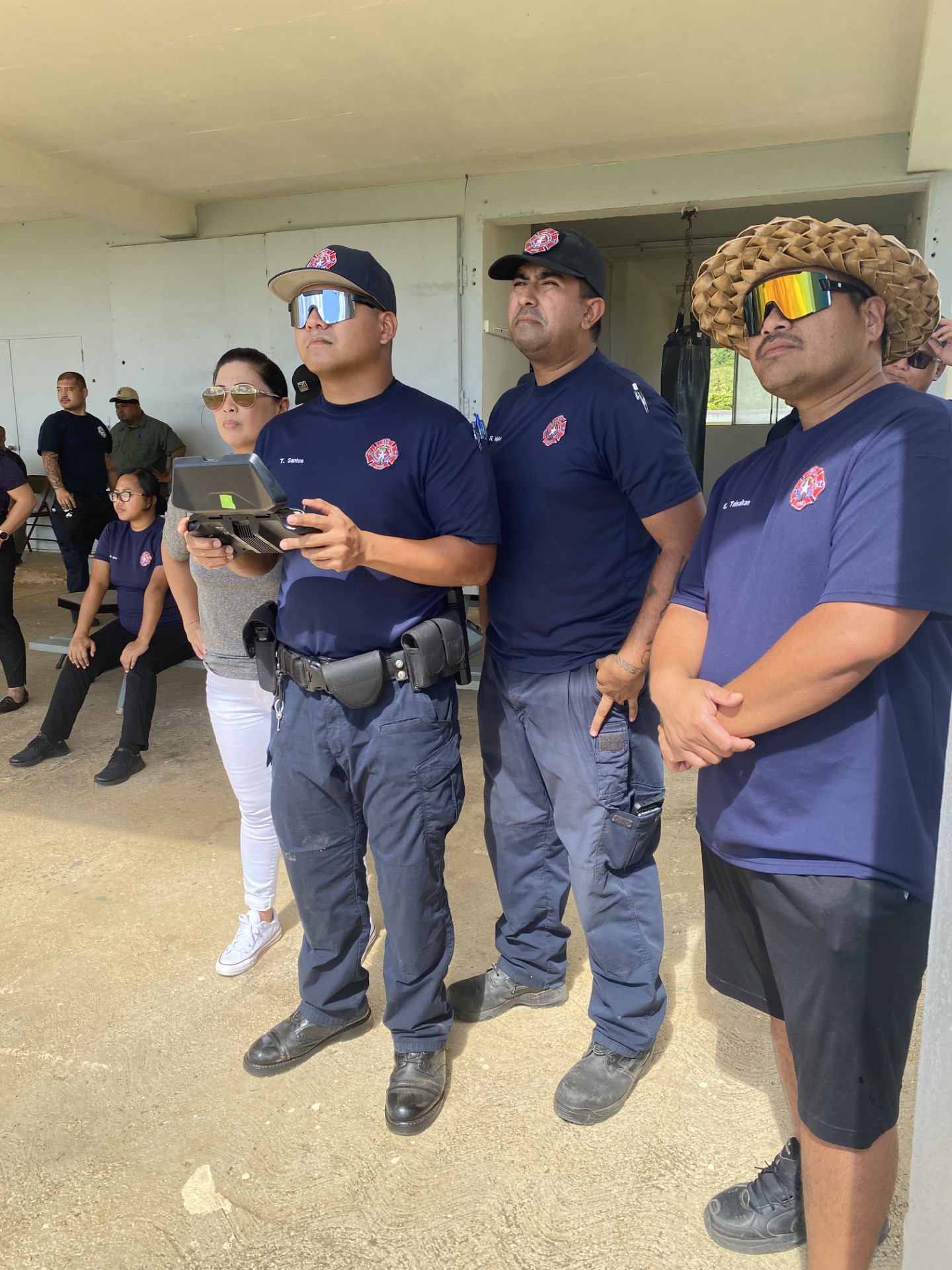
Tony Santos, left, stands next to Robert Mojica, center, at a training event lead by Bella Wings Aviation on June 21.
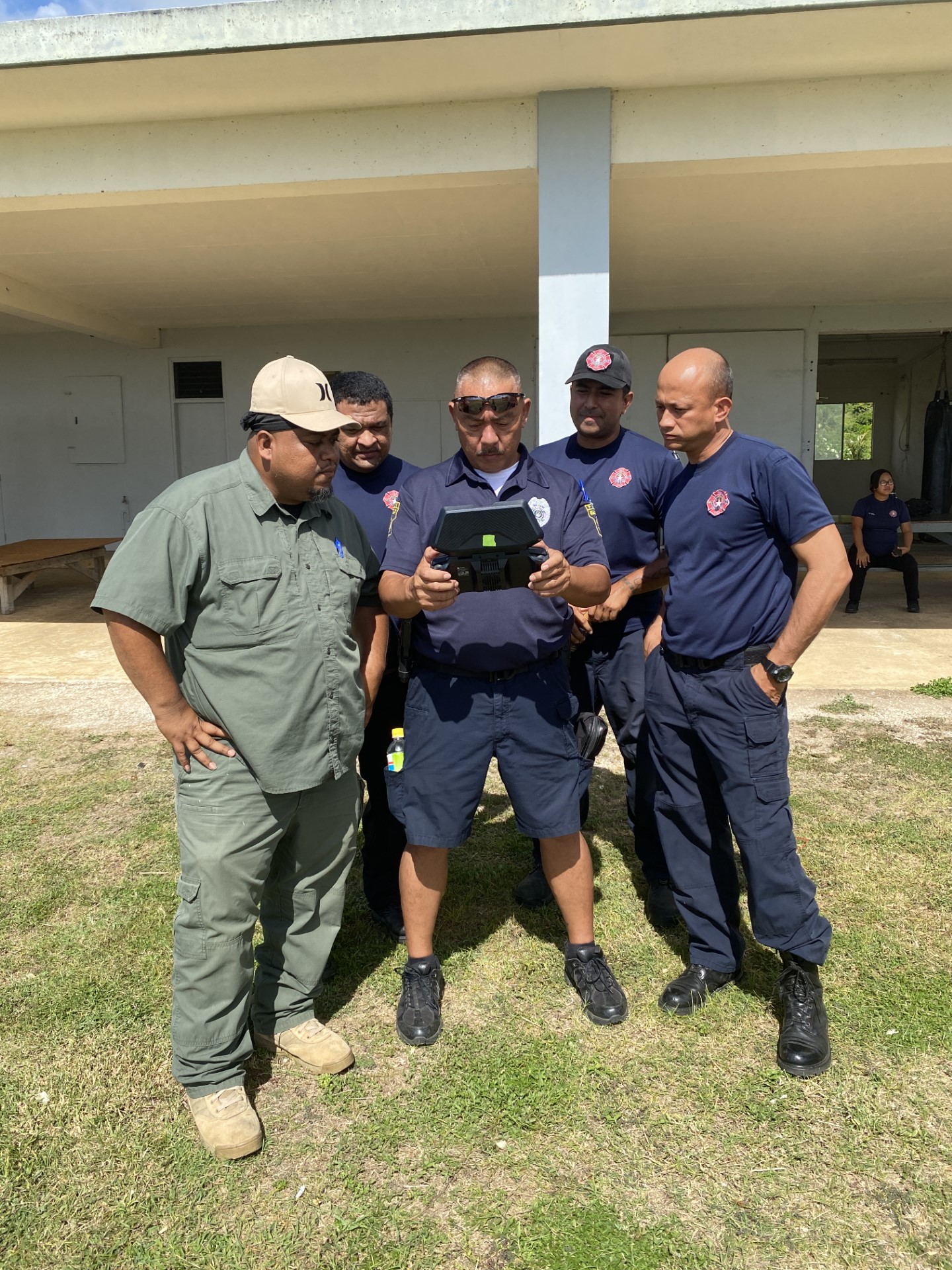
First responders, emergency personnel, and Public Safety officials are training with Bella Wings Aviation to apply drones to public safety work.
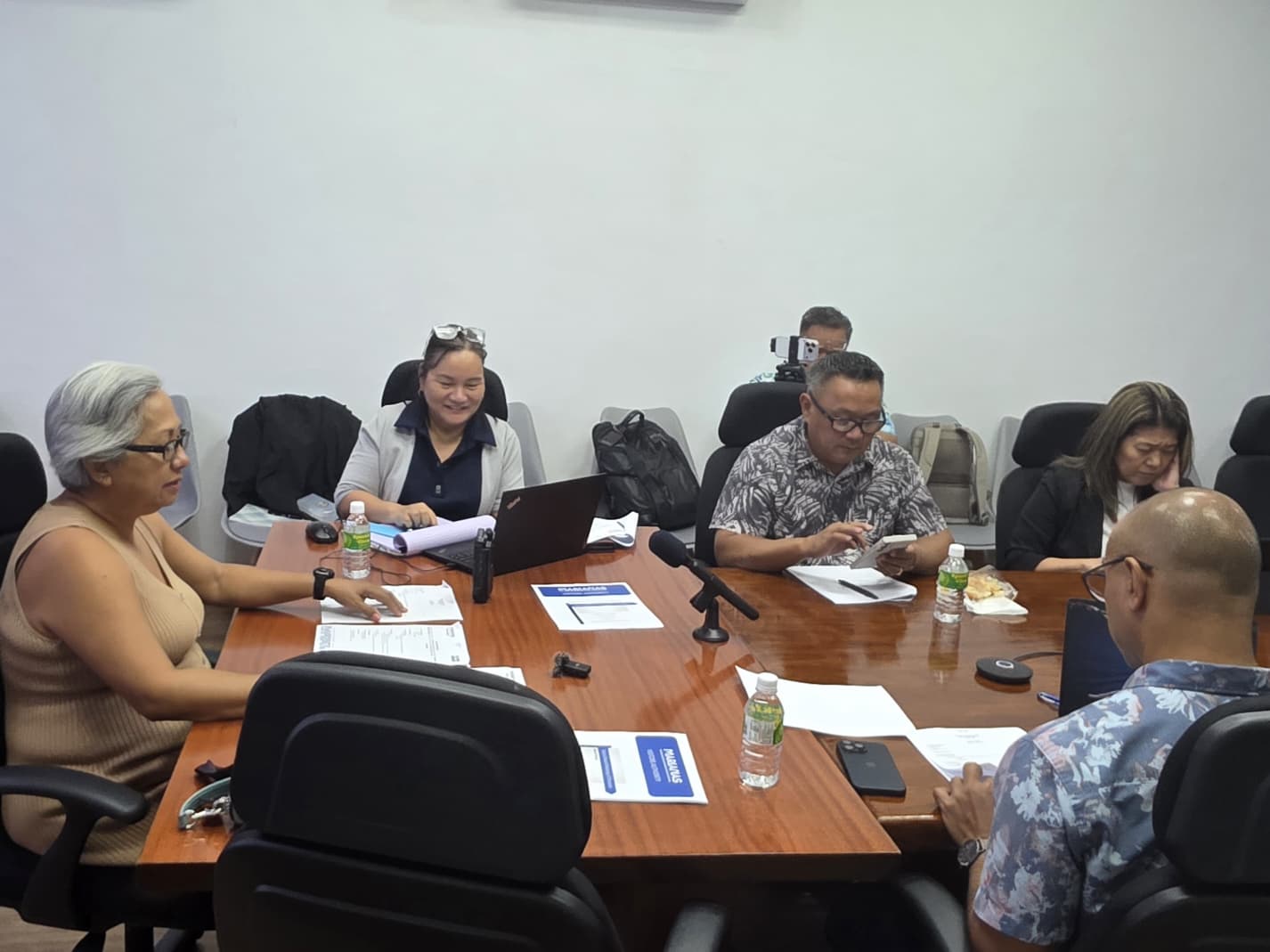
THE collaborative training exercise between Bella Wings Aviation and CNMI emergency personnel continued on June 21, as first responders and public safety officers received hands-on drone training in Marpi.
As Variety reported earlier this week, 15 emergency and public safety personnel are learning Federal Aviation Administration regulations in a classroom, while also practicing how to fly drones.
Representatives in the training exercise come from CNMI Customs Biosecurity, the Department of Fire and Emergency Medical Services, CNMI Office of Homeland Security and Emergency Management, the CNMI Department of Public Safety, the CNMI Department of Corrections, and the CNMI Aircraft Rescue and Firefighting unit.
When training is complete, they will take an FAA-certified exam that will enable them to receive a drone pilots license if they pass.
Ray Cepeda is a lieutenant at CNMI Customs and Biosecurity working to earn this license.
“After being in this training, I realize what regulations we can use for surveillance of all our ports of entry, our seaports and post office and such,” Cepeda said.
Robert Mojica, public information officer of the Department of Fire and Emergency Medical Services, is likewise training with Bella Wings Aviation. He sees many applications for drones at DFEMS.
“We were saying we need drones for search and rescue missions,” Mojica said. “Our big thing is night operations. If someone goes into the jungle and we can’t find them by calling them out, we’ll be searching in there with flashlights. But if we had the capabilities of thermal imaging and night vision, that would cut search and rescue in half.”
Mojica said drones also enhance first responders’ abilities to search beyond land.
“If we had someone lost at sea it would be easier to spot them and locate them. One of these drones has the capabilities of attaching a life jacket or a floatation device to it,” he added.
Mojica said wildland firefighters can use drones to view the percentage of land that has been burned, or to find access points for firefighters to enter mountainous fires.
Firefighter 3 Tony Santos said he had “zero experience” prior to joining the training exercise.
After using the controls, he said drone piloting is “almost like playing a video game.”
He said wind conditions and other environmental hazards get factored into how a drone handles in the real world. Santos called it a challenge, but added, “Once you get the feel, you understand how it works.”
Santos believes he would be able to use drones for high rise building inspections, fire investigations, search and rescue, and resupplying missing hikers.
Bella Wings Aviation has said they would bring drone workforce development to the Marianas.
Dr. Natalia Faculo, BWA strategy and operations advisor, said the drone technology industry will be game-changing for our island communities.
“The impact that it has on the people will go far beyond this generation,” Faculo said.
She said drone piloting can begin as early as childhood. On Guam, she said, there are BWA programs for children as young as seven.
Faculo said the drone education pipeline paves a natural transition that can start in middle school through high school moving into a more advanced drone-career technical education, all in an effort to “help bridge the gap” in talent retention in the local workforce.
“We see so many of our community members leaving the island. Education is paramount. Our goal is to nurture an environment aimed at providing educational training and workforce development opportunities that drive long-term sustainability — our island community will be pioneers as the industry unfolds,” Faculo said.
Back in May, aside from announcing drone pilot classes, BWA also said they would begin manufacturing drones on Saipan.
In addition, BWA has plans to use drones to deliver medicine and goods between Saipan, Tinian, Rota, Guam and the Northern Islands.
