








THE food served to senior citizens by the Office on Aging is prepared fresh every day and undergoes strict quality evaluation and control before its distribution, according to Office on Aging Director Walter Manglona.
Manglona said the food is recommended by a dietitian who ensures that the menu is packed with nutrients essential for the health of senior citizens and at the same time are appetizing and appealing to the taste and sight.
“We have a team of quality control individuals who also taste the food, checks how it is packed and even evaluate if it’s appetizing to look at,” Manglona told Variety.
He issued the statement in response to a complaint from a senior citizen and his wife regarding to the taste of the food they received.
Jack Muna, who receives hot lunches from the Office on Aging, said the food he receives is not appetizing.
“The meat is tough. The caterer has to consider who will eat this food! It’s salty, the patty is dry and the potato wedges are soft and not crispy!” he said.
Muna believes that the food is no longer fresh because the bento box is no longer warm when it is delivered to him.
“The broccoli delivered to us the other day is mushy. The brown rice is too sticky and the meat is something we cannot chew. We are old, we should at least have tender meat,” he said.
Muna is the caregiver of his sick wife who also receives free hot lunches from the Office on Aging.
“It does not taste good,” he added. “I know how to cook and I just don’t think the food they serve is delicious.”
He said he believes the vegetables are frozen and not fresh.
“It is difficult for me because I am sick,” his wife said. “My arms and hands are painful and I have a heart condition,” she added.
He said because he and his wife are disappointed with the food from the Office on Aging, they now prepare their own lunch.
But some senior citizens said they like the food provided to them.
“The food is delicious,” one of them said. “I receive my food warm every day and fruits are fresh.”
Prepared fresh everyday
Variety visited Herman’s Modern Bakery, the vendor for the hot lunches.
The management said the food is prepared according to the conditions of the contract.
“We only prepare what is recommended by the dietitian. We make sure that we prepare the food on time and we deliver only freshly cooked food to the Office on Aging every day,” the management said.
They only use fresh ingredients such as fresh fruits and fresh vegetables because the contract requires them to follow certain quality standards, the management added.
The management said they deliver the hot food to the Office on Aging which then delivers the lunch boxes to the homes of the recipients.
As for the meat, Herman’s said they only prepare lean meat or what is recommended by the dietitian.
They said the patty that was served to Muna was made of tuna meat “as per the required menu approved by the dietitian for that day, that’s why it lacks the juiciness of fatty beef.”
They also clarified that the potato wedges served were baked and not fried that is why they lack the crispness of French fries.
Manglona said the dietary requirements of seniors are different from the younger generations.
“As for the meat, we cannot serve fatty meat to the elders. We cannot serve oily food to them,” he added.
He reiterated that the food they serve meets the nutritional needs of senior citizens.
“We want to make sure that they eat healthy. Our goal here is to meet their nutritional requirements and supplement their health. As long as everyone is healthy and nobody gets sick then that’s what matters,” he said.
The objectives of the Nutrition Program of the Aging Office is to “provide an opportunity for older adults to live their years in dignity by providing healthy, appealing meals; promoting health and prevent disease; reducing malnutrition risk and improve nutritional status; reducing social isolation and increase social interaction; linking older adults with other community-based services such as physical activities and programs, community health, or case management services; and providing an opportunity for meaningful community involvement such as through volunteering.”
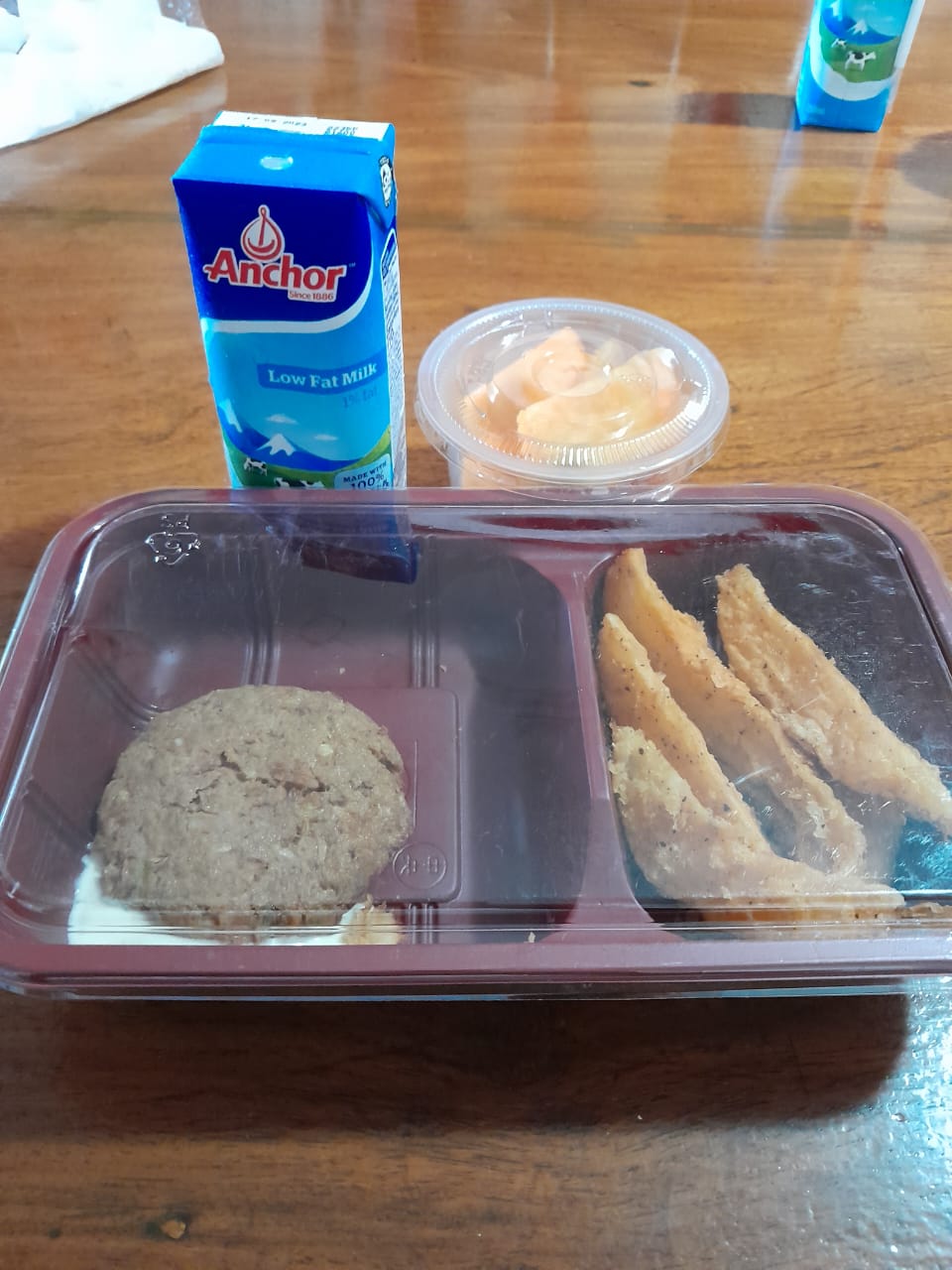
The food provided to Jack Muna.
