

CNMI Chief Justice Alexandro Castro said the judiciary has been placed on the “bottom” of the budgetary “totem pole” and is consequently underfunded.
Appearing before the House Ways and Means Committee on Friday, Castro said, based on his personal observation and experience in the past 34 years, the Office of Management and Budget has “unintentionally” placed the judiciary’s budget request at an executive branch level and not as a separate branch of government.
“May I therefore recommend that this year, we approach the budget process differently,” he told lawmakers.
He said there are three branches of the government, and they must be funded accordingly.
Because of the CNMI government’s fiscal condition today, Castro said the judiciary supports the governor’s budget submission with respect to the judiciary’s personnel costs amounting to $5.8 million.
But he said they oppose the $300,000 allocation for the “all others” category in the proposed FY 2024 budget for the judiciary.
He said the amount will only allow the courts to operate roughly three months into the fiscal year and then, “we have to close the doors of our court houses on Saipan, Tinian and Rota.”
Castro added, “I do not think, knowing the governor, and knowing the lt. governor — I do not think that they will support such unintended consequences.”
Castro said the judiciary roughly needs $900,000 on top of the $300,000 for a total of $1.2 million for “all others.”
“That amount sounds too much for a department and I agree. But as a third branch of government, that request is more than reasonable and, more importantly, essential. Please help us deliver quality judicial services to our people on Rota, Tinian and Saipan,” Castro said.
ARPA funds
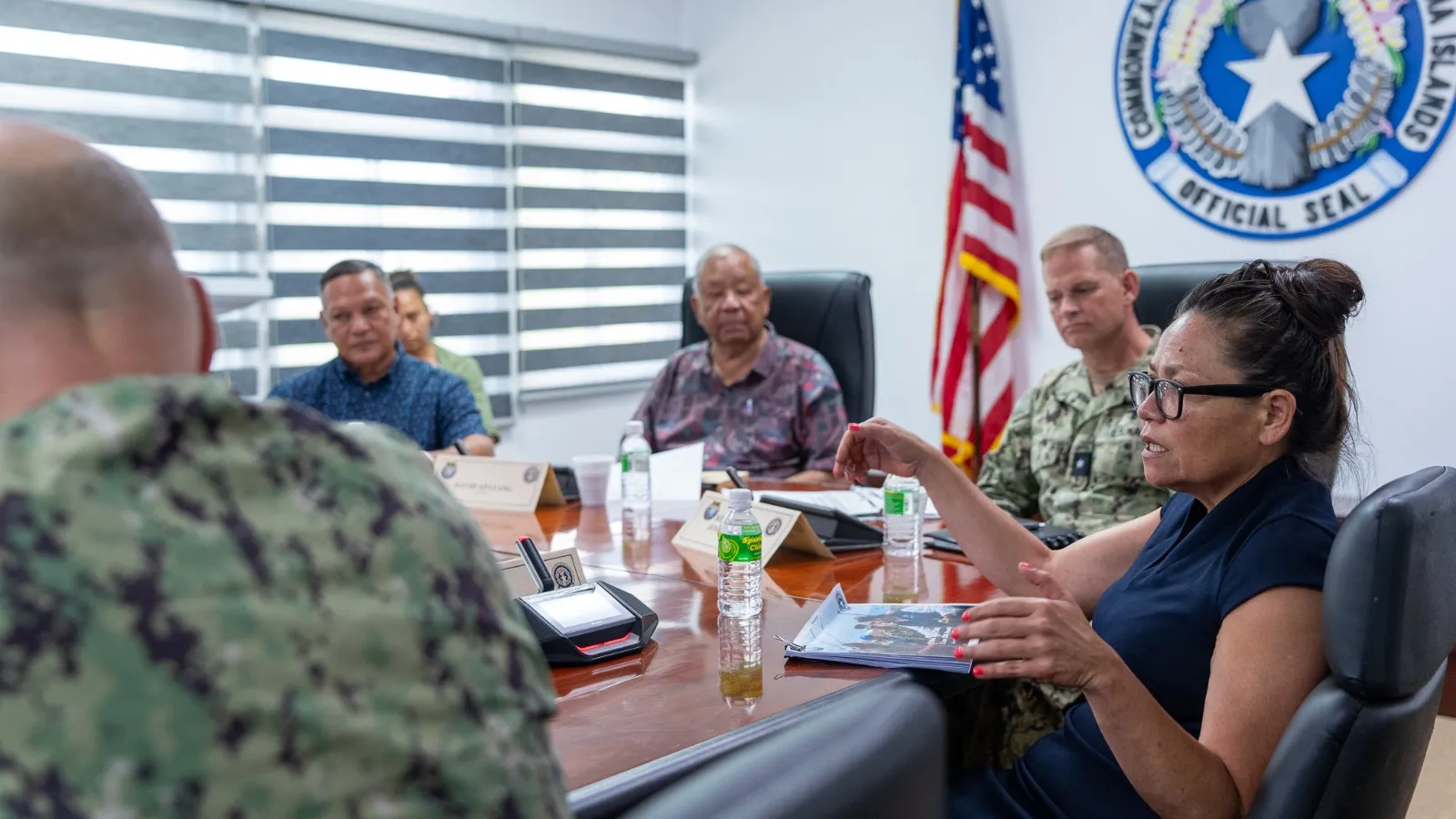
Also appearing before the House committee were Associate Justice John Manglona, Associate Justice Perry Inos, Presiding Judge Roberto Naraja and Associate Judge Teresa Kim-Tenorio.
With Castro, they presented the judicial branch’s budget proposal and raised concerns about the current and proposed fiscal year 2024 appropriation.
In his testimony, Manglona said American Rescue Plan Act funds made possible “a range of accomplishments and ongoing projects including major technology improvements” in the judiciary.
The judiciary received $14 million of the $482 million in ARPA funds that the CNMI government received from the federal government more than two years ago.
Manglona said to date, the judiciary has only expended 47% or $6.58 million of the $14 million in ARPA funds awarded to the third branch of government.
He said the ARPA funds will allow the judiciary to move forward and improve its operations following the hardships of 2021 and 2022.
It can be seen from the judiciary’s monthly reports, that the judiciary took this promise of ARPA funds seriously, Manglona said.
“We relied on it, and we had concrete plans for investment and implementation of long-overdue technology and facilities improvements. But little did we know, the four-year spending plan would only get to its first phase,” he added.
Early this year, “we received the news [that] the promise of ARPA funding was hanging by a thread and the substantial portion of the $14 million granted to the judiciary may not materialize.”
Manglona said there is now a serious risk that many of judiciary’s projects will not be completed.
The judiciary, he added, will soon release its five-year strategic plan based on the input of stakeholders including the Legislature. But “all that input and planning will go to waste without the necessary funding to put them into action,” Manglona added.
Utilities
For his part, Associate Justice Perry Inos raised concern about the judiciary’s utility costs.
He said their budget request for utility over the years “had been based on historical usage” or whatever the usage was in the previous year. Quoting the judiciary’s finance manager, John Villagomez, Inos said their average monthly usage is around $60,000 or $720,000 a year.
Inos said the judiciary’s utility cost has always been “under-budgeted.”
“So, this is not a guess work. We will continue to be under-budgeted,” he added.
He said the judiciary received a disconnection notice from the Commonwealth Utilities Corp. a couple of months ago “and we are trying to address that.”
But “how do you address usage deficiency in your electricity bill if we just don’t have the funds?” he asked.
Exempt judiciary
Inos suggested that one way to address this problem is for the Legislature to pass a law “that takes off disconnection as an option for the judiciary.”
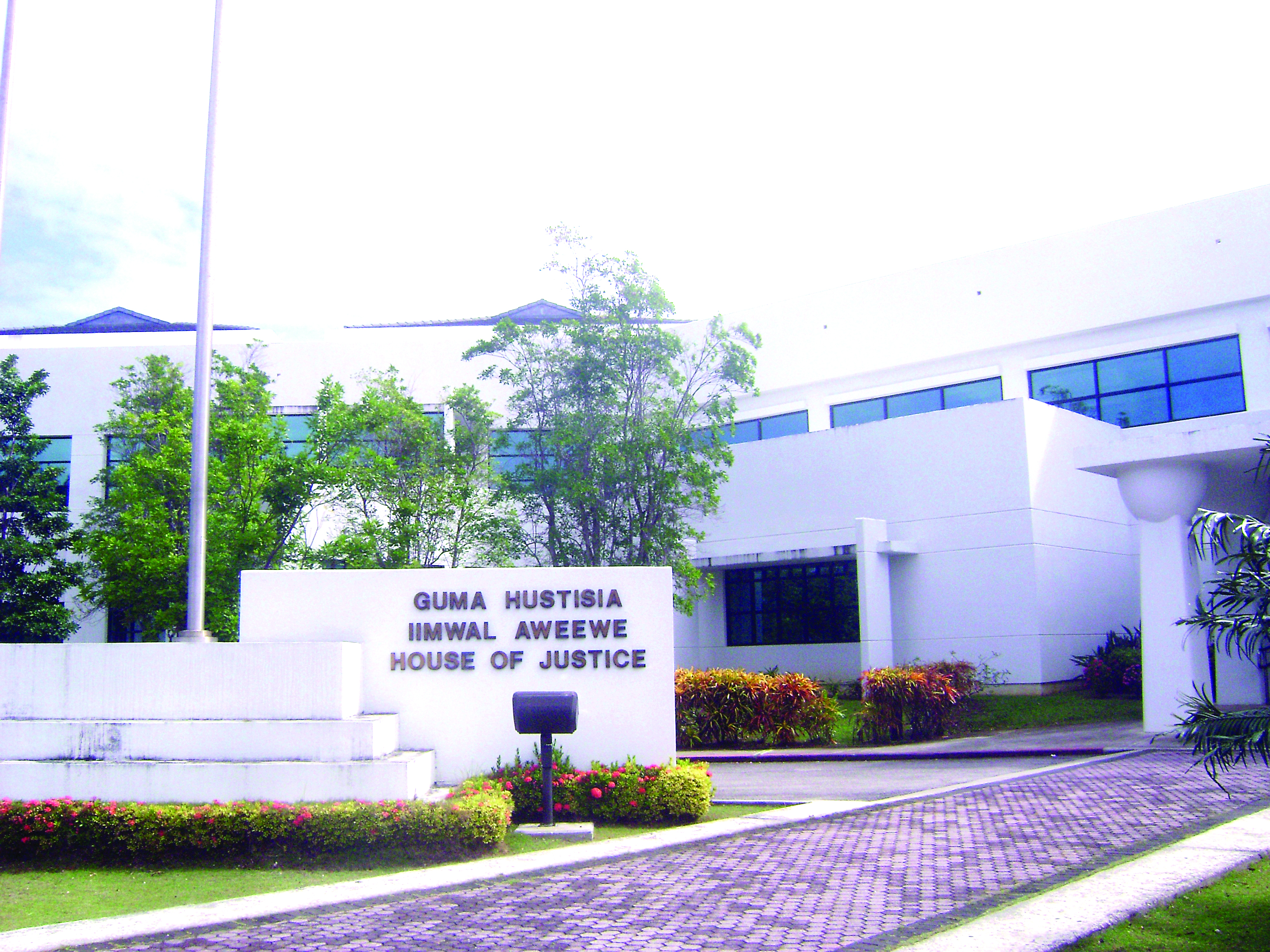
With many government agencies, he added, “when your electricity is disconnected, you can still provide your services. With the judiciary it’s a different story. In reality a disconnection to Guma Hustisia means that the third branch of government will shut down. The entire branch will shut down. It is not like other agencies or instrumentalities of the government,” he said.
Inos said 90% of the judiciary’s entire work is at Guma Hustisia.
“So, when CUC disconnects power, water and sewer services, we’re done,” he said.
“This is constitutionally unacceptable. Please consider enacting a law taking disconnection to CUC off the table. Consider that please,” he added.
In the governor’s proposed budget for FY 2024, the judiciary will get $6.4 million. The judiciary’s FY 2023 budget is also $6.4 million.