

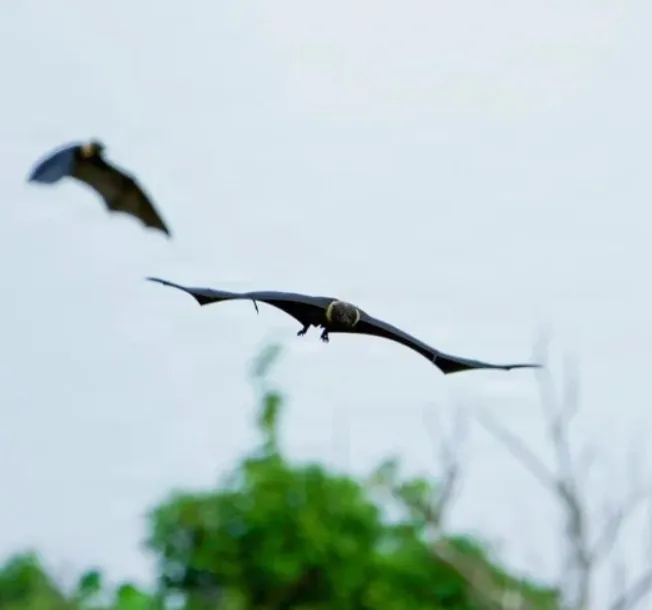




HAGÅTÑA (The Guam Daily Post) — A southern flock has been evicted.
Despite bird lovers’ concerns over the removal of trees in Malesso’ that were home to the migratory black noddy, the trees had to be cut down, according to a Department of Agriculture official.
On Tuesday, Chelsa Muna-Brecht, the department’s director, reported to the Island Beautification Task Force that the trees were on private property and posed a danger to the community for several reasons.
“They’re so numerous that there’s so much feces, (residents) can’t go outside. It damages their vehicles, and it was a public health threat for them. It was a nuisance for them,” Muna-Brecht said.
The black noddy, a medium-sized seabird, typically makes a flight to Guam in April to nest and raise its young. Muna-Brecht said the residents, affected by the birds taking roost on their property, followed all the required steps to remove the trees with much consideration for the birds.
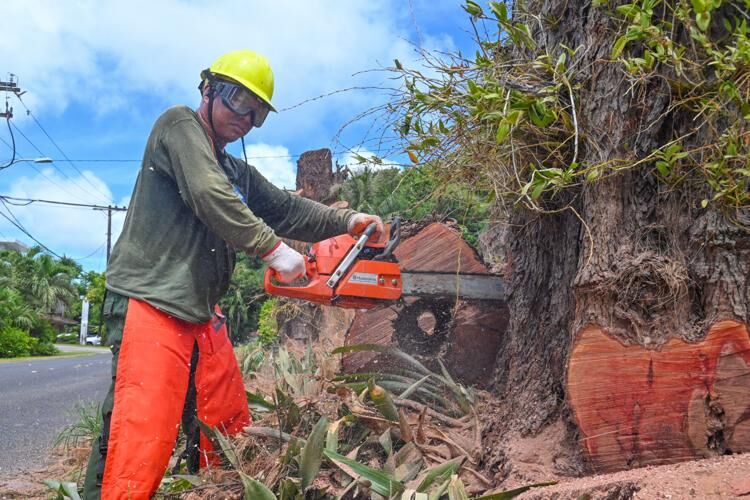
“Our Forestry Division went out and conducted a tree inspection. They consulted with the mayor. They also got a letter of support from the Church and they waited. The birds … are migratory birds and so, in accordance with federal law, they waited (until) the birds left the trees, which they do seasonally. And as soon as they left the trees, they came out and did a follow-up inspection and then cut the trees,” she said.
When the trees were cut, that’s when officials confirmed they averted an “accident waiting to happen.”
“They also observed what they thought would be the condition, which was the trees were being hollowed out at the center. So, they were already infected and would have become detrimental to anyone’s health at some point if we had some strong gusts or winds,” Muna-Brecht said.
That’s the reason, despite concerns from bird-watchers on the island, the trees had to be removed, the director said.
“Contrary to some of the strong feelings of those who love and admire the birds, … those trees needed to come down. And in the end, they were on private property. So, the private landowners could’ve done whatever they wanted. We’re just happy that they brought us in on the process, and it was done safely,” she said. “They followed and complied with the guidance that we issued.”
Impact on the birds
The black noddy previously roosted in trees on Cocos Island, but they were pushed toward the shores of Malesso’, where they nested in about five main trees, two on a sightseeing location, and in three gagu, or ironwood trees, on the private landowner’s property.
Now that the trees are gone, where will the black noddy roost, and what is the impact on the birds? To answer this, The Guam Daily Post turned to Martin Kastner, a biologist and avid bird lover.
“They just started nesting again last week. So, it happened pretty suddenly and so (it) seems like right now they are really concentrated in the flame tree and monkeypod (tree) still standing,” Kastner said Thursday in an interview. “Last year, there were about 350 nests in the trees that were cut and about 250 in the other two trees still standing. The question is: How many more birds are going to be able to fit in those trees? And, if the birds are going to be pushed off further to the edges and other trees.”
Kastner said more will be learned over this season, but noted when the birds arrived, he observed their behavior in response to the nesting sites being removed.
“What I’ve seen is that the birds were really packing into the remaining two trees at the nighttime and some of the trees nearby. What I’ve heard is that they were circling around, basically looking for their trees that were cut down. Then eventually, they settled down somewhere else,” Katner said.
Kastner was among the bird lovers who were saddened by the removal of the trees. He told the Post that he hopes future instances where habitats for birds are disrupted, such as this, are accompanied by more engagement with the community and a full conversation on the scope of the impacts to all those involved.
He added that the island has yet to see the impact the removal of the trees has on the black noddy population, which, if pushed further inland, could become susceptible to the brown tree snake, which has been responsible for the decimation of Guam birds in the past.

