





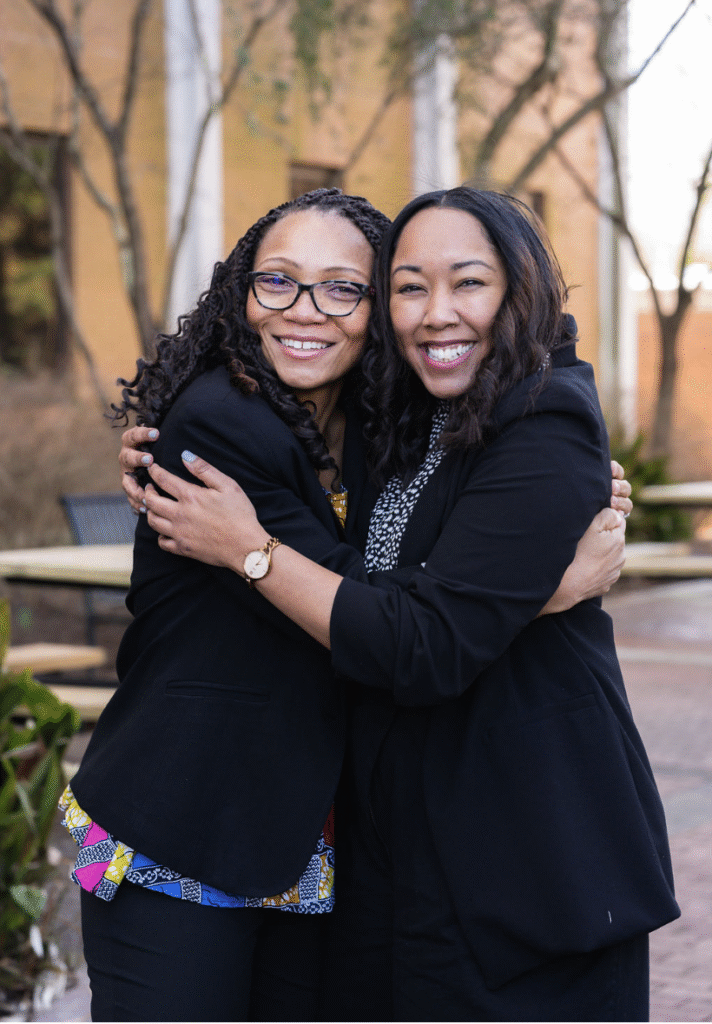
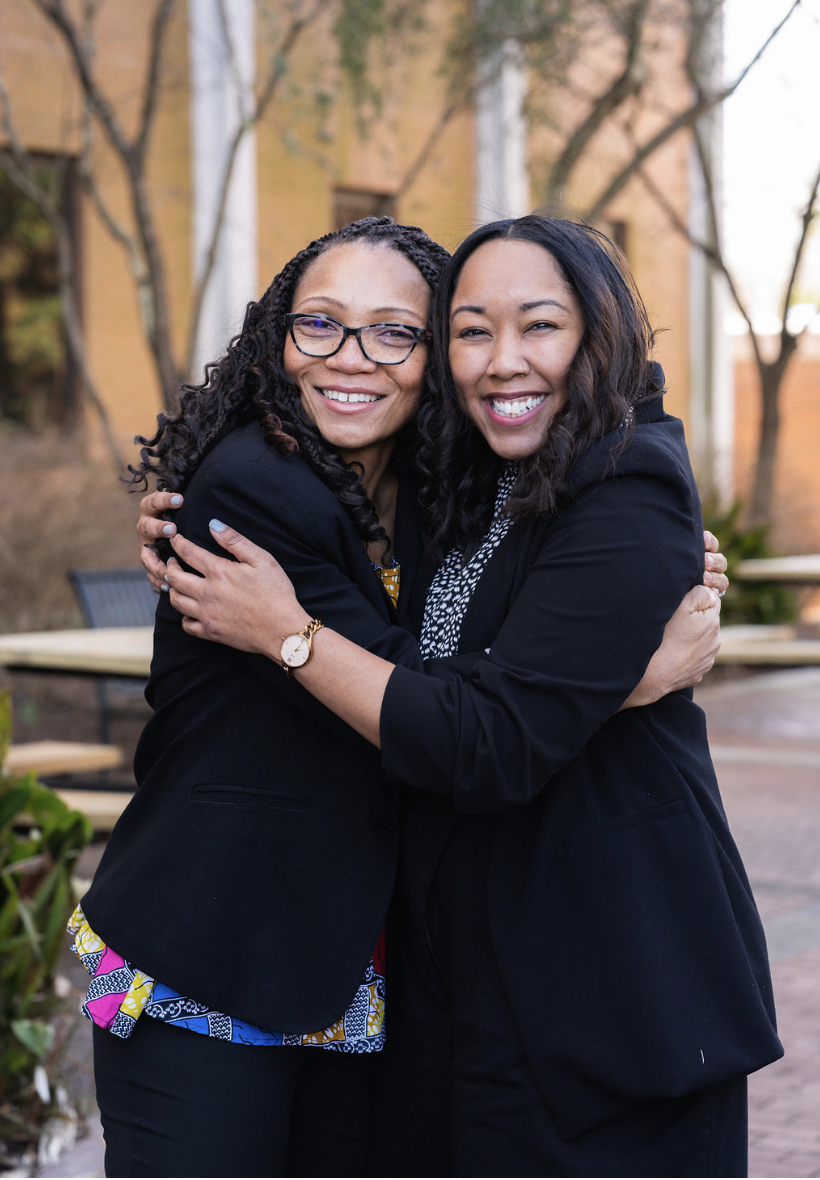
Dr. Collette Chapman-Hilliard, left, and Ph.D candidate Shawntell Pace.
A DOCTORAL candidate is calling on her fellow Chamorros around the world to take part in a study that seeks to describe the connection between culture and mental health.
Shawntell Pace is a student at the University of Georgia in Athens, Georgia, and is a fourth-year candidate pursuing a counseling psychology degree.
She is inviting Chamorros to voluntarily take a survey and/or sit down for personal interviews that will go toward her dissertation. Participants will receive an Amazon gift card as an incentive for participation.
Pace’s dissertation will examine how understanding Chamorro or CHamoru history, culture, and identity impacts mental health outcomes of Chamorro adults. In her research, Pace is being guided by Dr. Collette Chapman-Hilliard.
Pace said there are two ways people may participate. The first is to complete a survey. The second is to sign up to be interviewed by Pace.
She encourages people to do both but added that it is merely an option.
Participants may contribute to just one part of the research, if they wish.
Pace said she would like to close data collection by October and is aiming for at least 300 participants.
The link to the survey is https://tinyurl.com/CHamoruSurvey
The link to sign up for interviews is https://tinyurl.com/CHamoruinterviews
Pace said in psychological literature, there is a link between “better mental health outcomes” and connecting to one’s heritage.
She added, however, that the research specific to Chamorros is an area in need of development.
“I found a couple of articles about [Chamorro] mental health, but nothing about how our identity, heritage, and historical knowledge can improve our mental health,” Pace said.
“From adjacent populations such as the Latinx community and even the Black community, we see that the stronger the cultural identity, the better mental health outcomes. So, we can stand to reason that the same would occur in our CHamoru community.”
She wants to describe that connection via her research.
Pace said interviewees will sign a consent document, and then organize a meeting with her via Zoom.
She said interviews will only be audio recorded, and she will retain the anonymity of her interviewees. Pace will later transcribe the audio and then destroy the recording. She will then send a transcript to the participant to review for accuracy.
“Once they approve of the transcription, my team and I will start looking for themes,” Pace said. “What I love about this process is that all participants will be invited to preview the themes collected from all interviews and will be able to share their thoughts. My plan is to really involve the participants so that CHamoru voices are centered and honored.”
Pace said prior research she’s conducted has already begun to link strong cultural identity with positive mental health outcomes.
“When folks start filling out the survey, they will notice that I ask a ton of questions about connection to island and even language to account for the nuances of how we understand who we are. I actually conducted a pilot study before this that examined how CHamoru cultural strengths impacted the mental health of CHamoru adults and what I noticed was that CHamoru roots truly ran deep and improved mental health outcomes. What I mean by this was CHamorus, whether they lived on island, off island…knew the language, was learning, or did not know the language at all…the story was drastically similar. CHamoru cultural values were imperative to their mental health,” she said.
Pace’s interest in culture started early for her.
“I went to school at San Vincente Elementary in Saipan and what I vividly recall is learning about my CHamoru culture, language, and even CHamoru dance. This was such a pivotal time in my upbringing and when I moved stateside, I took these lessons with me,” she said.
For Pace, a connection to culture made her stronger.
“As I got older, I realized that this knowledge empowered me. I always knew that I stood on the shoulders of my ancestors and that despite colonization efforts, our culture thrived, which meant that despite what society threw at me, I too will thrive….”
She said research is her way of being an activist and storyteller.
“I know that my community has been and continues to resist colonization efforts,” Pace said. “My hope is that my data can be utilized as evidence that colonization helps no one and that our efforts for self-determination, sovereignty, as well as revitalization efforts to learn our language, etc. will ultimately help us live better physically, emotionally, mentally, and spiritually.”
Pace said her mother is from Guam and was raised there. On her maternal side, her grandmother, Florencia Matanane, is a survivor of the Japanese occupation of Guam. Her maternal grandfather is from Rota. She was born in the states, but lived on Saipan, from first to fourth grades.
