







THE Transportation Security Administration has activated a $13 million state-of-the-art Checked Baggage Inspection System or CBIS at the Francisco C. Ada/Saipan International Airport.
On Thursday, TSA spokesperson Lorie Dankers gave members of the local media an opportunity to tour the network of conveyors starting from the check-in counter all the way to the area where luggage is loaded to the aircraft.
CBIS is a fully automated system that screens the checked luggage of travelers departing the airport.
Dankers said the construction of the system took five years to complete, and it became operational on Sept. 4, after certification by TSA.
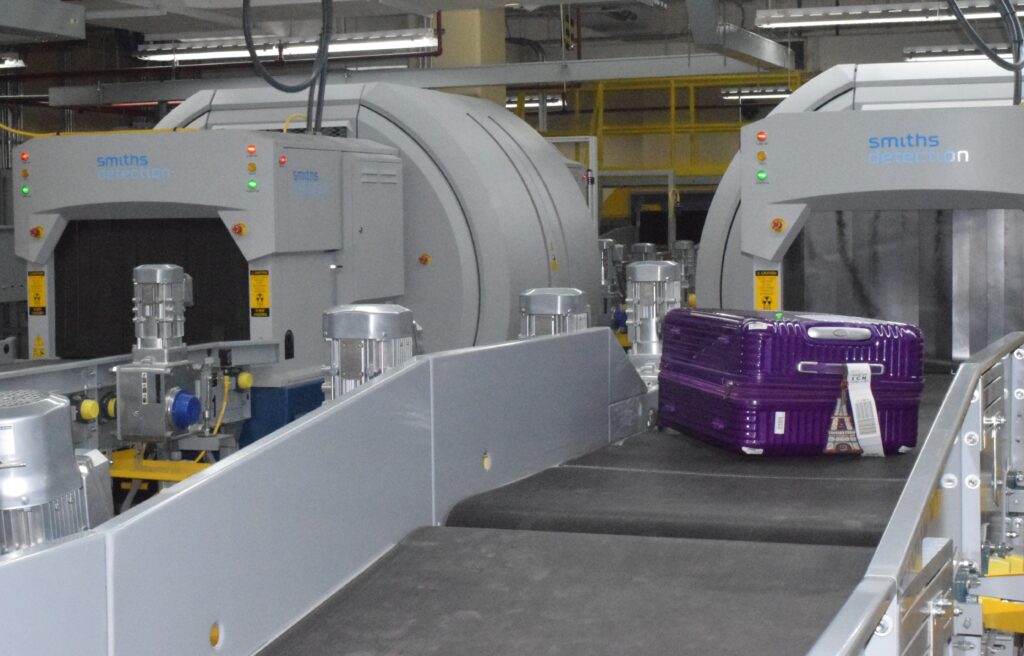
The key components of the system are the two Explosive Detection Systems or EDS that generate a three-dimensional image of the luggage and its contents. Each unit of the EDS is capable of screening up to 700 bags per hour.
She said TSA is required to screen all checked luggage for explosives and other security threats that could be catastrophic on an aircraft.
EDS is programmed to analyze the contents of a checked bag, completing a sophisticated and swift analysis of the 3-D image, she said.
The EDS then determines whether the bag is cleared for travel or if it requires follow up screening, she added.
If EDS detects an object that could be a security threat, the luggage is red-flagged and will be scrutinized on-screen by TSA staff to determine if the luggage requires physical research, Dankers said.
The conveyor itself is equipped with modern technology that directs the luggage either to the dispatch area or to the physical search area, she added.
“We are grateful to officials at Saipan for their investment in a new checked baggage screening system that puts TSA in a position to deliver the highest level of security in the most efficient manner,” TSA Federal Security Director for the Pacific Nanea Vasta said.
“We are proud of our strong partnership with local officials, and we look forward to future investments in security to meet the aviation security needs of the Saipan community,” he added.
Dankers said the vast majority of bags screened by EDS do not require additional screening. She said if the bag is cleared by EDS, it continues through the system and onto the aircraft without any TSA contact.
She said the system streamlines the checked baggage system screening process and automates the movement of bags. This reduces the number of physical injuries sustained by TSA officers who do not have to lift or manually move heavy bags, she added.
In the past, Dankers said checked luggage was screened through stand-alone x-ray units and all bags, for example, had to be manually inspected by TSA officers, which was a time-consuming process.
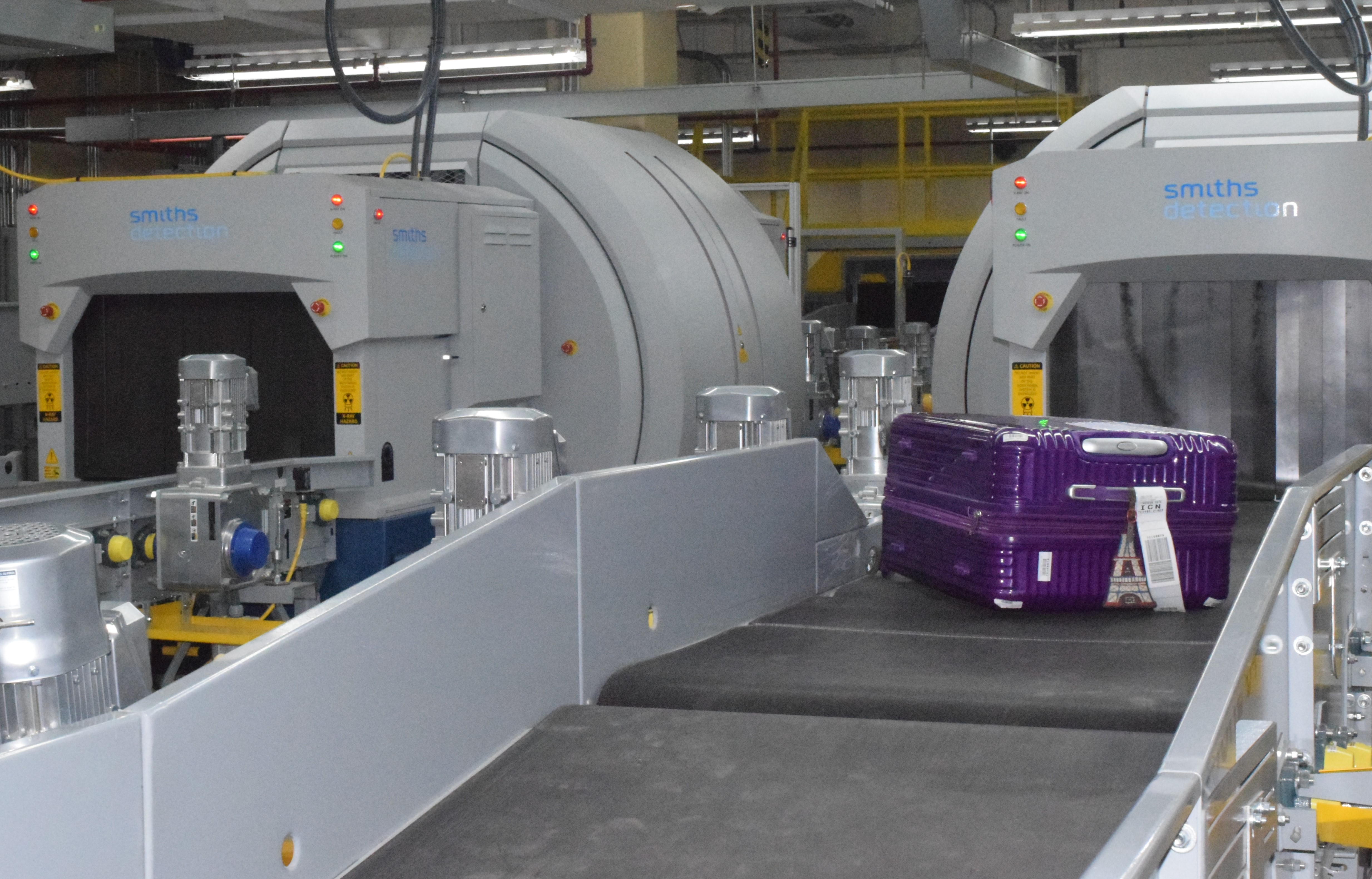
A piece of luggage emerges from the Explosive Detection System, which is a key component of the newly installed Checked Baggage Inspection System at the Francisco C. Ada/Saipan International Airport on Thursday.
