



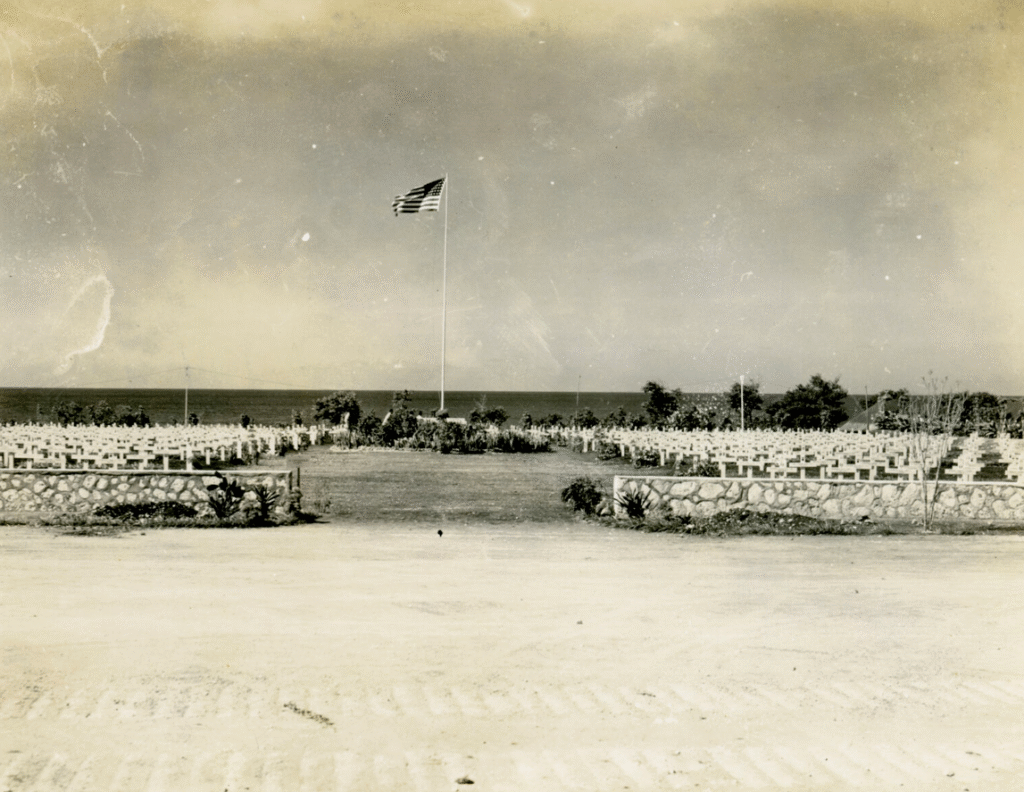
LAND clearing began Saturday, Sept. 9. at the site of a former World War II-era American Cemetery, local historian and scholar Don Farrell said.
He said a crew of “a few hardy souls, not representing any particular agency,” met at the 8th Avenue Roundabout to begin uncovering the nearby site of the access road to the cemetery. They likewise uncovered the cemetery’s altar and flagpole, he added.
Farrell said the site was once the graveyard for all the servicemen who died on Tinian during the war. The area hosted 627 graves.
In 1947, their bodies were exhumed and returned to their next of kin or reburied in the Punchbowl National Cemetery in Oahu, he added.
After almost 80 years of exposure to the elements and Mother Nature, the site’s flagpole and altar are reduced to historic debris, Farrell said.
He added that it was a “timely” measure to begin land clearing efforts because of a local plan to use the site for a formal Veterans Day ceremony this November.
Farrell said because the location is overgrown with vegetation, the long process to make it usable for visitors will have to begin now. Not all of the clearing can be done manually, and will require a front-end loader, he added.
The American Cemetery is included on a list of sites that will comprise an upgraded Tinian National Historic Landmark.
According to the website of the National Park Service, the agency responsible for historic landmark designations, national historic landmarks are “historic properties that illustrate the heritage of the United States.”
The upgraded map of the National Historic Landmark and the list of historic sites within the landmark have been sent to the National Park Service by the Northern Marianas Humanities Council for final review.
In 2021, the Humanities Council received a $92,000 grant to create and install 20 interpretive signs around the Tinian National Historic Landmark. Farrell is one the advisors for the project. The funding came from the NPS’ American Battlefield Protection Program.
Farrell said the Tinian NHL was first designated as a landmark site by the NPS in 1985 and sits on land leased by the Department of Defense.
Its current boundary includes Unai Babui, Unai Chulu (the invasion beaches), the former Japanese Air Administration Building, the atomic bomb assembly buildings, the high-tech area where atomic bomb parts were sub-assembled, the atomic bomb loading pits, as well as the North Field runways, taxiways, and service aprons, and surrounding areas.
Farrell said because Tinian was such a major part of World War II, there are some sites in the Tinian NHL that should have been included in a historic landmark designation yet were not included in the original 1985 designation.
These areas include the American Cemetery, the Mt. Lasso Homing Beacon, and the 374th Army Hospital.
Farrell said aside from being of use to the people of the CNMI, the contemporary Tinian NHL is an area of significance to scholars.
“The North Field area is famous among historians,” Farrell said, adding that Tinian’s role in the war had a wide impact. “The dropping of the atomic bombs was a true turning point in world history, not [just] in American history or island history.”
Farrell, a proponent of World War II tourism, said this could draw scholars as well as history buffs to Tinian for study or pleasure. “Historic Tinian” could become an international tourist destination, if properly developed, Farrell added.
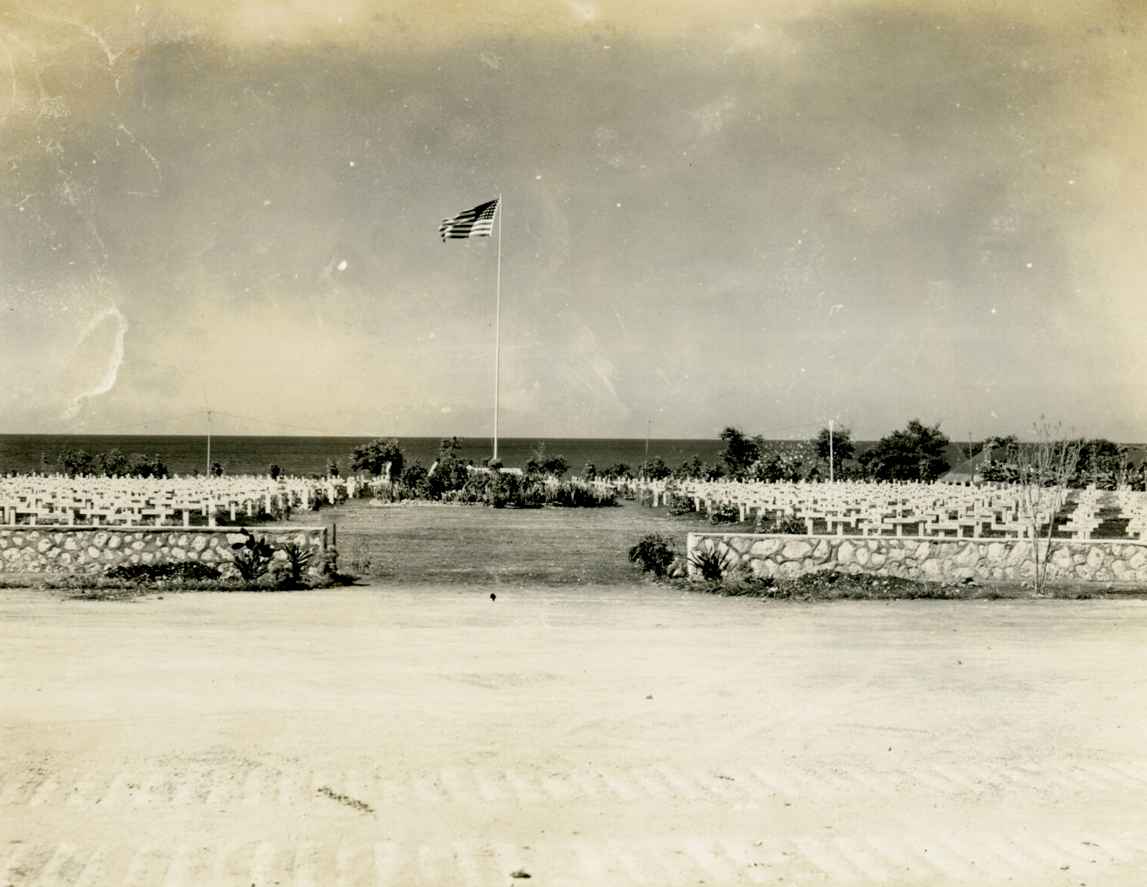
The American Cemetery on Tinian as it appeared after the conclusion of the Battle for Tinian, and prior to the relocation of the servicemen to their next of kin or the Punchbowl National Cemetery in Oahu.
