





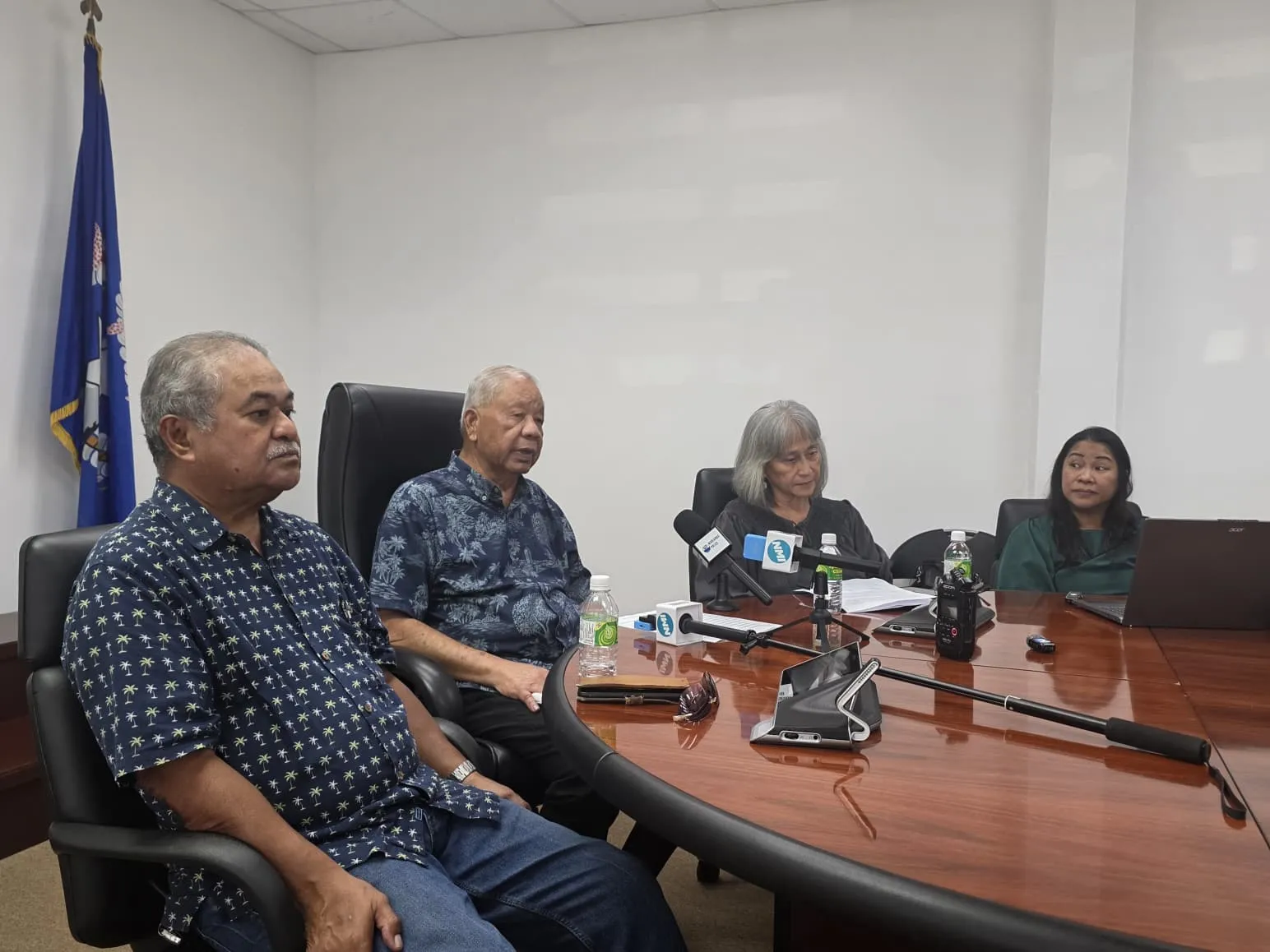


Justices and judges are the CNMI’s highest paid officials.
On Friday, in his State of the Judiciary Address, Supreme Court Chief Justice Miguel S. Demapan invoked Article IV, Section 6 of the CNMI Constitution which states that salaries of judges or justices “shall not be decreased during their term of office.”
But according to Mendiola, Covenant-Rota, the justices and judges can always volunteer for pay cuts to help the government cope with its worsening financial crisis.
“I appeal to them once again to please volunteer reducing their salary by at least 10 percent,” Mendiola said. “They don’t have to put the cuts into the general fund — they can use the funds for their own operations.”
Demapan has submitted a budget proposal of $5,311,249 for fiscal year 2009. The judiciary has 104 full-time employee positions.
Sen. Maria T. Pangelinan, D-Saipan and chairwoman of the Senate Committee on Fiscal Affairs, has introduced Senate Bill 16-26 to reduce the salary of the justices and judges.
The bill will not take effect during the term of the current justices and judges. A justice serves an eight-year term, while a judge serves six years.
“We cannot afford to maintain their current salary levels,” Pangelinan said in a past interview.
She noted that federal research indicates a lower wage structure for members of the U.S. judiciary in certain states compared to the CNMI’s pay levels.
The CNMI chief justice gets $130,000 a year while the two associate justices get $126,000.
The Superior Court presiding judge is paid $123,000 while the four associate judges get $120,000 each.
