



“Construction of Airbase on Tinian Island In Case Guam Gets Knocked Out Has Begun” — headline of a news story posted on The War Zone, June 15, 2022
COMMONWEALTH Covenant Day should remind us why the American flag flies over these islands. To be sure, that’s probably a question whose answer depends on who you ask. But history — or one authoritative version of it — gives a simple (and verifiable) answer. As mentioned by Howard P. Willens and Dianne C. Siemer in their book, “An Honorable Accord,” the U.S. is here so that these (and other Micronesian) islands cannot be used by a hostile power, again.
In other words, the existence of the NMI as a U.S. commonwealth (and Palau, the Marshalls and the FSM as U.S.-affiliated island nations) is premised on America’s national security and defense needs.
With the Cold War as a backdrop, the Covenant negotiations between the U.S. and the NMI started in 1972. Willens and Siemer noted that the Defense Department’s primary concern at the time was to secure NMI land that might be needed in the future for bases, training exercises or target practice. U.S. military services were instructed to “develop programming proposals regarding near-term requirements,” specifically on Tinian. The planned facility there would consist “of construction for a B-52 reflex capability, a cargo aircraft thru-put capability, a logistics complex, a port complex and the development of a maneuver area.”
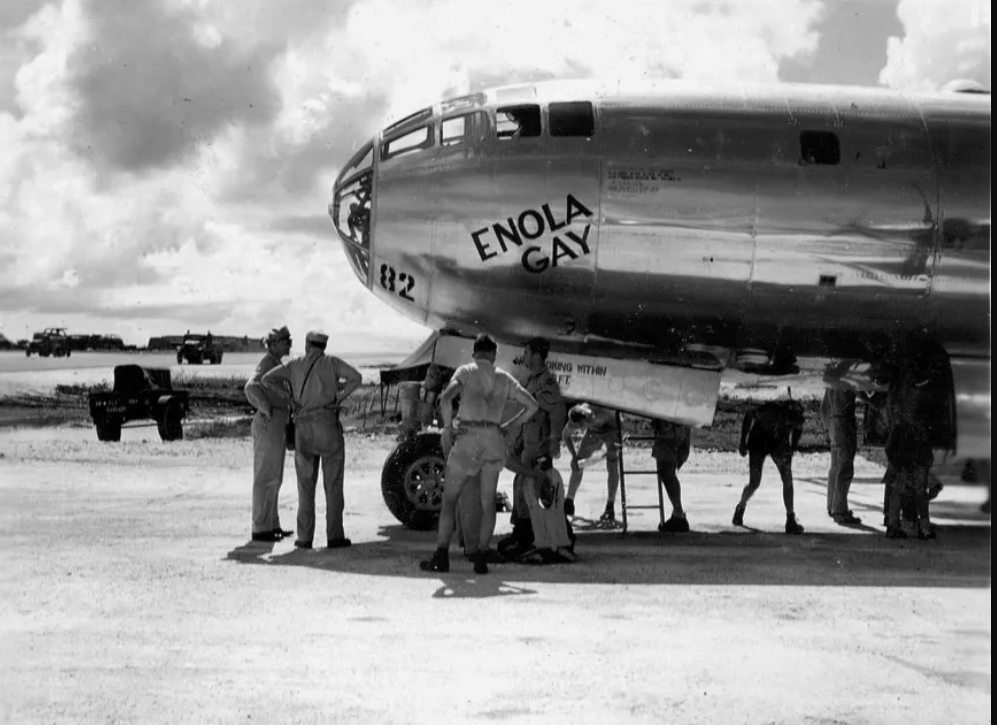
Defense analysts believed that more than 27,000 acres were needed by the military in the Marianas. “The military services wanted about 800 acres on Saipan, which would give them access to the airfield and the only good harbor. They also wanted one of the small uninhabited northern islands to use for target practice. The centerpiece of their land requirement was the entire island of Tinian” which, in 1945, served as the launching point for the atomic bomb attacks against Hiroshima and Nagasaki, Japan.
For the U.S. military in 1972, Tinian’s “tropical climate, excellent visibility, isolated location and proximity to much of Asia made it a good backup to [U.S.] bases in the Philippines, Okinawa, Taiwan and Guam.”
According to Willens and Siemer, Defense had advised the U.S. Covenant negotiator, Ambassador F. Haydn Williams, that the department’s “minimum needs were 18,518 acres on Tinian, 800 acres more or less on Saipan, and a small uninhabited island for target practice. Defense wanted Williams to start with its first negotiating position, under which the United States would essentially acquire full interest in all the desired land at virtually no cost and, if necessary, fall back to the…alternative, which contemplated a possible expenditure of about $21 million,” which today is worth about $151 million.
“Shortly before the [Covenant] negotiations began, Defense officials briefed Williams regarding their land requirements. They referred to the changing political environment in Asia and the corresponding changes in the US basing structure in the Pacific as supporting [the] conclusion that the entire island of Tinian should be acquired. In Defense’s view, ‘While Tinian cannot accommodate all the strategic, tactical, logistical and training activities that are now forward based, it can accommodate many of them, and become one of the major U.S. defense installations in the Pacific area.’ ”
Williams was advised that the “acquisition of the entire island becomes much more than just a nice-to-have item. It is a definite and real requirement, whose attainment may very well be possible now, but extremely difficult in the future.”
According to Willens and Siemer, “If Williams had harbored the slightest doubt about the importance of Tinian to Defense, this briefing was calculated to dispel it and to ensure that he understood what Defense hoped he could achieve in the upcoming negotiations with the Marianas.”
In Nov. 1975, Robert F. Ellsworth, the assistant secretary of defense for international security affairs, appeared before a U.S. Senate subcommittee which was reviewing the Covenant joint resolution. Its chair, Sen. Harry F. Bird Jr. of Virginia, asked Ellsworth, “What strategic and other defense interest does the United States have in the Marianas and Micronesia generally?”
Willens and Siemer said Ellsworth took Byrd’s question head on:
“We have broad national interests in this part of the Pacific. First, we have a responsibility, a specific responsibility for the defense of Hawaii, Midway, Johnston, Wake and Guam islands against unlawful or hostile action. Second, in that part of the Pacific in which the Northern Marianas are located, we have both the national and international responsibilities for civil air traffic control and for search and rescue operations — specifically in that ocean area between Hawaii and the Marianas. Third, we have a national responsibility to protect the sea lanes of communications to our Pacific island territories and to our allies, friends and trading partners. And fourth, when one looks at the map, one can see that the Northern Marianas and Guam are a strategic entity. In addition, of course, to being a cultural and ethnic entity. As we see it, the provisions in the Covenant that give us access for defense purposes to the Northern Marianas, and the provision in the Covenant which constitute denial to other foreign powers for defense purposes to the Northern Marianas, definitely will strengthen our security posture in that part of the world without in any way involving a new United States commitment.”
In an interview conducted in 1993, Willens asked educator, historian and long-time NMI resident Samuel F. McPhetres the following question: “What do you think fostered the final decision of the United States to acquiesce in [the NMI’s] request [for political status negotiations in 1972]?”
McPhetres replied, “Because we wanted Tinian so bad we could taste it. And the Marianas people said, okay, sure. All you have to do is sign off on the dotted line. We’ll give it to you.”
Send feedback to [email protected]

