







ELECTION Day reminded me of the apocryphal story involving the musicians on the Titanic who were having a bitter argument about what tune to play while the luxury steamship was sinking. Unlike the ill-fated passenger liner, however, the CNMI is not bound to “go down” anytime soon. Things may get worse — depending on the state of the economy — but ordinary folks, as usual, will make the necessary adjustments, and these may include, to quote Lenin, “voting with their feet.”
As for those who prefer to stick around, here’s a piece of advice that I find useful after almost 30 years of thinking, reading, writing and arguing about politics:
Lower your expectations.
You have elected men and women — not magicians — to public office. As always, there is no doubt about the sincerity and good intentions of most if not almost all public officials. But if sincerity and good intentions are enough then, by now, we should all be back in the Garden of Eden.
I’ve covered Capital Hill since 1994, and I’ve heard, more or less, the same pronouncements and the same “solutions” to the same issues and the same problems from past and present politicians who probably believed they were saying something original or even profound. And what I’ve learned, so far, is that we seldom learn anything from history because not a lot of us are familiar with it. Moreover, in politics and policymaking what is truly boneheaded is, more often than not, very popular. So on top of historical ignorance we also have to deal with economic illiteracy, faulty arithmetic and preconceived notions that have nothing to do with reality, but they do reflect our political beliefs that are rooted in our personal experiences which we assume are shared by everyone, all the time, everywhere. Hence, our fondness for top-down, one-size-fits-all “solutions” that usually end up solving nothing or making things worse.
Prudence should be a policy-maker’s primary consideration, but the native tongue of politics is grandstanding. And then there’s ideology which can make us feel “intelligent” while also blinding us from seeing the actual results of our preferred policies. Not surprisingly, the ideologues want reality to conform to their ideas instead of the other way around.
Writing in the New Yorker in Feb. 2017, Pulitzer Prize-winning author Elizabeth Kolbert stated: “If we — or our friends or the pundits on CNN — spent less time pontificating and more trying to work through the implications of policy proposals, we’d realize how clueless we are and moderate our views.” (The article’s title: “Why Facts Don’t Change Our Minds.”)
oOo
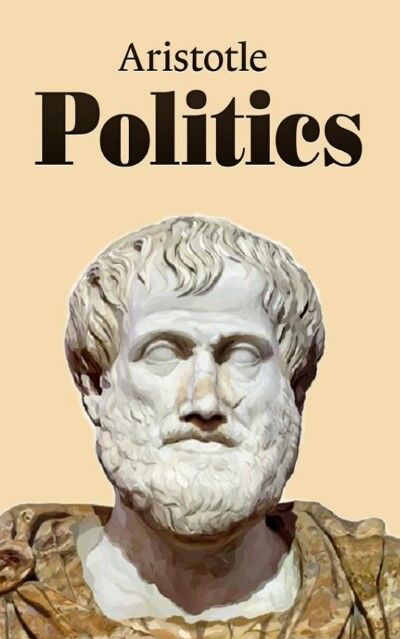
Consider, for example, the e-gaming “revenue-generating” law that would have resulted in business shutdowns, job losses and less revenue for the CNMI government. Why was it introduced and passed without public hearings or a committee report by the same lawmakers who had been critical of previous bills that were passed without public hearings or a committee report? Most likely, it was because they believed they knew what they were doing. The British philosopher Bertrand Russell once noted that Aristotle, one of the most intelligent men who ever lived, “could have avoided the mistake of thinking that women have fewer teeth than men by the simple device of asking Mrs. Aristotle to open her mouth. He did not do so because he thought he knew.”
Today, amid economic uncertainty, there is a proposal to raise the minimum wage. It is, no doubt, a truly popular measure. Only the “heartless” or the “greedy” would oppose higher pay for workers especially in this economy.
But what actually happens to the same workers if the wage-hike law takes effect when their employers themselves are struggling? Here, the math is pretty clear. Someone has to pay for the government-mandated additional cost of doing business. Employers will end up either reducing the employees’ work hours and/or their benefits. Worst case scenario: workers lose their jobs or the business itself shuts down.
Some would say: well, if they can’t afford to pay their workers then they shouldn’t be in business in the first place.
In other words, some of us would prefer business closures and layoffs than workers keeping their jobs if they’re not going to be paid the rate that we in our infinite wisdom consider “fair.”
How does that help the workers or even the economy?
Mrs. Aristotle please open your mouth!
Send feedback to [email protected]

