






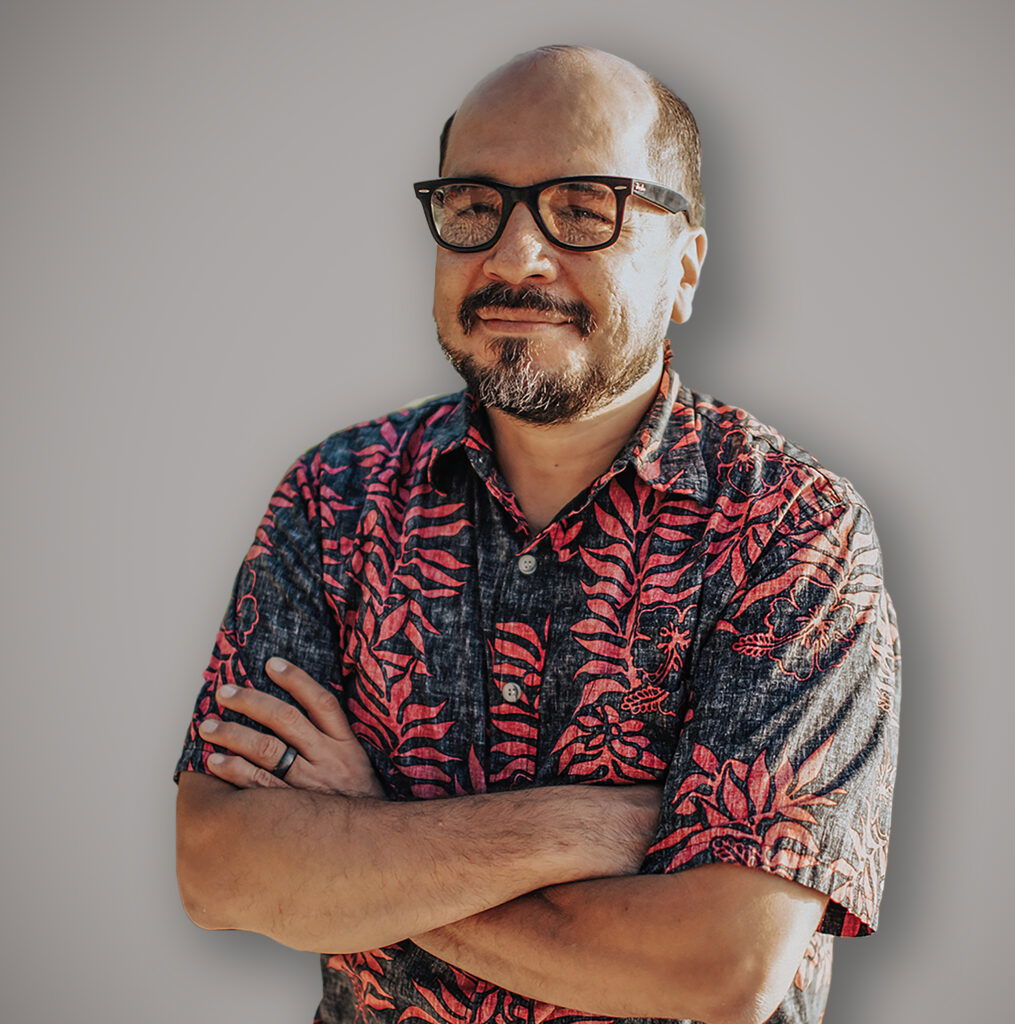
The following is the text of Northern Marianas College President Galvin Deleon Guerrero’s speech delivered at the State of Education Address on Thursday, Sep. 22, 2022 at the Saipan World Resort.
MANY of you may be familiar with the parable of the Star Thrower by Loren Eiseley. As the story goes, one clear morning, hundreds of starfish were found washed ashore after a torrential storm struck the night before. A little girl walking along the beach feared what would happen when low tide hit around noon and the sun would bear down on the shore, effectively killing all the starfish. So, she proceeded to throw starfish back into the ocean, one starfish at a time, one by one. As she did this, she came across an old man who was astounded by what she was doing by herself. He looked at the hundreds of starfish strewn along the shore and asked her what she was doing. She responded that she was saving the starfish. In disbelief, he told her that there was no way she could save all of them. In response, she looked out at the ocean, looked at the old man, looked down the shore, picked up another starfish, and threw it out into the ocean. She turned back to the old man and said, “Well, I saved that one, and with your help, I can save more.”
Over the past year, I’ve shared this parable with many audiences, and I share it with you today because when I think about the state of Northern Marianas College, when I think about the state of education in our islands, when I think about the overall state of our islands, this parable of defiant optimism says a lot about where we, and who we are, as a Commonwealth.
You see, that girl on the beach was exercising an incredible amount of agency, an agency that we all possess, especially here in the CNMI. Sure, there are forces that seem beyond our control — climate change, economic turbulence, and global catastrophes like the Covid-19 pandemic. And sure, we could choose to feel victimized by those forces. Or, as that little girl did, we can take charge of our destiny and act as agents of change who fight to save our planet, who fight to ensure economic prosperity, who fight to keep everyone safe and healthy.
At Northern Marianas College, we have chosen not to be victims. We have chosen to be agents of change. And, as agents of change, we have triumphed despite all that has come our way. Despite the devastation caused by Super Typhoon Yutu and other disasters, we have recovered to continue serving our students and our community, and are on the precipice of building brand new facilities. Despite all the financial uncertainty brought upon by the global economy, not once did we lay off or furlough any of our employees. And despite all the challenges of the pandemic, we kept everyone safe and we kept sailing on. As a testament to what we have accomplished, we were recognized by the Western Association of Schools and Colleges with a historic eight-year accreditation term without a mid-term visit, the longest in the college’s history.
We accomplished all of this because we did not give in to victimhood. We embraced our role as agents of change. Because the state of things, or the status quo, is not just about what exists today. It’s a challenge to imagine what can exist tomorrow. Will we, like the old man, stand there in disbelief, paralyzed by the overwhelming state of things that lies before us? Or will we make a difference, and save one starfish at a time? In other words, will we embrace our role as agents of change, entrusted with the stewardship of our islands and the islands of future generations?
At Northern Marianas College, we have made stewardship the heart of our new strategic master plan, which focuses on three strategic priorities:
Take care of our people.
Take care of our resources.
Take care of our community.
And it is around these priorities that I will discuss the state of the college.
Let us begin with what we are doing to take care of our people. Taking care of our people first means taking care of our students and empowering them to succeed. To do that, we need to offer a wider range of engaging programs, develop more targeted student support services, and provide accelerated curricular and career pathways.
To empower students to succeed, the college’s Student Support services, led by Dean Charlotte Cepeda, is leading the way, particularly with programs like Project PROA, which provides a wide range of services and activities, including mentoring and tutoring, for high school and college students. And, with support from Governor Torres and the Legislature, the Board of Regents has launched the Proa Promise Initiative, which provides a last dollar scholarship to new students, enhances wrap-around student support services, and improves job placement rates.
The success of our students starting smart is reflected in enrollment figures that continue to climb while other colleges and universities are seeing declining numbers. In particular, we have seen a 20% increase from a little over a thousand in 2016 to the most recent figures passing 1,300. When we take a look at graduation rates for our primary associates degree programs, we see that graduation rates have more than doubled in the past decade. As Interim Dean for Academic Programs and Services Vilma Reyes has noted, our faculty are working even harder to bring these numbers up even more.
Beyond these numbers, the stories of individual students reveal much more about their success, like Norman Tanghal, a 2021 graduate from NMC’s nursing program, who recently passed the NCLEX-RN test. Like many of his peers who have also passed the test, he attributes his success to NMC’s Nursing Program, where class lectures from his instructors, the skills lab, and the Kaplan test tools all helped him prepare.
This past summer, as part of our many law enforcement academies, 29 new officers were also sworn in under the Division of Customs and Biosecurity after completing the 9th cycle of the Customs and Biosecurity Academy facilitated by NMC’s Criminal Justice program. As the recipient of the cycle’s Leadership Award, Kane Ybanez, said, “The instructors from Customs and Northern Marianas College have taught us a lot, and I feel very prepared to take on the role of Customs officer, and protect the community.”
And earlier this year, 50 researchers, made up of students and faculty, presented at the 2nd Annual Research Symposium that was sponsored by NMC’s Science Mathematics Health and Athletics department and Project PROA. As Dr. Beylul Solomon from NMC’s School of Education, noted about the symposium, it provided an important platform to showcase research from Asian Americans and Pacific Islanders, who are one of the most underrepresented groups in research.”
In addition to empowering our students to succeed, we must also cultivate our employees. We can do that by offering competitive compensation and benefits, embracing a growth mindset in personal and professional development, and facilitating collaboration and engagement across the institution.
In the past year, we have launched several initiatives to support the holistic wellness of our employees. This includes the launch of a Health Squad that has coordinated health-related activities and explored policies and practices that support employee health. As a result of the squad’s work, we have redesigned our sick leave procedure into a more encompassing health leave procedure, and we have secured an institutional subscription for the Calm App, an award-winning app that gives employees access to hundreds of sleep, meditation, and relaxation features.
As just one example of our commitment to supporting the growth of our employees, recently, the College’s Finance Team completed 13 rigorous online courses in auditing and finance from the Annual Association of Pacific Islands Public Auditors. They’re a busy team, but they found the time to grow professionally.
And as evidence of how much we have cultivated our employees, our very own Vice President for Administration and Advancement, Frankie Eliptico, was awarded by University of Guam President Dr. Thomas W. Krise The President’s Medal — the highest award given by the UOG president to individuals outside the university who demonstrated distinguished services to enlighten, to discover and to serve. His achievement reflects how NMC as a whole supports the personal and professional growth of our employees.
In addition to taking care of our people, it is vital that we also take care of our resources. This begins by building start-of-the-art facilities. These facilities will include a robust and secure information technology infrastructure, resilience against future natural disasters, and an atmosphere that welcomes all stakeholders with open, accessible, and appealing designs.
With funding primarily from the U.S. Department of Education, Phase 1 of our new facilities will be the construction of the Student Center, the flagship building of the new campus. The three-story building will house student services offices, the CNMI Archives, the library, study rooms, a cafeteria, and many more spaces. With funding from the Economic Development Authority, Phase 2 involves the construction of a 3 story workforce development and training center building and the new Center for Research, Extension, and Development, or CRED building. The workforce development building will house the School of Nursing, School of Business, the Community Development Institute, and the Small Business Development Center. With funding from the HUD’s CDBG-DR program, Phase 3 will be the construction of two two-story multi-use classroom and services buildings, with each building housing 16 classrooms. With funding from FEMA, Phase 4 will see the construction of the facilities maintenance warehouse and procurement services to include exterior storage space and construction of a new gymnasium. Future phases will develop facilities on Rota and Tinian, and remove existing structures on the As Terlaje site to allow us to complete the campus quad and make space for future expansions on campus. When we’re done, we will finally have a beautiful main campus that will not only meet the needs of our stakeholders and our community, but will be the envy of the Pacific, including this building, a rendering of the upcoming Student Center, which will be the first building that goes up.
It will also be incumbent upon us to secure the financial vitality of our college. To do this, we must increase and diversify revenue streams, expand philanthropic contributions, and solidify more consistent funding.
To that effect, the college has done remarkably well in taking care of its financial resources. The college recently received — for the 15th consecutive year — a favorable, unqualified audition opinion on its financial statements and was thus designated as a low-risk auditee by independent auditors. We have also reconstituted our Foundation, which is taking aggressive steps towards raising more funds for the College. And, building off the success of our golf tournament, we will expand the annual fundraising event into a two-day tournament that will bring in top golfers — and donors — from across the Pacific.
As a testament to the college’s responsible stewardship of its financial resources, in its recent review, the Western Association of Schools and Colleges Seniors Commission on Colleges and Universities commended the College for “effective management of limited financial resources reflected by low debt, stable financial reserves, and growing enrollment.”
As we take care of our people and take care of our resources, we must also take care of our community. This begins by recognizing the role that Northern Marianas College plays when it comes to investing in our economy. We do that by meeting workforce needs, promoting more entrepreneurship, and cultivating problem-solving skills.
The college has already begun investing in our economy with the recent decision by the Small Business Administration to establish and fund a Small Business Development Center, or SBDC, in the CNMI, which is once-again housed at the college. Since earning this designation, the SBDC has aggressively engaged with community partners to support the Governor’s BOOST program, bring women entrepreneurs together for training and development, work with local farmers on securing micro-grants, and hosting several small business nights at the college’s Mango Terrace.
Complementing the work of our SBDC, the college’s Community Development Institute has begun active outreach efforts to offer more modular training programs to our community, develop a maritime program with 500 Sails, further develop the CNMI’s apprenticeship program, and even offer TED-type leadership talks to companies and organizations.
The college’s investment in our economy is best exemplified by our graduates, who have accomplished amazing things for our community. Consider, for example, Charlie Bell Foster and Jamerie Paras, whose research into a pay-as-you-go concept for taxes was showcased at a Saipan Rotary Club meeting and featured in a recent issue of Taga Plus magazine.
Finally, to take care of our community, we need to foster a spirit of stewardship. This happens when we practice regenerative living, cultivating behaviors that promote diversity, equity, inclusion, justice, and access, and promoting cultural enrichment that protects our islands’ indigenous legacy.
In this regard, the college’s Cooperative Research Extension and Education Services is leading the way. While we do not have the time today to talk about the millions of dollars, dozens of programs, and countless research publications that CREES handles, I’d like to share a few recent examples with you. CREES was recently awarded $3.4 million to conduct food science research and spur further economic development in the CNMI. The project, led by NMC CREES Food Scientist, Program Leader, and Professor Dr. Zaidul Sarker, will use the bulk of the funds to purchase equipment for the food science lab on Saipan and a smaller lab on Rota.
CREES’s Aquaculture and Natural Resources Program also secured a $536,000 grant to construct mangrove crab farming demonstration units on the islands of Saipan, Tinian, and Rota. The demonstration units, which are funded by a Technical Assistance Program grant through the U.S. Department of the Interior’s Office of Insular Affairs, will be used by NMC-CREES to provide training to any individual who would like to pursue mangrove crab farming.
CREES’s 4H Marianas is yet another phenomenal program that cultivates stewardship in our community by offering a wide array of experiences to young people in health, science, agriculture, and civic engagement, such as the extremely successful Camp Magalahi summer program.
And, CREES’s very own Dean Patty Coleman was part of a team that secured first place in the semi-finals of the University of Oxford’s “Map the System” competition. Their research focused on a food systems map that identified “complex systemic causes” of the prevalence of high-risk diets (processed foods, sugary drinks) in the CNMI, and how the indigenous people of the Marianas have some of the highest rates of diet-related diseases in the world.
These are all examples of stewardship. After all, at the end of the day, stewardship is what we’re about. And the future that lies ahead calls on all of us to be stewards, because, to be honest with you, when I look at the years ahead, it’s gonna be rough.
Climate change isn’t getting any better. We can expect more typhoons like Super Typhoon Yutu to occur more frequently and with equal or even greater intensity.
Globalization is not going away and we remain increasingly vulnerable to economic forces beyond our control. To put it bluntly: we all see the fiscal cliff coming when federal funds dry up as our tourism industry continues its slow recovery. You think budgets are tight now? Wait until then.
And, if this pandemic has taught us anything, it’s that what happens across the globe — inflation, the war in the Ukraine, or rising tensions in China — can and will affect us here in the Pacific.
However, when I look ahead at these looming threats, I am reminded about that girl, saving starfish, one at a time. When looking at the hundreds of starfish that needed saving, she could have given up. She could have given in to fear and despair. But she didn’t. Neither should we. We can make a difference, no matter how small and no matter how hard and no matter how long it takes. So long as we can save one starfish, one person, one Commonwealth, we should at least try.
You see, I firmly believe that we can and we will make it through the challenges that lie ahead, if we embrace stewardship and take care of our community, take care of our resources, and, perhaps most importantly, take care of each other.
That’s what our ancestors did when they navigated the entire Pacific with nothing more than vessels carved by their own hands, wisdom passed down for generations, and deep faith in each other. They knew that if they took care of each other, no matter how violent the storm, how dark the night, or how perilous the journey, they would find their way, together. So can we. So should we.
So, steady the course, batten down the hatches, and let’s sail ahead together, as stewards of each other. And, above all, stay safe, stay calm, and sail on.
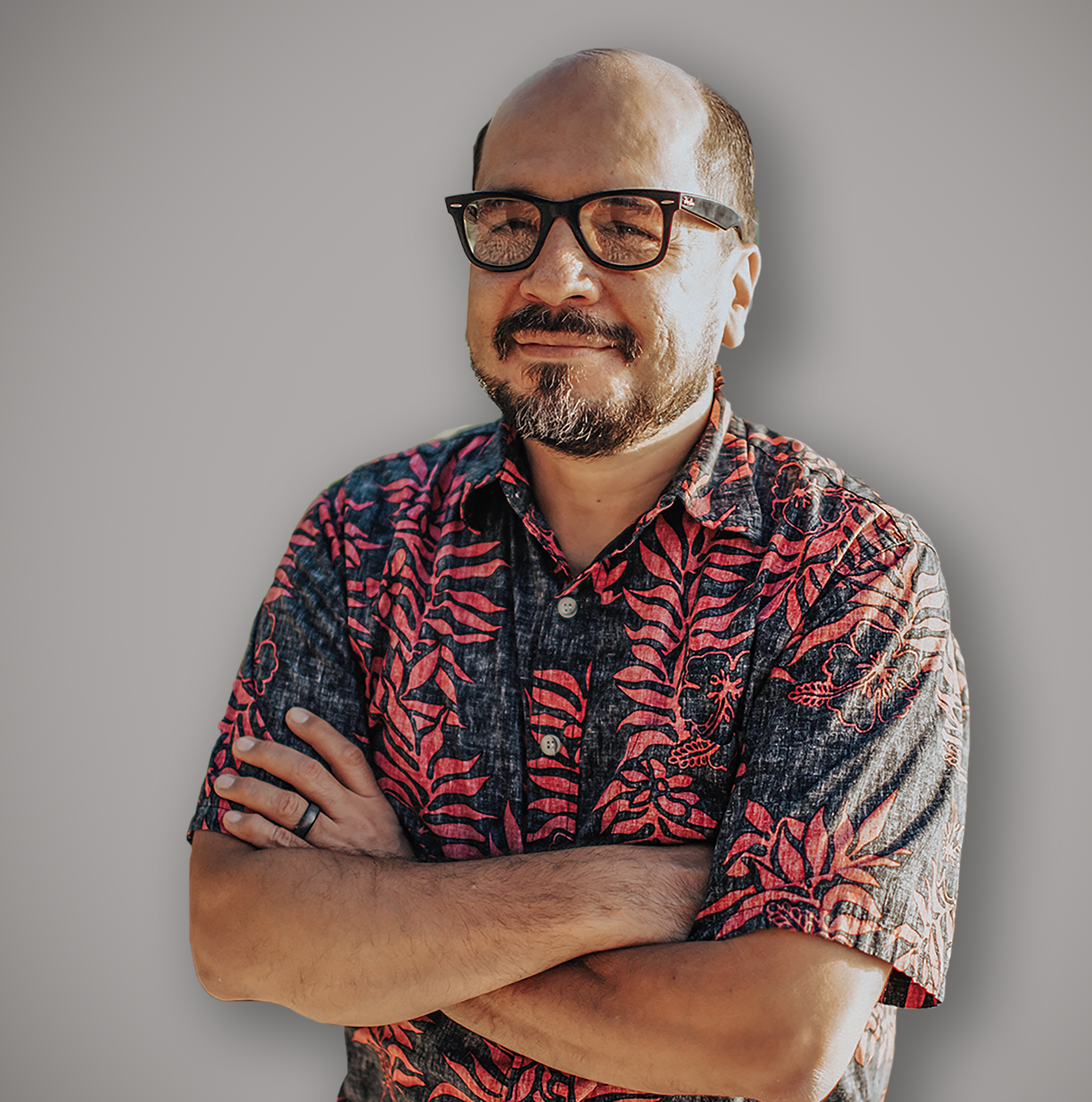
Galvin Deleon Guerrero
