




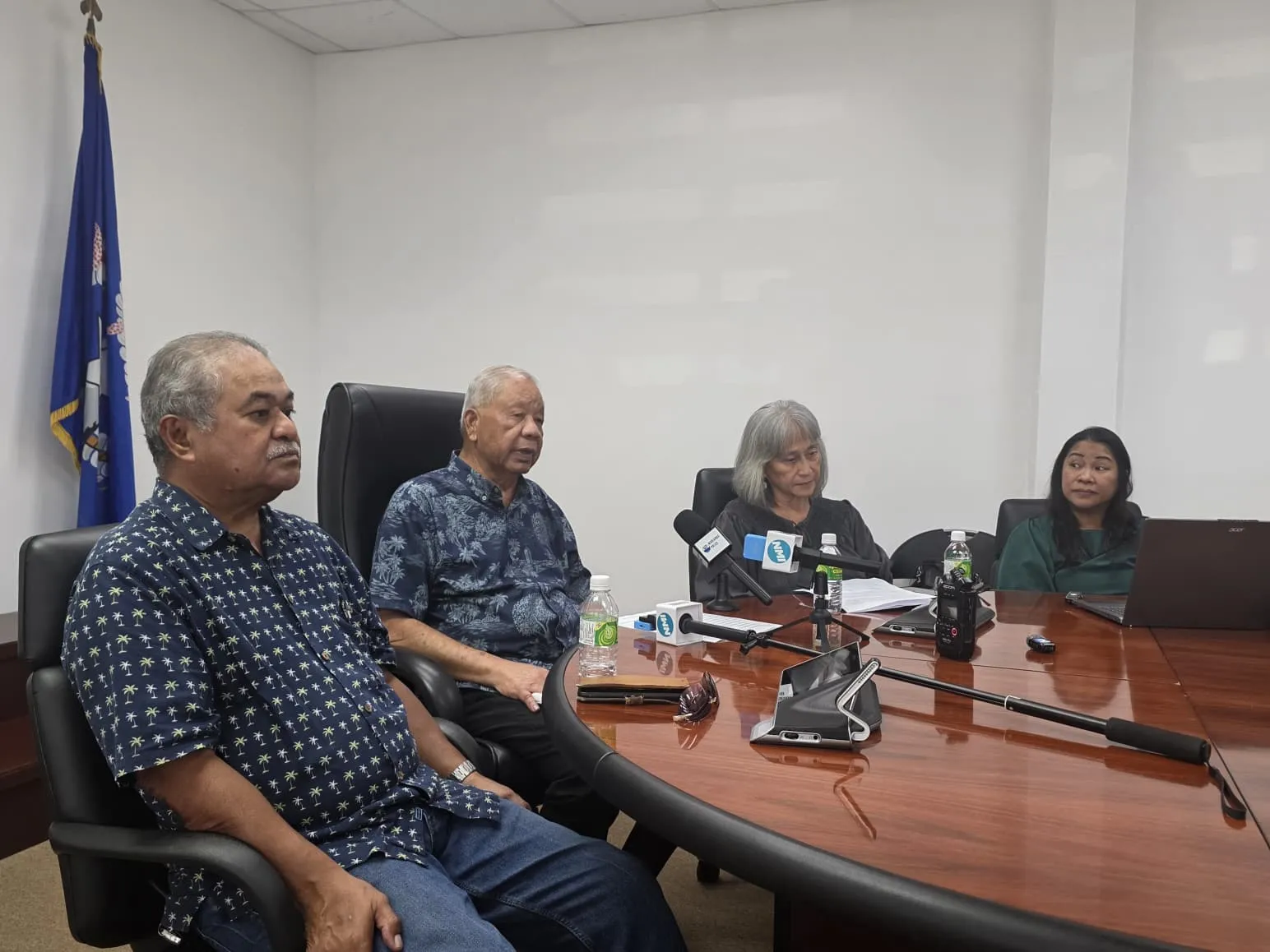



IN his own experience as a businessman on Tinian, Tinian Chamber of Commerce Secretary Neal Eisgrou said “it is rare to have a [U.S.] citizen/permanent resident apply for full-time work. We are totally dependent on foreign workers.”
Eisgrou said on Friday that the Tinian Chamber of Commerce “is changing our focus and will no longer pursue” Tinian Chamber of Commerce Initiative 22-1 which urges the U.S. Congress to “rescind” the federalization law in the Consolidated Natural Resources Act of 2008.
The Tinian Chamber recently released the result of a survey it conducted last year, indicating that almost all Tinian business owners believe that the extension of federal immigration law to the CNMI should be rescinded.
In an email to Variety, Eisgrou said that during the Friends of Business Summit held recently, one of the items discussed was the federal takeover of CNMI immigration.
He said everyone agreed that federalization should be rescinded, but if not possible, there must be a way for the businesses to hire the workers they need.
“I asked the [Saipan] business owners at my table if they were having trouble getting applicants to come in for interviews and they said that they did not have a problem for lower-level workers. But my experience on Tinian is that it is rare to have a citizen/permanent resident apply for full-time work. We are totally dependent on foreign workers.”
He said Tinian businesses called the 200 local applicants referred by CNMI Labor, but “when they hear Tinian, they [the applicants] say no.”
According to the 2020 Census, Tinian’s population went down to 2,044 from 3,136; on Rota, to 1,893 from 2,527; and on Saipan, to 43,385 from 48,220. The census was conducted before the Covid-19 pandemic.
Eisgrou said the Tinian Chamber “is changing our focus and that is to have a pilot program where Tinian and Rota take over the CW program,” referring to Tinian Chamber of Commerce Initiative 22-5 or the Tinian and Rota Takeover of the CW Program.
He added, “It makes sense, since we need it the most and we know our businesses well and can keep track of them much better than the U.S. We can physically monitor who is hired, we do not need more and more forms and higher and higher fees and a bloated government.”
As an additional incentive to hire residents/citizens, Eisgrou said they have also proposed TCC Initiative 22-2: the CNMI government will give businesses $1,000 for each permanent resident/citizen they hire, but the amount will be paid back to the government after the employee serves one full year of service.
Eisgrou said this amount would make up for the losses incurred by employers when their resident employees work “for a short amount of time and then quit.”
“Businesses invest time and money even before the employee starts working. Our proposal would give a positive incentive for businesses to hire and invest in resident workers.”
As for U.S. Citizenship and Immigration Services, which oversees the CW-1 program, Eisgrou said: “Everything they do is punitive and negative — let’s do something positive.”

