





SAYING that Vickilyn Manglona Teregeyo “has not demonstrated extraordinary and compelling reasons for compassionate release, and that her history with methamphetamine use rather demonstrates that she poses a danger to the safety of her soon-to-be-born baby,” District Court for the NMI Chief Judge Ramona V. Manglona denied the defendant’s request for compassionate release.
In her 11-page order, Judge Manglona said she was mindful of the impact of separating babies from their mothers, and the decision to do so is not done lightly.
But she said she was unpersuaded by the defendant’s arguments on the need to bond with her newly born child given her history of testing positive for methamphetamine while pregnant and even after giving birth — “in complete disregard for the safety for her unborn and newly born children,” the judge added.
Represented by attorney Richard Miller, Teregeyo is scheduled to give birth on May 12.
Teregeyo is not asking for compassionate release for her own “convenience,” said Miller. “She makes the request in the best interest of the daughter she is about to give birth to, as well as her own health and safety in the period immediately preceding and following labor.”
Teregeyo’s request was opposed by Assistant U.S. Attorney Garthe Backe who informed the federal court that recently methamphetamine was found inside the jail cell of Teregeyo on March 27, 2022.
Backe also noted that in her Guam criminal case, the defendant’s then-attorney filed a motion for temporary release due to her impending labor and delivery.
The magistrate judge granted the motion over the U.S. government’s objection, Backe added.
When the defendant later gave birth, both she and the baby tested positive for methamphetamine, Backe said.
“This clearly demonstrates that defendant — under almost the exact same circumstances — has no regard for the safety of her unborn child, and that she cannot (and should not) be trusted to comply with any court-imposed conditions of release,” he added
In her order, Judge Manglona noted that despite her background, the defendant asks the court nearly four years later to do the same: to release her so that she could give birth, even though the defendant had tested positive for methamphetamine numerous times while pregnant.
“The court has grave concerns about releasing defendant so that she could ‘bond’ with her newly born child when defendant’s history demonstrates an utter disregard for the health and safety of the baby,” the judge reiterated.
The judge was also not convinced “that additional conditions would entirely avert defendant’s use of methamphetamine, given that electronic home monitoring would not limit the ability of others to enter her place of home detention nor eliminate her ability to obtain methamphetamine.”
Moreover, the judge said, “this is not the first time that this court revoked defendant’s supervised released.”
“As previously mentioned,” the judge added, “this court revoked defendant’s supervised release one year ago and sentenced her to three months of imprisonment in light of her numerous instances of testing positive for methamphetamine, even though at that time, she was raising a seven-month-old child and a nine-year-old.”
According to the judge, “This highlights defendant’s repeated use of methamphetamine during the early months after her baby’s birth and casts doubt on defendant’s argument that she does not pose a risk to others.”
Teregeyo was convicted on Guam for the offense of drug user in possession of a firearm and ammunition, and was allowed by the federal court system to serve her probation in the CNMI.
Teregeyo was sentenced by Guam District Court Chief Judge Frances M. Tydingco-Gatewood on May 24, 2019 to time served, 12 months and 18 days, with a 3-year term of supervised release.
Her supervision was then transferred to the District Court for the NMI’s jurisdiction,
In March 2022, Judge Manglona revoked the supervised release of Teregeyo after the defendant admitted that she used methamphetamine.
She was sentenced to serve a term of three months imprisonment, followed by three months of home confinement/detention with electronic location monitoring as a special condition of supervised release, and followed by 27 months of supervised release.

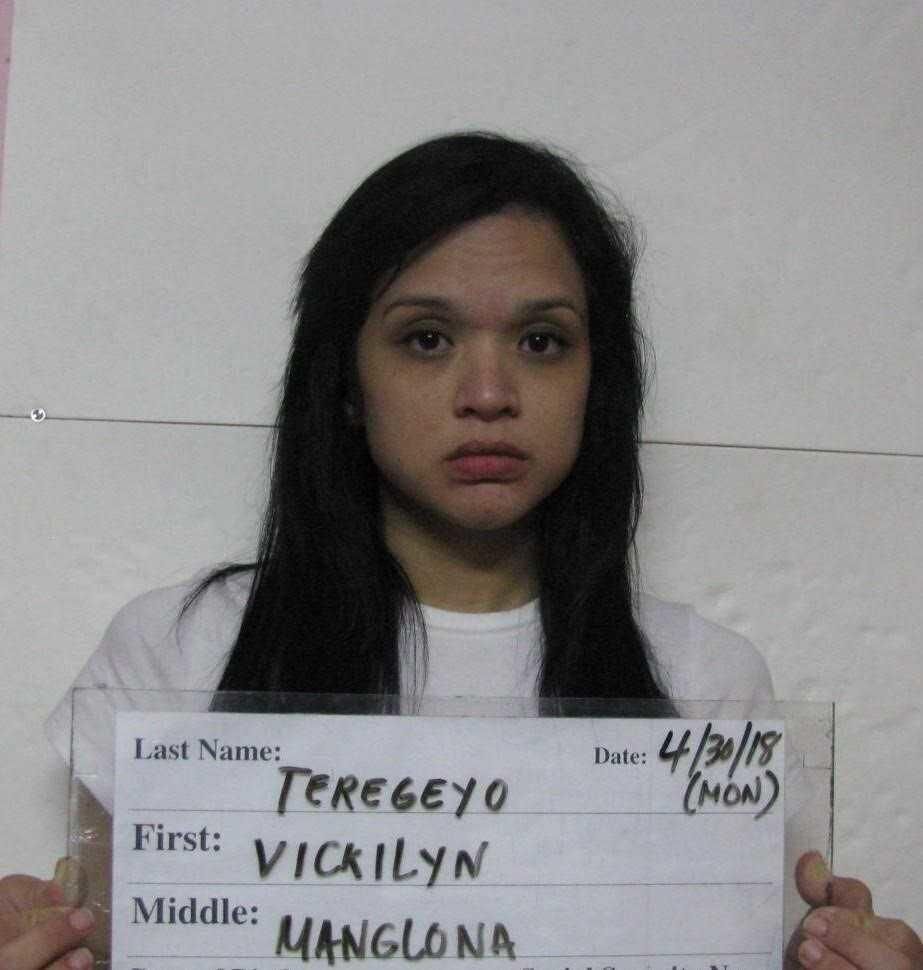
Vickilyn Manglona Teregeyo
