
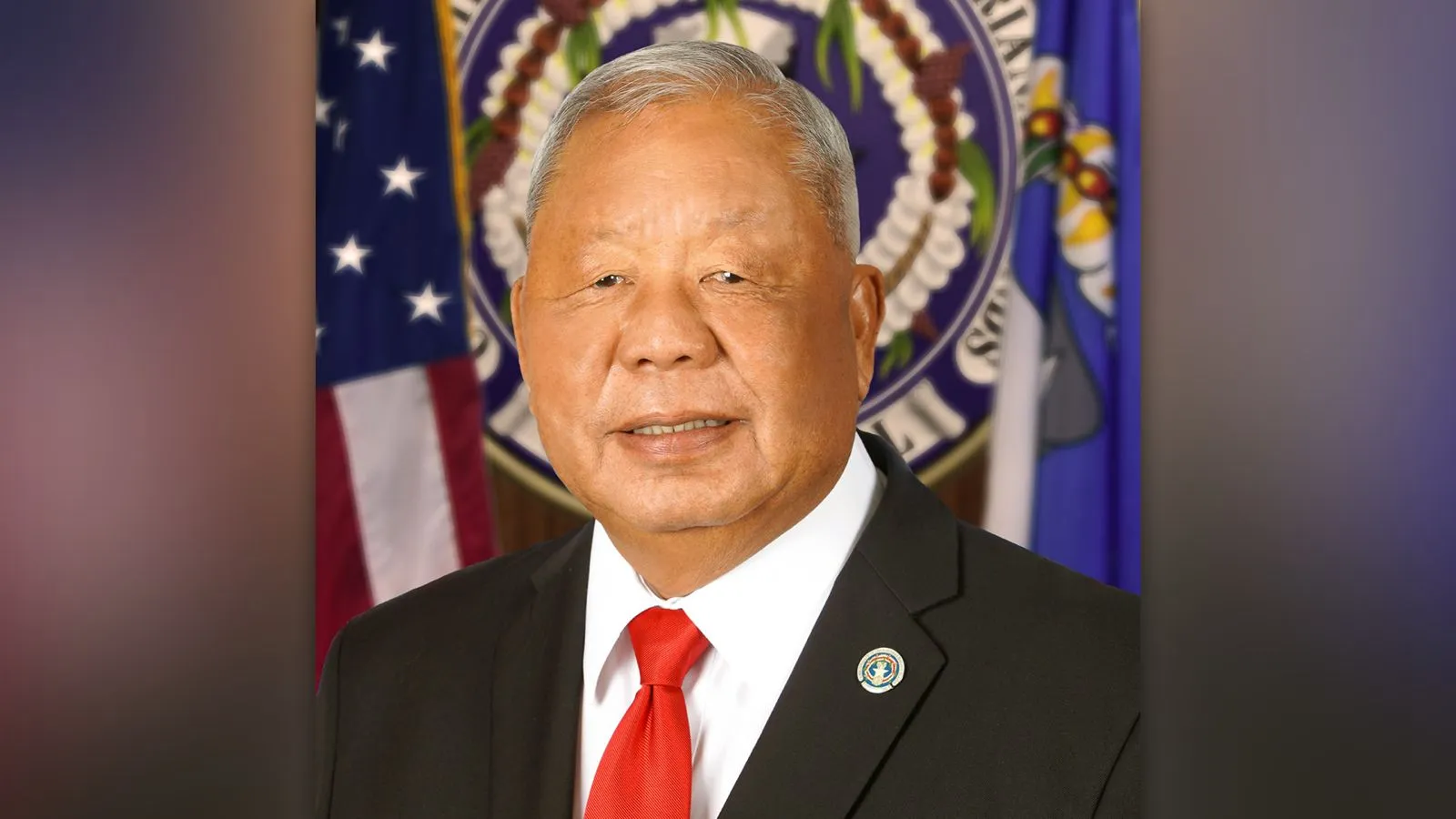




THE Estate of Manuel B. Villagomez and its administrator, Colleen V. Manglona, through attorney Robert Torres, have filed a notice in federal and local courts rejecting the NMI Settlement Fund’s claim of overpayment in retirement benefits in the amount of $56,913.77.
Torres, in a second status report, has informed the federal court that they will object and reject the NMI Settlement Fund’s claim in a formal filing in the Superior Court because the claim is barred by the statute of limitations.
The NMI Settlement Fund and its trustee, Joyce Tang, through attorney Nicole Torres-Ripple, filed a claim in the probate of the Estate of Manuel B. Villagomez related to what it said was an overpayment in retirement benefits amounting to over $56,913.77 that was paid prior to Villagomez’ passing on May 10, 2021.
The NMISF said it is a creditor of the estate, and it timely filed a Notice of Claim in the Probate Action (Superior Court) on Nov. 1, 2021.
Torres-Ripple said the “claim of overpayment of retirement benefits against a decedent is outside the probate court’s jurisdiction in accordance with the NMISF’s administrative appeal process approved by the federal court.”
The NMISF’s claim, she added, is unrelated to the construction of a will, determination of heirs and successors, and the administration of the probate proceeding.
Torres, for his part, has asked the federal court to deny the request of the NMISF to issue an order of stay and intervene in the probate proceedings.
In a notice filed in local court on April 5, 2022, Torres said: “After consideration of the basis of the claim by the NMISF, the administrator disallows the claim as barred by the CNMI Statute of Limitations and by the doctrine of laches.”
He added, “Decedent retired in 1994. The NMISF asserts that he was overpaid as his pension calculation was incorrect because overtime or compensatory time was included in determining his three highest salaries.”
OT pay
Citing an Office of the Public Auditor report issued on July 20, 2000, Torres said the issue of overpayment had been known to the NMI Retirement Fund (now Settlement Fund) because it was the NMI Retirement Fund that requested a legal opinion from the Attorney General’s Office on whether overtime and compensatory time could be used to determine the benefit amount of a retirement annuity.
He said the AG’s office, in its issued legal opinion on June 9, 2000, stated that overtime and compensatory time may not be used to calculate the amount of benefits, but only for determining eligibility for retirement.
Torres said the AG’s opinion also stated that overtime and compensatory time could not be used to determine the amount of the benefit paid to a retiree by NMI Retirement Fund.
According to Torres, the AG’s office “recommended that re-calculation of benefits to affected members should be made, and the amount of overpayments should be determined. AGO further stated that members should be informed and advised of their right to appeal an adverse determination. If no appeal is filed, then collection process must be undertaken by the NMI Retirement Fund.”
The decedent, Torres said, clearly was in that group of overpaid annuitants to which legal opinion applied.
“No action was taken against the decedent following the legal opinion the Retirement Fund received (which it requested),” Torres said.
Despite notice that it would have to initiate recoupment by the AG’s Office, the NMI Retirement Fund did nothing as to decedent’s overpaid pension, Torres said.
On March 22, 2005, the NMI Retirement Fund administrator said that at the March 10, 2005 Fund board of trustees meeting, the board agreed to revisit the issue of recovering overpayments at its next regular meeting.
The NMI Retirement Fund administrator also stated on Aug. 4, 2006 that the recalculation of pension benefits was “ongoing, yet is subject to certain due process applications of the Administrative Procedure Act prior to recoupment.”
“The decedent was in this group and never received notification,” Torres said.
Time barred
Reiterating that the Settlement Fund’s claims are time barred, Torres said, “In decedent’s case, the NMI Retirement Fund, the predecessor to the NMI Settlement Fund, first gave notice to decedent of the overpayment and recoupment on May 7, 2012. This was over 12 years after receiving legal advice to proceed with recoupment. [And] this was over nine years after the Retirement Fund informed OPA it was ‘revisiting’ the recoupment issue.”
Torres said upon receipt of the notice of overpayment, “the decedent disputed the claim and asserted a timely appeal of the claim of overpayment in June 2012. Since that time the NMI Retirement Fund and subsequently the NMI Settlement Fund never afforded decedent his administrative appeal. All the while, decedent was required to provide his current address and contact information and he remained ready, willing and able to prosecute his appeal.”
Pending appeal
Manuel B. Villagomez passed away on May 17, 2021. Following his death, the NMISF gave notice to decedent’s spouse regarding the pending appeal in June 2021.
Torres said only recently has the NMISF indicated that there is an administrative appeal process that is proceeding.
“After receiving the NMISF notice of claim, the Estate administrator has communicated with the Fund’s trustee and her counsel regarding the claim, Torres added.
“The Estate administrator has sought information as to the nature, background and basis for the claim. More importantly, the Estate administrator has informed the NMISF of the issue of the statute of limitations as well as having provided the documents or information regarding the decedent’s financial information,” Torres said.
He said the NMISF’s trustee failed to provide legal authority or factual authority supporting any position that the statute of limitations does not bar the NMISF claim or that there is any equitable tolling provision that applies.
Instead, Torres said, “the Trustee takes the myopic view, in addition to a plain misreading of the statute, that the Fund can recover for the six-year period prior to May 7, 2021 which is from May 6, 2006 through May 7, 2021. Alternatively, the Trustee appears to assert that she can pursue recovery from May 7, 2021 through decedent’s passing on May 17, 2021. Again, the Trustee provides no authority for this approach.”
Torres added, “The clock runs when a party’s cause of action accrues not when a party gives notice of its claim, otherwise creditors can lie in wait for years only to bring claims late in the day. The statute is intended to direct creditors or claimants to pursue claims diligently and without delay. In this case, the Fund has done neither.”
Torres said whatever the administrative reasoning is, the law is clear that the “clock for the claim” started running on June 9, 2000 and ran out on June 9, 2006.
Torres is asking the local court to direct the NMI Settlement Fund Trustee to show competent evidence and proof why its claim should not be conclusively barred by the determination of the court.
On April 7, 2022, Torres filed a notice of rejection and disallowance of the NMISF’s claim in federal court and requested the same order of finding the claim time barred.
Torres said, “Another option is for this court to pose the certified question to the CNMI Supreme Court on whether the CNMI Statute of Limitations of six years applies to the NMISF claim and the date when the statute is construed to start running.”