




GOVERNOR Ralph DLG Torres on April 1 submitted to the Legislature a $101.35 million budget for fiscal year 2023, which begins on Oct. 1, 2022.
The governor also submitted his proposed spending plan for American Rescue Plan Act and other federal funds. He proposes to use $16 million in ARPA monies for the central government and a total of $1 million in other federal funds for various government operations.
The government’s total projected revenue for FY 2023 is $150.4 million, but after debt service and the NMI settlement agreement obligations are satisfied, the net resources available for appropriation will total $101.35 million, which includes the $5.4 million allotted for the Department of Public Lands.
The FY 2022 appropriations law identified $144.84 million in total budgetary resources of which $45.95 million was for debt service and the NMI settlement agreement.
This left $103.3 million for appropriation, including $4.48 million for the Department of Public Lands.
Finance Secretary David DLG Atalig, for his part, said the 25% of the retirees’ pension “would be completely dependent on the Casino BGRT.”
He said that should this source of revenue reach a standstill, it would be essential for the CNMI to focus on other avenues for revenue generation.
He said his department’s FY 2023 revenue forecasts “factor in historical contexts when the CNMI did not have the casino industry and the tourism sector was not at its peak.”
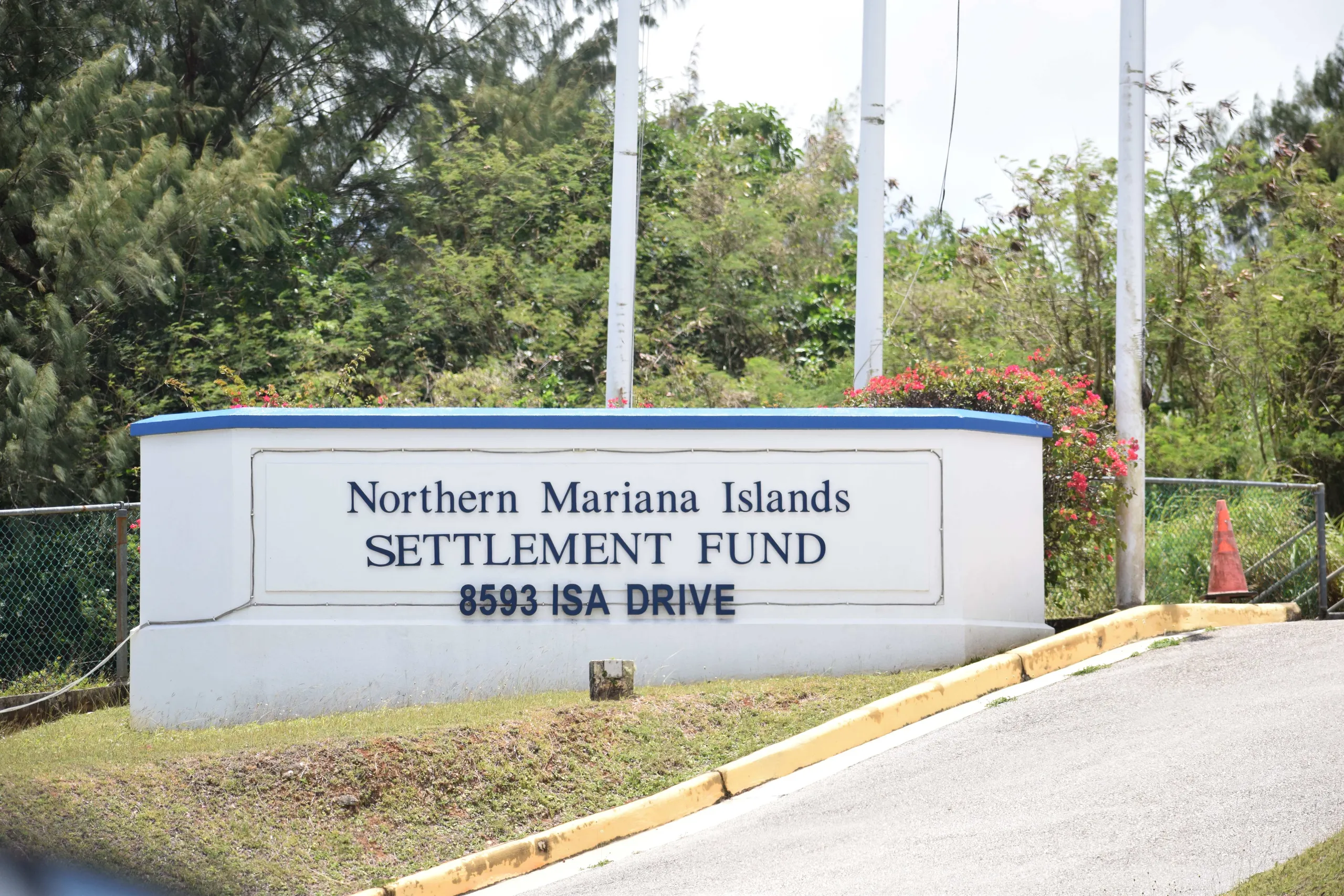
According to the NMI Settlement Fund, “The 25% benefit payment and bonus payment are voluntary payments from the [CNMI] Government, and are not required under the Settlement Agreement.”
The previous source of funds to pay the 25% was the business gross revenue tax from Imperial Pacific International whose casino shut down in March 2020 amid the Covid-19 pandemic.
Highest priority
In his letter to Speaker Edmund S. Villagomez and Senate President Jude U. Hofschneider, the governor said as Covid-19 cases slowly ease on the islands, his administration continues to work with community partners “to navigate resources in revitalizing the economy and revamping the NMI’s tourism industry,” with the health and safety of the residents as his highest priority.
“This has been achieved through the efforts of the Covid-19 Task Force and the development of the Public and Private Partnerships Program, whose goal is to maintain and rehabilitate our tourism and recreational areas. Our team has also developed the Travel Bubble program, which established the CNMI as a safe destination for tourists. The successes of the program have conveyed a promising advantage over our competitors that I anticipate will help carry the CNMI into a post-Covid-19 era,” the governor said.
He said while he acknowledges the challenges that several major natural disasters, the Covid-19 pandemic, and labor issues have had on the CNMI’s economy, his “priorities on infrastructure development, destination enhancement, diversification of our economy, natural disaster preparation and recovery, mitigation of the ongoing global pandemic, and the improvements to core governmental services remain critical.”
ARPA
According to the governor, 20% of the CNMI government employees’ wages to maintain 80-hour work will be covered under his ARPA spending plan.
With the exception of the judicial and legislative branches, he said “the allocation for all other operations and the provision of government services to defray the cost of utilities, active employees’ retirement and health insurance employer contribution will also be factored in the ARPA spending plan.”
Finance Secretary Atalig said ARPA “has helped the CNMI address the unique challenges of this pandemic.”
ARPA, he added, “has helped the CNMI continue to provide vital government services, mitigate the spread of Covid-19, and safely open its borders to resume tourism.”
He said ARPA funding allows the CNMI government to supplement personnel costs that cannot be covered under the general fund.
“This will allow the CNMI government to continue to have 80-hour work weeks and prevent furloughing employees. The ARPA funds must be accounted for separately from the general fund,” he added.
Under the American Rescue Plan Act or ARPA, the CNMI received a total of $492 million in federal funds.

