




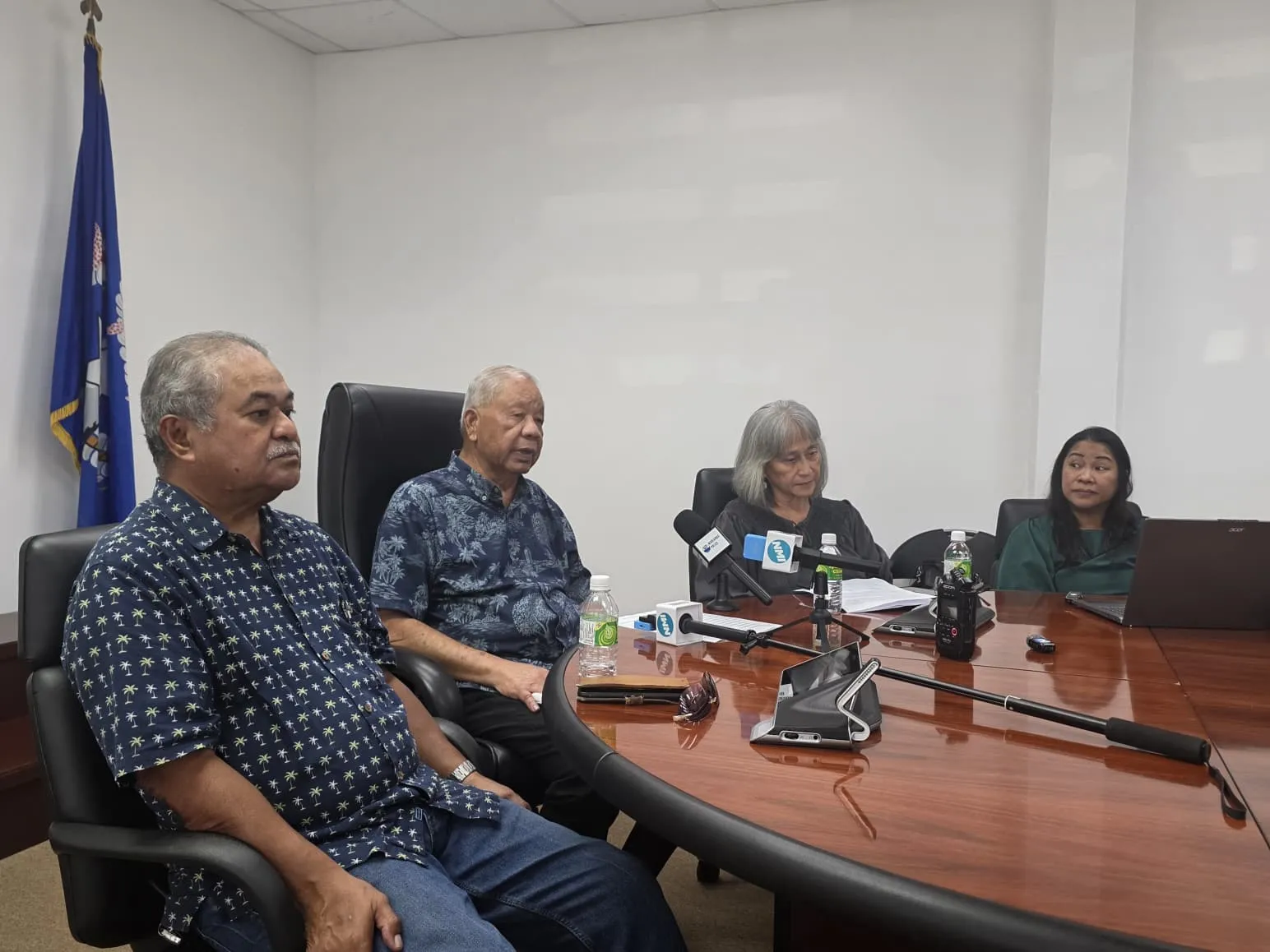


The motion for a new trial was originally set for July 30.
Pelisamen, through attorney Douglas F. Cushnie, filed the motion for a new trial on June 30.
Cushnie stated that his client’s motion is “based upon the perjury of the government’s star witness during the first and second trial in this matter, and the failure of the government to provide material subject to the Brady Rule.”
The Brady Rule states that every prosecutor has a duty to produce, upon request by the defendant, evidence that is material to the defendant’s guilt or punishment.
Pelisamen’s motion for a new trial was based on the “purely circumstantial case and the critical and false testimony of [former Judge Timothy] Bellas, and the government’s failure to provide bank documents relevant to that testimony.”
Cushnie said Bellas, the prosecution’s lead witness, testified drafting the petition which eventually caused the transfer of $4.4 million from the Bank of Guam account set up by Pelisamen to the estate of Rita Kaipat for land taking.
Cushnie said this money was then transferred to Bellas’s trust account.
He said based upon the order that Bellas drafted and signed by then-Superior Court Judge Juan Lizama, the money was split between the three estates of Rita Kaipat, Benigno Kaipat and Isaac Kaipat.
Cushnie said Pelisamen’s name did not appear in any of the banking transactions and his client also testified that he was unaware of any split of the $4.4 million.
Cushnie said Pelisamen’s co-defendant, attorney Joseph Arriola, transferred the money which Bellas had deposited into the Bank of Guam account to the Bank of Hawaii.
Arriola alone set up a new account in the Bank of Hawaii for $1.37 million and the wire transfer that formed the basis of the wire fraud and conspiracy to commit wire fraud charges, Cushnie said.
“A new trial is required if the false testimony could in any reasonable likelihood have affected the judgment of the jury,” he added.
The defense stated that if the federal government was not aware that Bellas was not telling the truth in his handling of the $1.37 million, “they should have known as he was their prime witness, and without him they could not establish a case.”
Cushnie said Bellas drafted the orders for fees for himself and the later justification of his conduct after he was terminated by Pelisamen.
Pelisamen testified that he was never told about anything that was happening and that “it was all a secret.”
Cushnie said Bellas testified he turned over the $1.37 million check from his trust account to Arriola.
Cushnie said there was no court order to authorize Bellas to assume control of the estate funds.
Cushnie said the federal government’s use of Bellas had “a distinctive advantage because Bellas is a lawyer, has a smooth delivery and speaks with authority on probate matters.”
Pelisamen, on the other hand, has a fifth grade education whose English is not his first or second language, his lawyer said.
“The [federal] government’s case was purely circumstantial, relying on a series of checks and phone calls,” Cushnie said.
Federal Bureau of Investigation agents arrested Pelisamen for wire fraud and money laundering conspiracy charges on Jan. 11, 2008.
On May 1, 2009, Munson declared a mistrial after a 12-member jury and two alternates reached a deadlock and were not able to agree on a verdict.
A new set of jurors convicted Pelisamen guilty of money laundering and wire fraud charges on June 22, 2009.
His sentencing was set for Sept. 29, 2009.
